

Marble vs Granite isn’t just a design choice—it’s a business decision that can make or break profitability for natural stone importers. Stocking too much of the wrong material can slow down sales, create mismatches with buyer expectations, and even lead to financial loss.
For wholesalers and importers, the challenge is not simply deciding which stone is “better,” but understanding how each performs in different markets, projects, and sales scenarios. This guide walks you through the essential factors properties, market demand, profitability, logistics, sales positioning, and container mix strategies so you can make smarter decisions when importing Egyptian marble and granite.
1. Marble vs Granite – Core Properties You Must Know
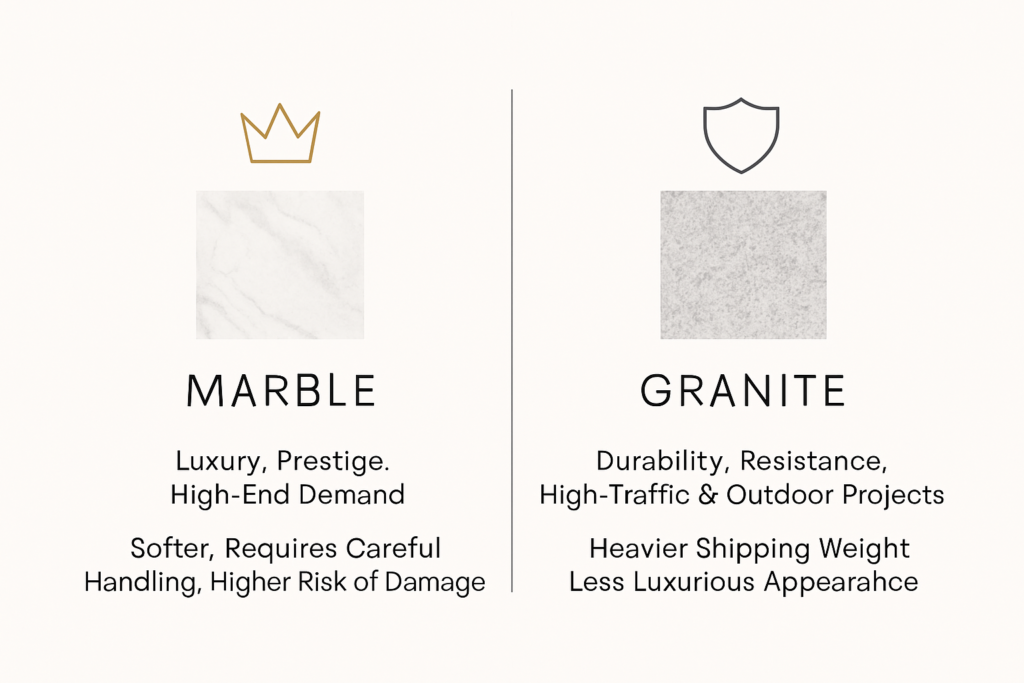
Marble
- Strengths: Luxury, prestige, high-end demand.
- Weaknesses: Softer, requires careful handling, higher risk of damage.
- Client Appeal: Perfect for architects and developers who want elegance and exclusivity.
Granite
- Strengths: Durability, resistance, suitable for high-traffic and outdoor projects.
- Weaknesses: Heavier shipping weight, sometimes less “luxurious” in appearance.
- Client Appeal: Contractors and developers who value practicality and long-term performance.
Key Insight: Marble sells on prestige, granite sells on performance.
2. Market Demand Insights
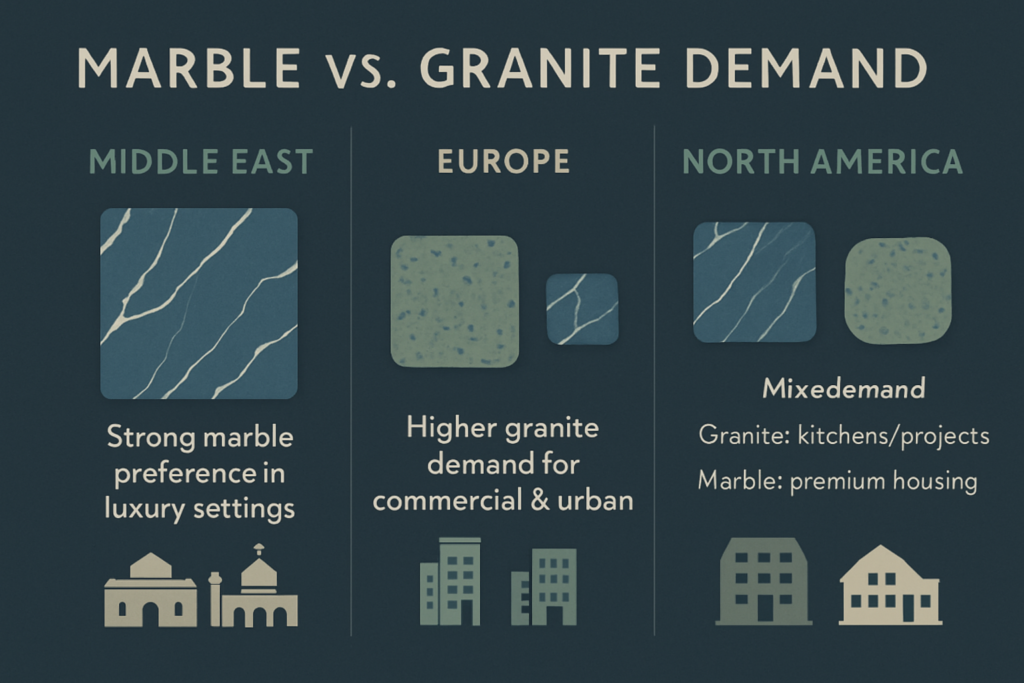
Different regions have different preferences:
- Middle East (Gulf markets):
- Strong preference for marble in villas, mosques, and luxury hotels.
- Granite still required for public spaces and infrastructure.
- Europe:
- Higher demand for granite in commercial projects and urban planning. Marble is demanded, but more niche (high-end residential & luxury hotels). According to a report by Stone World Magazine, granite continues to dominate in European commercial markets.
- Marble is demanded, but more niche (high-end residential & luxury hotels).
- North America:
- Mixed demand: granite for kitchens and public projects, marble for premium housing.
Importers who understand these differences
3. Marble vs Granite Profitability & Risks
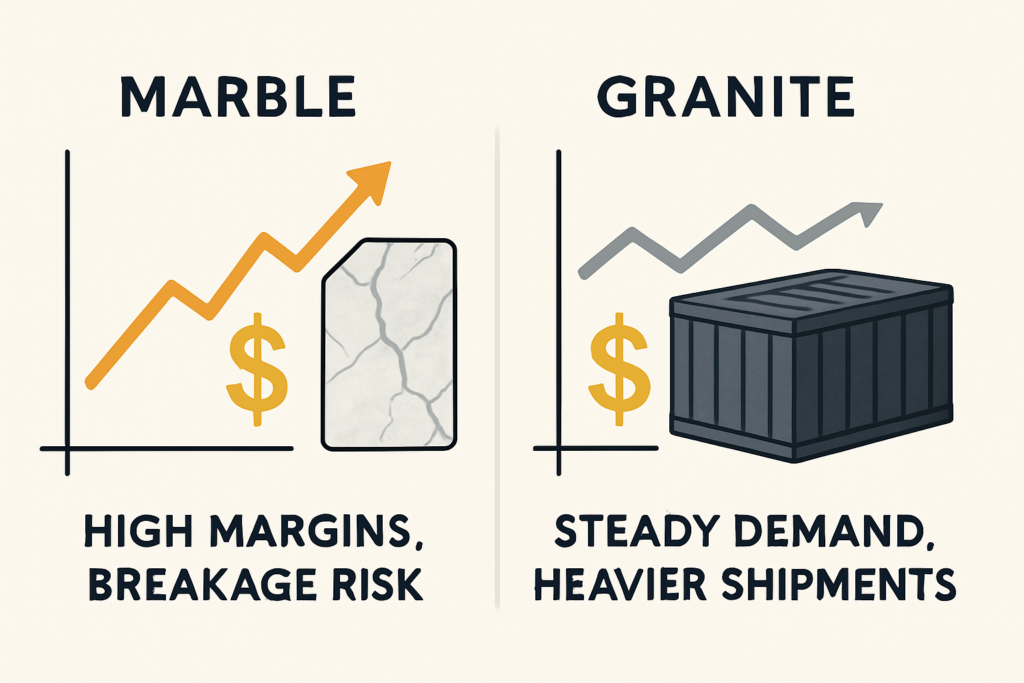
Marble
- Pros: High margins if positioned as luxury.
- Cons: Breakage during shipping, higher rejection rate in certain projects, maintenance concerns for end clients.
Granite
- Pros: Lower complaints, steady demand in infrastructure/commercial projects.
- Cons: Heavier shipments = fewer square meters per container, sometimes lower margins.
Smart importers don’t ask “Which is better?” but “Which gives me better ROI in my target market?”
4. Marble vs Granite Logistics & Container Planning
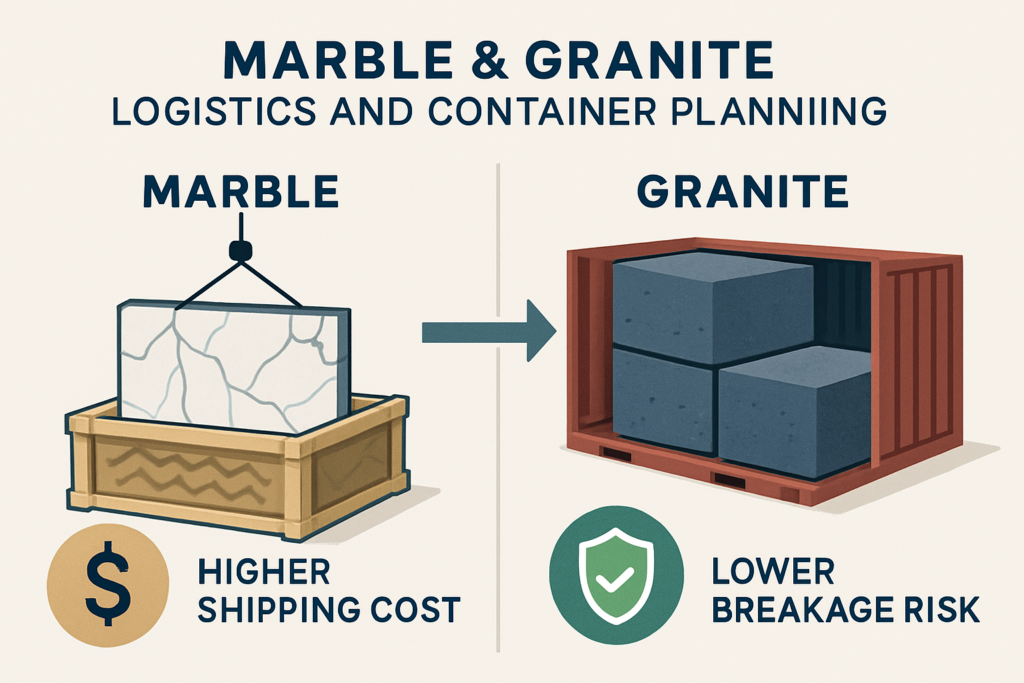
- Marble:
- Sensitive to cracks → needs strong wooden crates + protective packing.
- Adds to shipping costs.
- Granite:
- Heavier density → reduces total square meters per container.
- But lower risk of breakage compared to marble.
Tip for Importers:
Always calculate not just the cost per square meter, but the landed cost per usable square meter after losses.

5. Sales & Positioning Strategy
- How to Sell Marble:
- Emphasize luxury, uniqueness, and exclusivity.
- Market to premium developers, hotels, and villas.
- How to Sell Granite:
- Emphasize durability, strength, and cost-effectiveness.
- Market to contractors, public projects, and infrastructure suppliers.
Importers who tell the right story to their clients move stock faster.
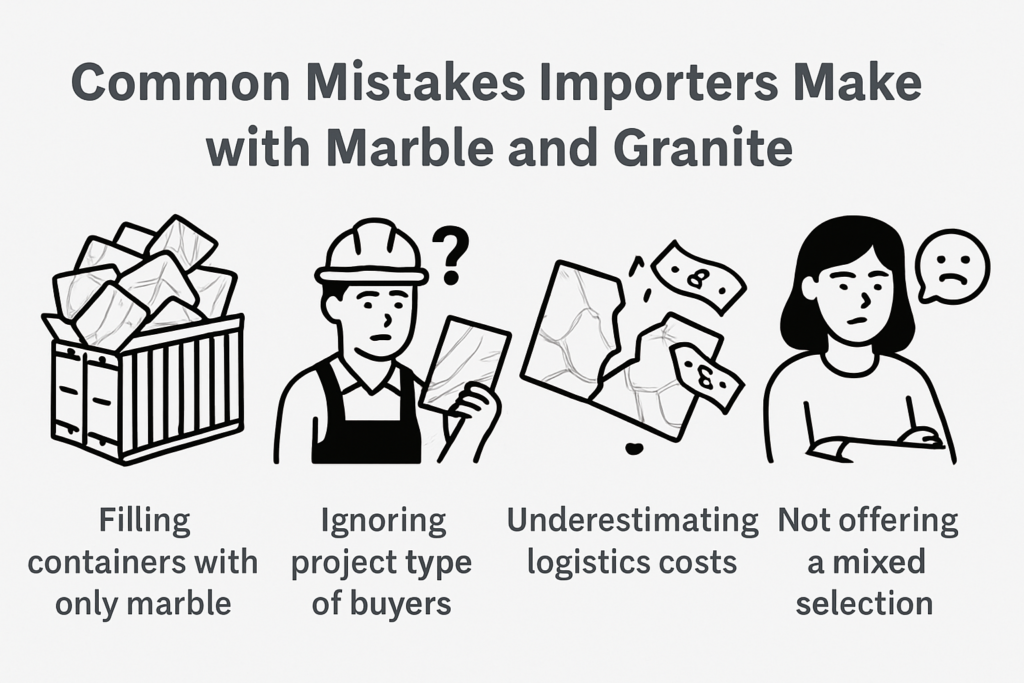
6. Marble vs Granite Common Mistakes Importers Make
- Filling containers with only marble → leads to unsold stock in markets that prefer granite.
- Ignoring project type of buyers → selling marble to contractors who only care about performance.
- Underestimating logistics costs → marble looks profitable until packing, breakage, and claims reduce margins.
- Not offering a mixed selection → losing clients who want both marble and granite options.
7. Container Mix Strategy (Practical Guide)
- Luxury-focused markets (Gulf, premium housing):
- 70% Marble, 30% Granite.
- Commercial-focused markets (Europe, infrastructure projects):
- 70% Granite, 30% Marble.
- Balanced markets (North America, mixed-use projects):
- 50% Granite, 50% Marble.
Always adjust ratios based on your buyer portfolio. If your top clients are hotel developers, go heavier on marble. If they’re contractors, granite is the safer bet.
Conclusion
For importers, the question is never just “Marble or Granite?” It’s about matching the right stone to the right projects in the right market.
- Marble: Higher risk, higher prestige, higher margins.
- Granite: Lower risk, higher practicality, steady demand.
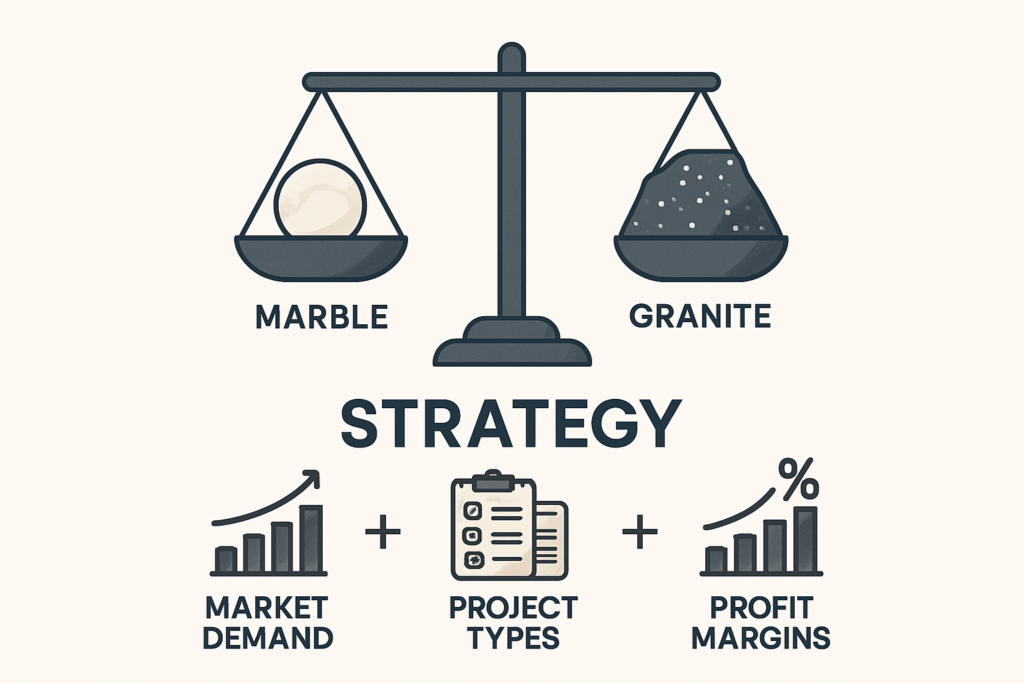
The smartest importers build a balanced strategy: filling containers based on market demand, project types, and profit margins.
If you want tailored advice on container planning, market trends, and product selection, our team can help you design a sourcing strategy that maximizes both sales and profitability.