
Marble Supplier in Egypt is not just a sourcing choice; it is a critical factor that shapes your reputation as an importer long before your clients see the final product. In the world of stone importation, reputation is everything. Clients choose suppliers not only for price or product range but because they trust you to deliver consistent quality every time. However, the most overlooked risk to your credibility often comes from hidden quality gaps within the supply chain gaps that remain invisible until the shipment reaches your customer.
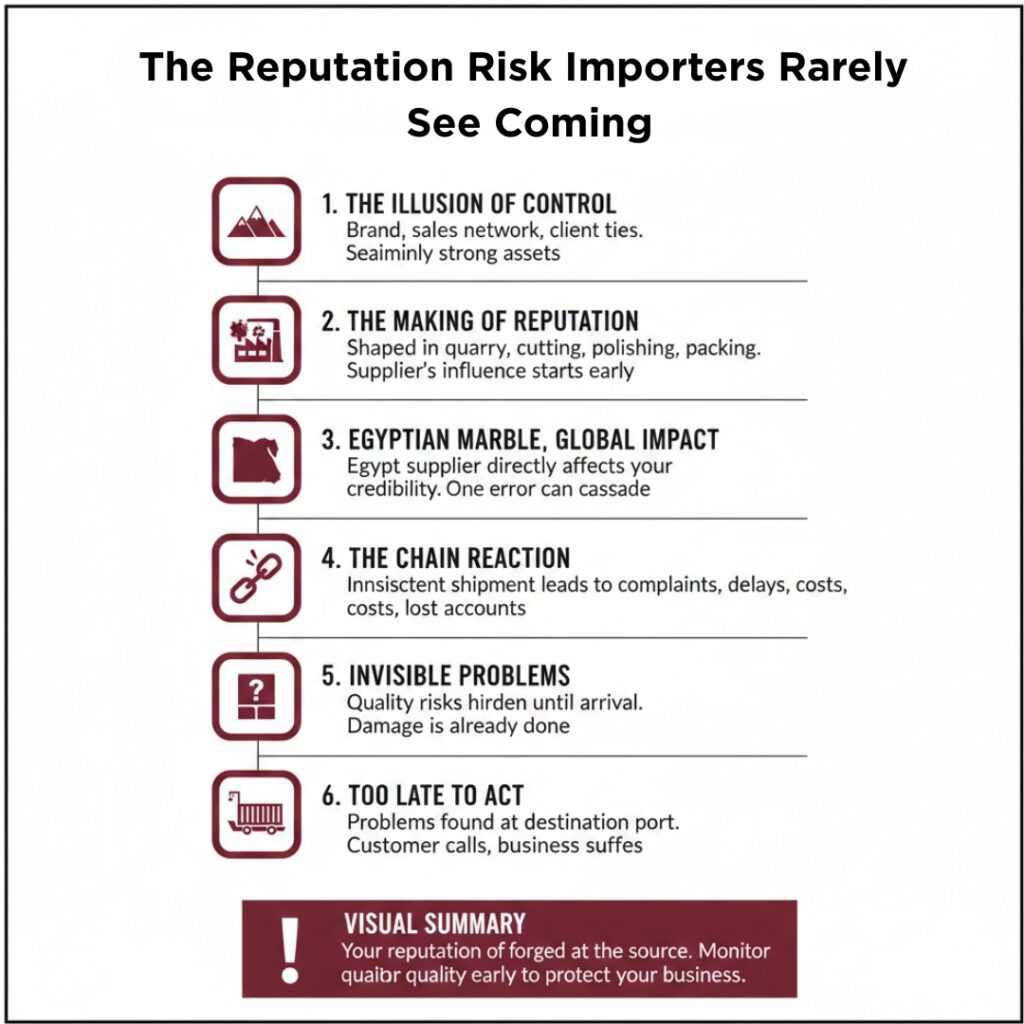
The Reputation Risk Importers Rarely See Coming
Importers often assume that their strongest assets are their brand, sales process, distribution network, and client relationships. Yet the truth is more uncomfortable. Your reputation is built long before your customer sees the finished slab or tile. It is shaped inside the quarry, during the cutting stage, in the polishing line, in the packing depot, and finally in the loading port.
A marble supplier in Egypt has a direct influence over your credibility, whether you are aware of it or not. One inconsistent shipment is often enough to cause a chain reaction of complaints, delays, returns, unexpected costs, and in the worst cases the complete loss of a key account.
The challenge is that most quality risks remain invisible until it is too late. Many importers realize these problems only after the container arrives at the destination port and the customer starts calling with concerns. By then, the damage is already done.
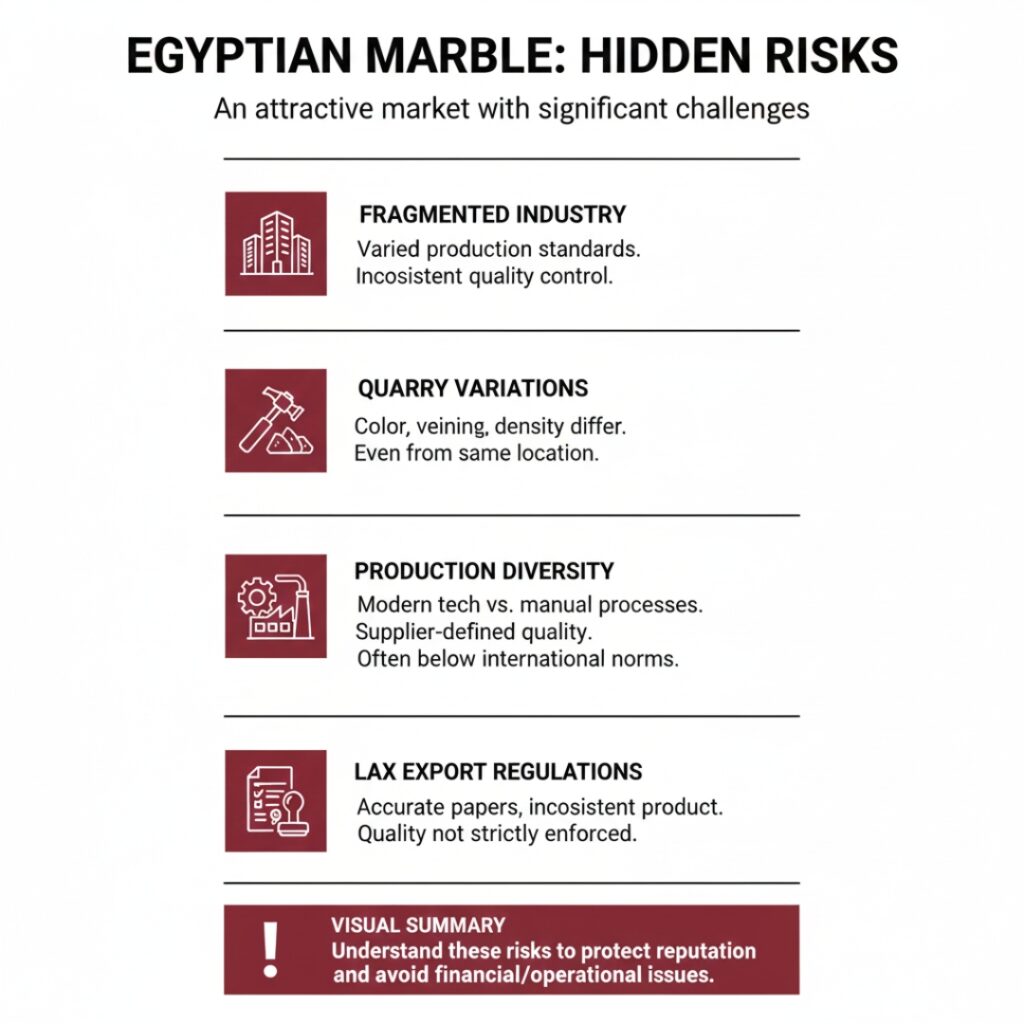
Why Working with a Marble Supplier in Egypt Is a Dual Opportunity and Risk
Egypt is globally recognized for its marble and granite industry. The country offers a wide variety of stones, competitive pricing, and an established export ecosystem. This makes Egypt an attractive destination for importers in Europe, the Middle East, America, and Asia.
But this opportunity comes with structural risks that many importers do not factor into their decision making:
- Egypt’s marble industry is highly fragmented. Not all suppliers operate with the same production standards or quality control systems.
- Quality variation between quarries is significant. Two blocks from the same location can differ dramatically in color, veining, and density.
- Production practices differ from one factory to another. Some facilities invest in modern technology, while others rely heavily on manual processes.
- Quality control systems are not standardized. Each supplier defines quality in their own way, which often does not align with international expectations.
- Export regulations are not strict on quality. Documentation may be accurate, but product quality can still be inconsistent.
Understanding these dynamics is essential for importers who want to protect their reputation and avoid unnecessary financial and operational risks.
Working with a reliable supplier is crucial because Egypt’s marble industry exported over 719,659 tonnes in early 2024 (StoneNews), showing strong demand from Europe, the Middle East, and Asia.
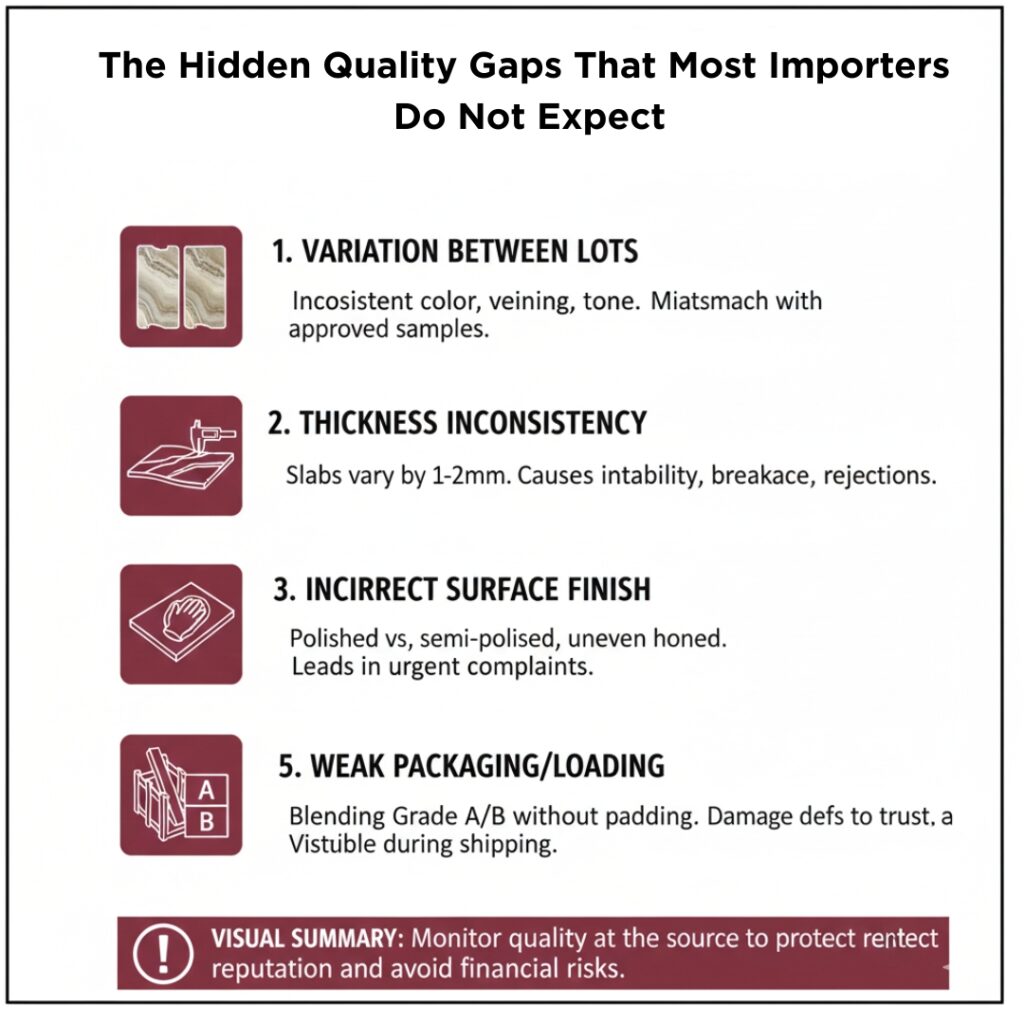
The Hidden Quality Gaps That Most Importers Do Not Expect
When sourcing from a marble supplier in Egypt, the following quality gaps are the most common yet also the most damaging. These issues typically remain invisible until the goods reach the client, which is why they pose such a high reputational risk.
Quality Gap 1 Variation Between Different Lots
One of the most common issues importers face when dealing with a Marble Supplier in Egypt is noticeable variation between different lots. Common variations include:
- noticeable differences in background color
- unpredictable patterns in veining
- uneven tone between tiles or slabs
- changes in reflection or polish quality
Such variations create a negative impression with end customers who expect the material to match the sample they approved. When this mismatch occurs, the importer faces complaints, additional costs, and the possibility of losing trust permanently.
Quality Gap 2 Thickness Inconsistency
Although a slab may be labeled as 2 centimeters or 3 centimeters, many importers discover that actual thickness varies along the piece. A difference of just 1 or 2 millimeters can cause several serious problems:
- instability during installation
- increased breakage rate during transport
- rejection by contractors who work on strict specifications
Thickness inconsistency is one of the most damaging issues because it directly affects the structural reliability of the product.
Quality Gap 3 Incorrect Surface Finish
Finish issues occur more frequently than expected. For example:
- slabs labeled as polished may arrive semi polished
- honed surfaces may appear uneven
- brushed finishes may not match the sample
- gloss levels may vary from one slab to another
A mismatch in finish is immediately visible to clients and results in urgent complaints. The importer must then negotiate replacements or refunds, affecting both cost and reputation.
Quality Gap 4 Weak Packaging and Loading Practices
Weak packaging is another sign that a Marble Supplier in Egypt may lack proper export standards, several issues may arise:
- slabs collide during shipping
- insufficient padding increases breakage
- weak wood collapses under weight
- loading errors create pressure points
The client does not blame the exporter or the port. They blame the importer. Even minimal damage can destroy confidence and credibility.
Quality Gap 5 Mixing Grades without Disclosure
Some suppliers include a mixture of Grade A and Grade B within the same shipment, especially if they experience shortages or production pressures. This practice produces visible differences in:
- crack lines
- background tone
- natural defects
- overall quality standard
Grade mixing is one of the fastest ways to lose a long term customer because it signals dishonesty and lack of professionalism.
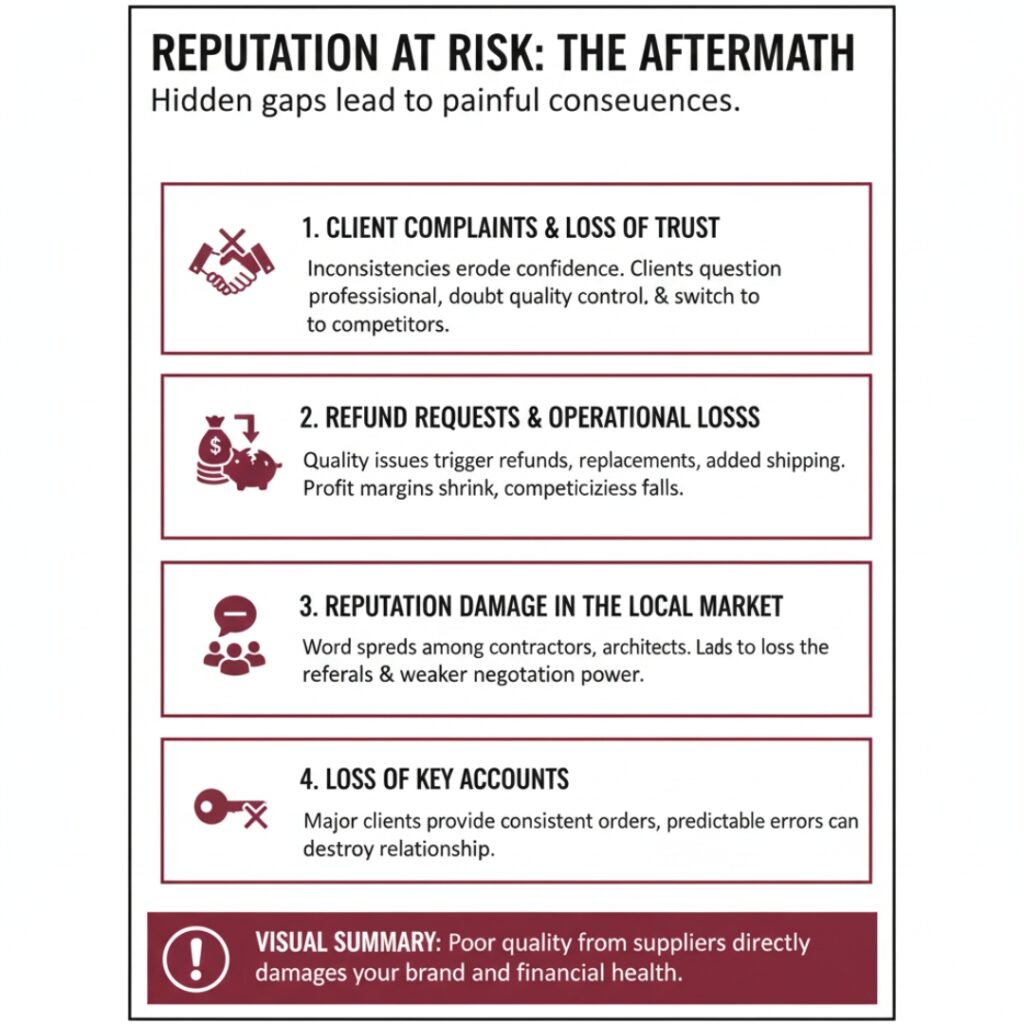
How These Hidden Gaps Damage Your Reputation and Client Relationships
Your reputation is tied entirely to the experience of the final customer. A marble supplier in Egypt may never meet your client, yet they have the power to influence your brand image. When a shipment arrives with inconsistencies, the importer suffers several consequences.
Client Complaints and Loss of Trust
Customer trust is fragile. One shipment with quality issues can overshadow years of successful business. When clients begin to suspect inconsistency, they may:
- question your overall professionalism
- doubt your quality control standards
- shift future orders to competitors
- hesitate to commit to long term contracts
Refund Requests and Operational Losses
Even minor quality issues can result in significant financial losses:
- partial refunds
- complete replacements
- additional shipping costs
- re polishing or repairing expenses
- longer delivery deadlines
These costs rapidly erode profit margins and reduce competitiveness.
Reputation Damage in the Local Market
Contractors, architects, and distributors speak to one another. A single complaint can spread quickly across a market, resulting in:
- loss of referrals
- decline in brand recognition
- weaker negotiation power
In some cases, the importer gains a long lasting negative label that becomes difficult to reverse.
Loss of Key Accounts
Losing one major client can have long term financial consequences that extend far beyond the value of the shipment. A key account provides:
- consistent orders
- predictable cash flow
- lower acquisition costs
- strong market leverage
Even a single mistake from your Marble Supplier in Egypt can create long-term damage to your reputation in the local market.
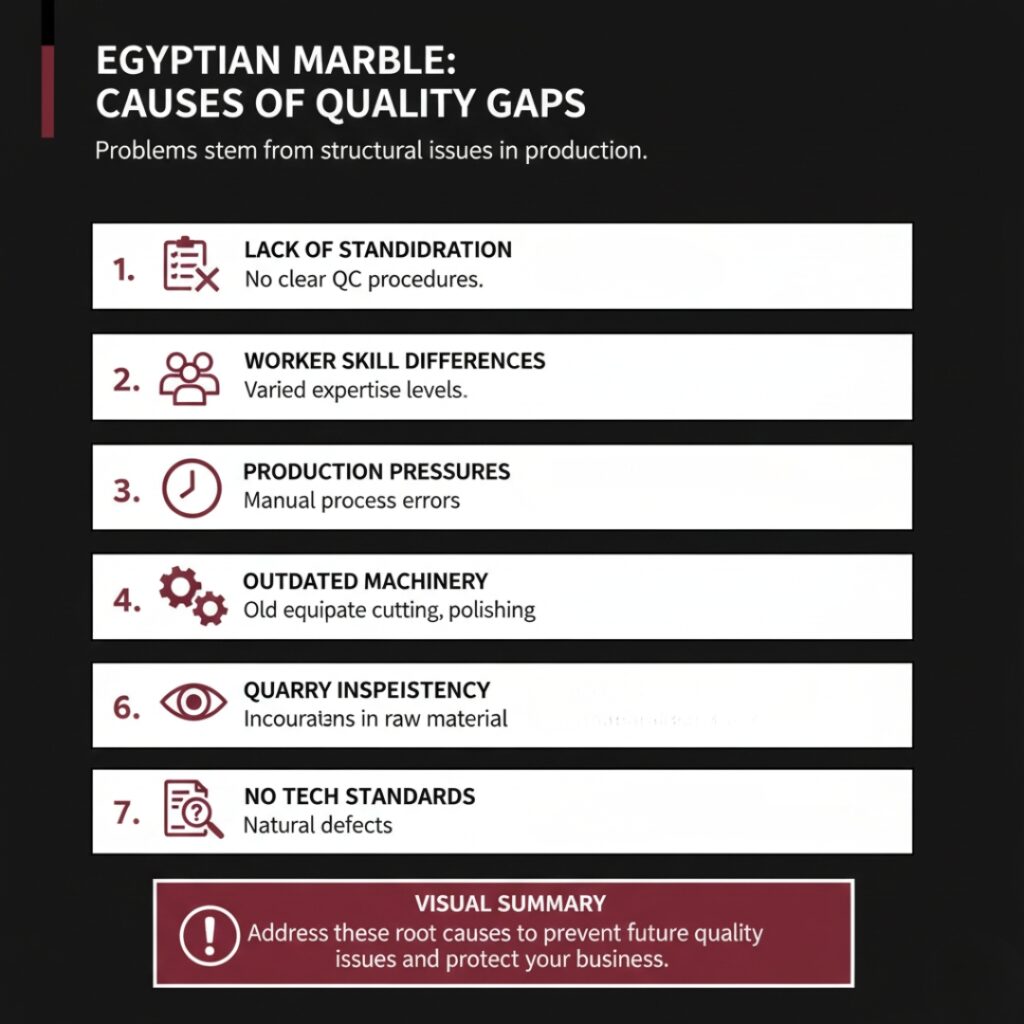
Why These Quality Gaps Occur in the First Place
Most quality issues originate from structural gaps in the supplier’s production process. Some of the most common causes include:
- lack of standardized quality control procedures
- differences between workers’ skill levels
- seasonal production pressure
- outdated machinery
- inconsistency in quarry output
- weak inspection procedures before loading
- lack of technical documentation standards
Unless these root causes are addressed, quality issues will continue to appear randomly and unexpectedly.
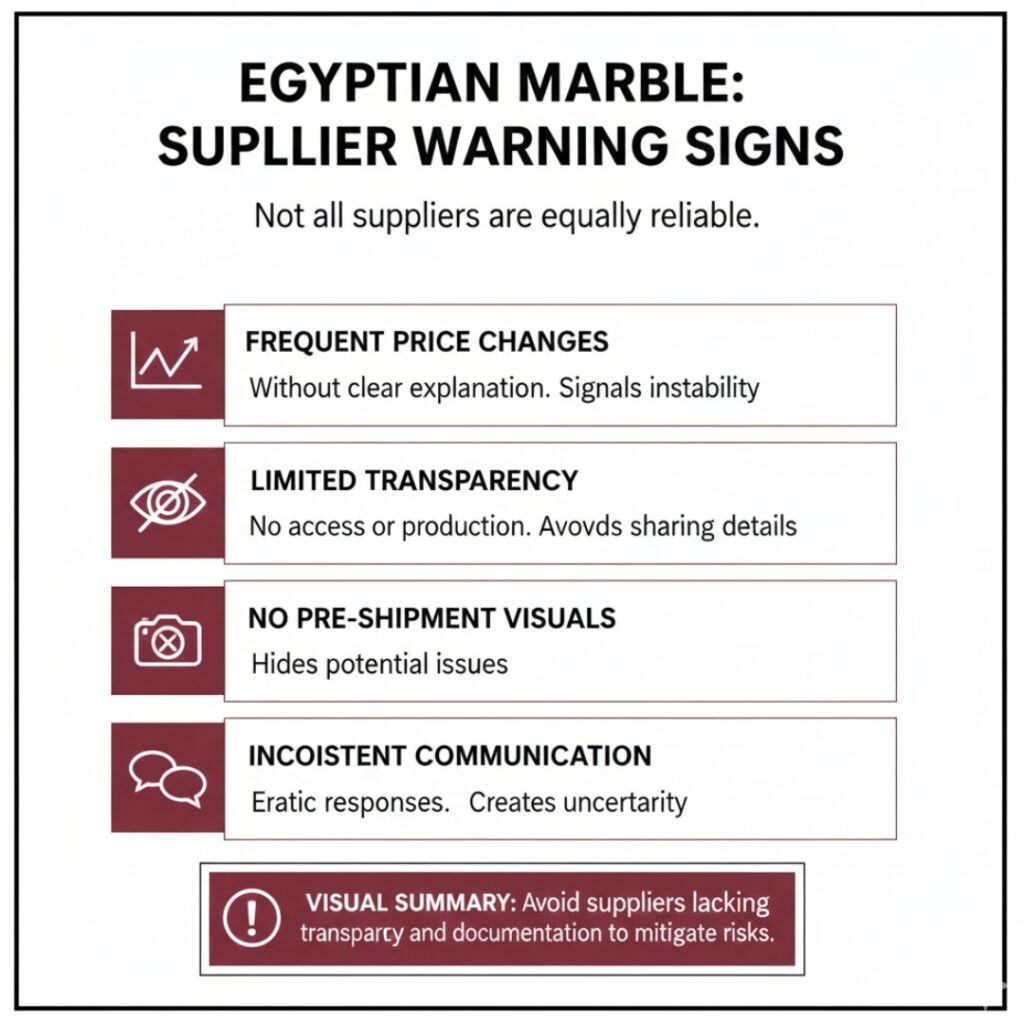
Warning Signs That You Are Working With the Wrong Supplier
Not all suppliers provide the same level of professionalism. The following warning signs should alert any importer to potential problems:
- frequent price changes without explanation
- limited transparency about production
- unwillingness to provide pre shipment photos or videos
- inconsistent communication
A reliable Marble Supplier in Egypt should always provide pre-shipment documentation and transparent communication.
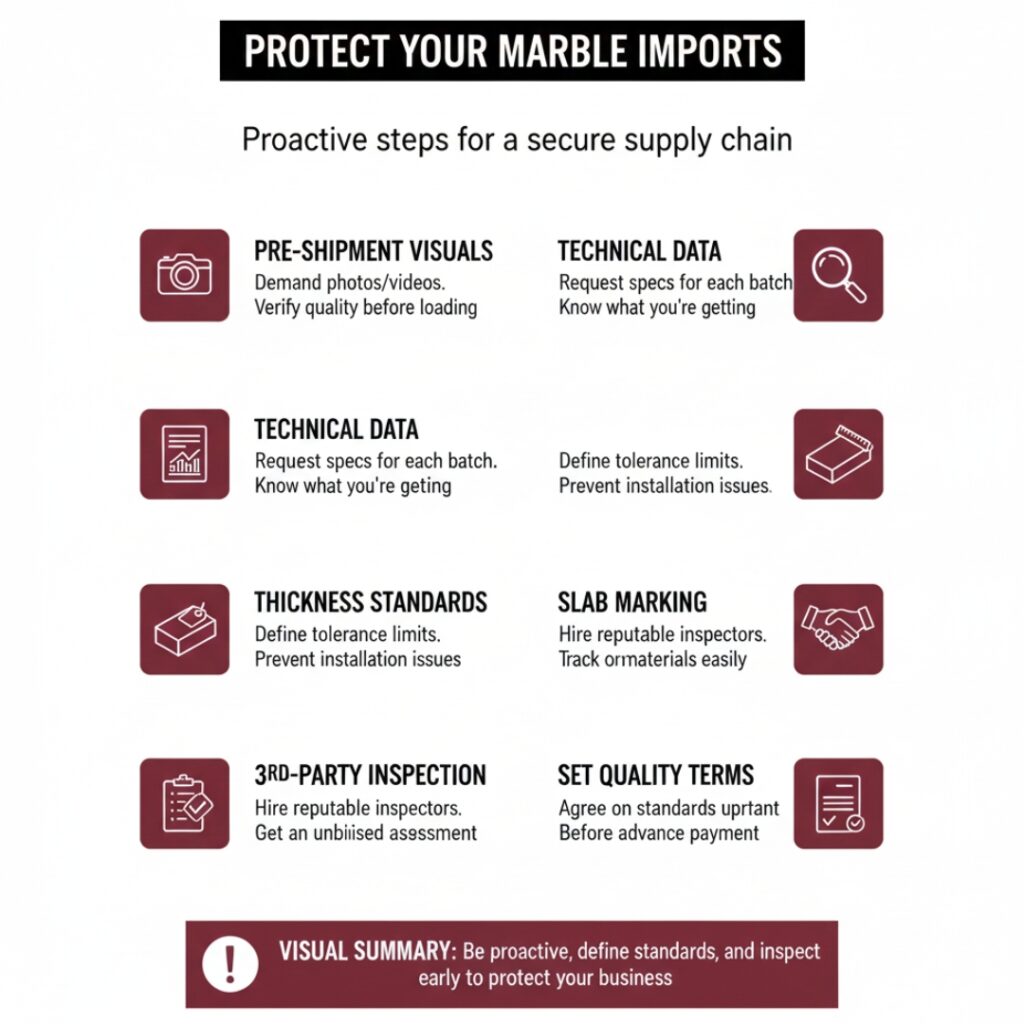
How Importers Can Protect Their Reputation Before Their Next Shipment
A smart importer does not wait for problems to appear. The following practices significantly reduce risk:
- demand pre shipment visual inspection
- request technical data for each batch
- insist on clear thickness tolerance standards
- require proper marking of slabs
- use third party inspection from reputable firms
- define quality standards before sending advance payment
These actions create control and reduce uncertainty.
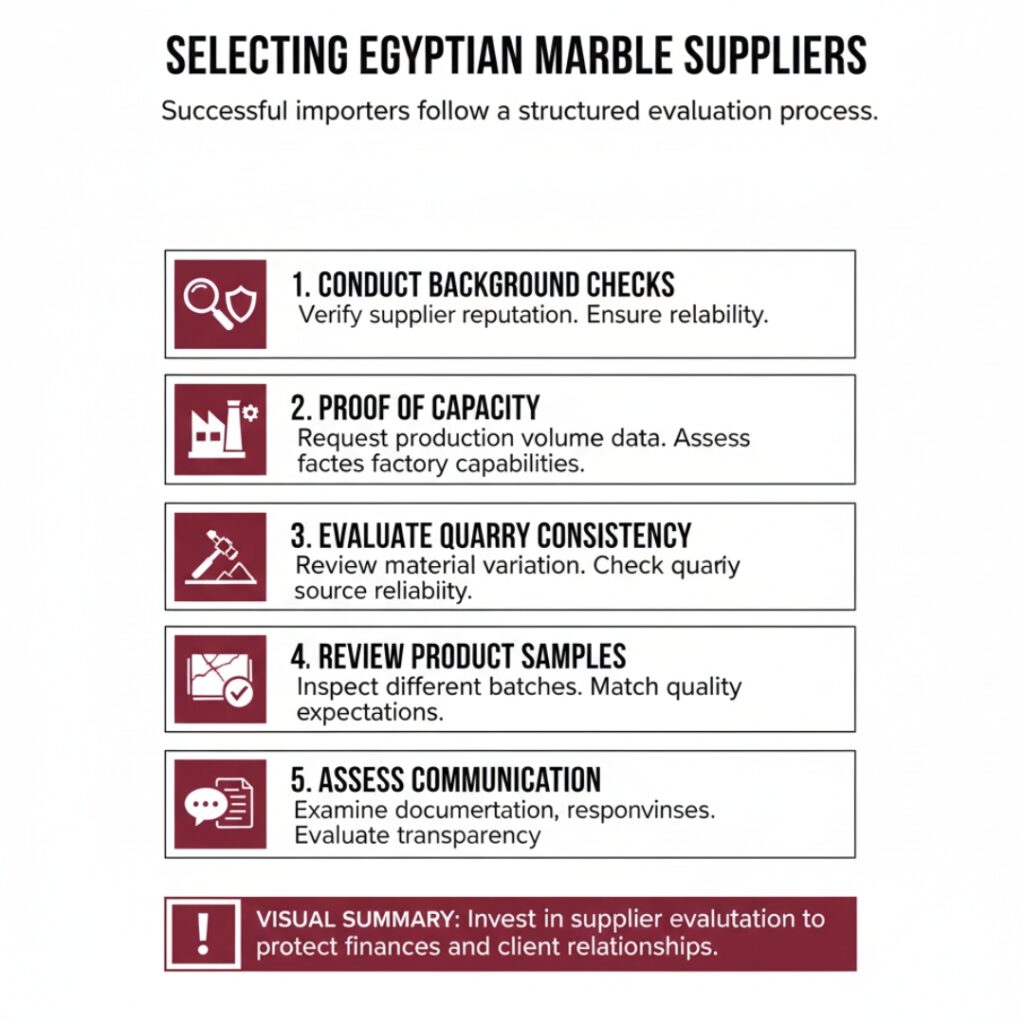
What Successful Importers Do Before Selecting a Marble Supplier in Egypt
Top performing importers follow a structured selection process. They:
- conduct background checks on the supplier
- request proof of production capacity
- evaluate quarry consistency
- review finished product samples from different lots
- assess the supplier’s documentation and communication practices
Before confirming any order, professionals always perform a pre-shipment inspection when working with a Marble Supplier in Egypt.
Final Insight Your Reputation Is Shaped by the Supplier Long Before You See the Product
Your brand image is not built inside your office or your showroom. It is shaped inside the quarry, the cutting line, the polishing station, and the packing area. Your client sees a single polished slab. What they do not see is the entire chain of decisions made by your supplier.
Choosing the right marble supplier in Egypt is not just a procurement decision. It is a strategic investment in your brand reputation. Inconsistent quality does not only affect a single project. It affects long term customer loyalty, future referrals, and your ability to compete in a saturated market.
Smart importers understand one critical truth. Protect your reputation by protecting your supply chain. And your supply chain starts with choosing the right supplier.