
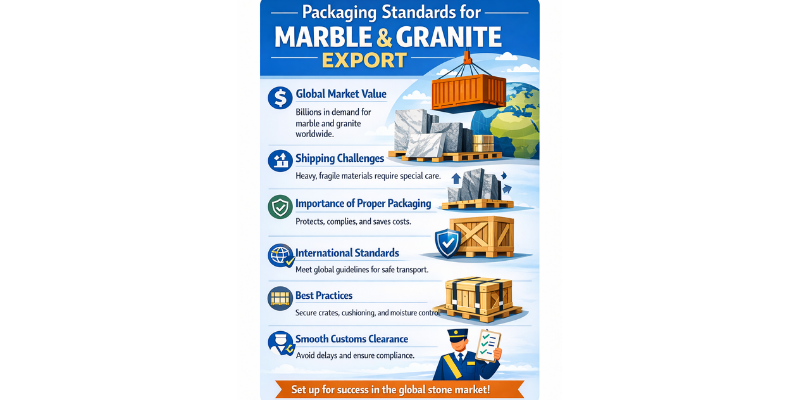
International Packaging Standards for Marble and Granite Export play a critical role in protecting high-value natural stone shipments across global markets. The global natural stone market is worth billions of dollars, with marble and granite being among the most sought-after materials for construction, interior design, and architectural projects worldwide. However, transporting these heavy, fragile materials across international borders presents significant challenges. Proper packaging isn’t just about protecting your valuable shipment it’s about compliance with international standards, minimizing costs, and building trust with buyers.
Whether you’re an established exporter or entering the international market for the first time, understanding packaging standards for marble and granite export is essential to your success. This comprehensive guide explores the critical requirements, best practices, and industry standards that protect your products and ensure smooth customs clearance.
International Packaging Standards for Marble and Granite Export Explained
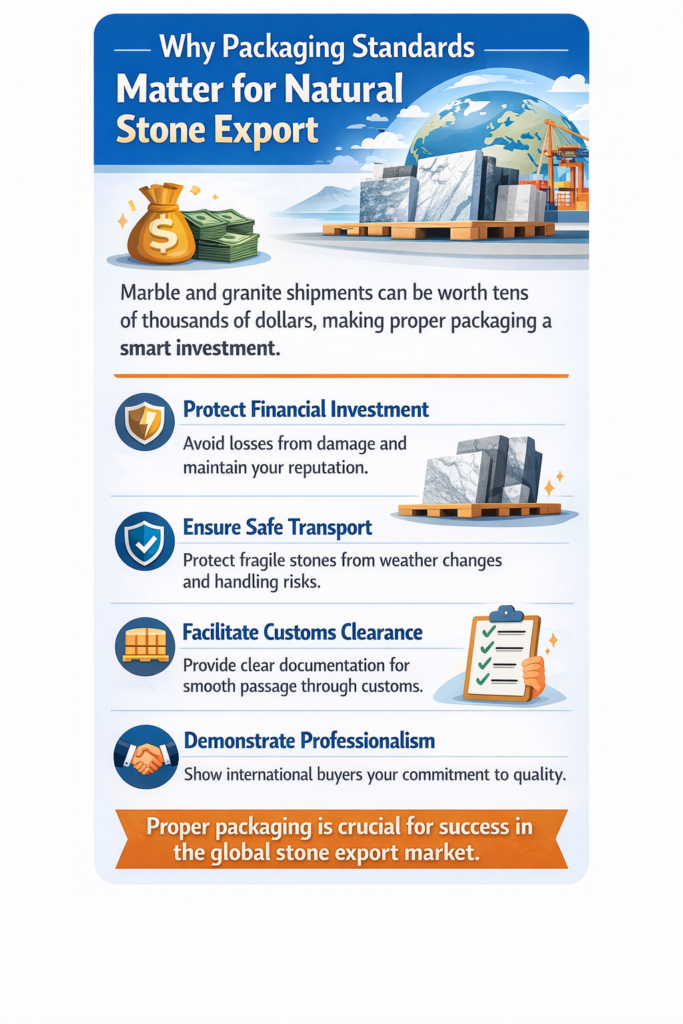
Marble and granite are premium materials that command high prices. A single shipment can be worth tens of thousands of dollars, making proper packaging a critical investment rather than an expense. When products arrive damaged, exporters face financial losses, damaged reputations, and unhappy clients.
Beyond financial considerations, packaging standards serve several important functions. They ensure products withstand the rigors of international transport, including temperature fluctuations, humidity changes, and rough handling. They facilitate customs clearance by providing clear documentation and compliance verification. Finally, they communicate professionalism to international buyers, differentiating your business in a competitive market.
International Standards Governing Marble and Granite Export
ISO Standards
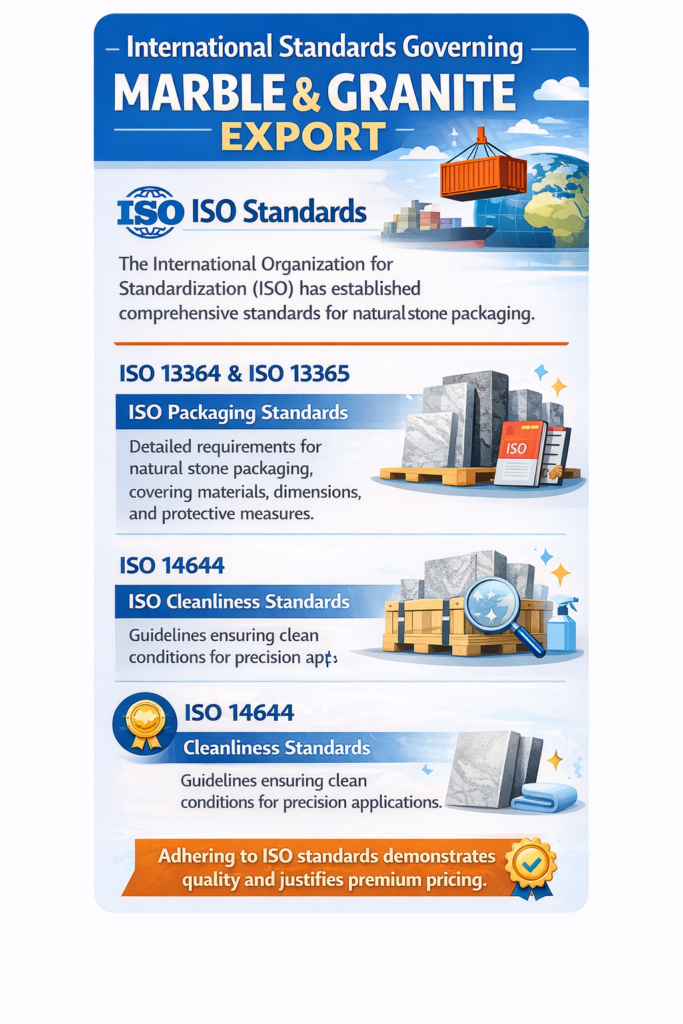
The International Organization for Standardization (ISO) has established comprehensive standards for natural stone packaging. ISO 13364 and ISO 13365 specifically address the packaging of natural stone products, providing detailed requirements for materials, dimensions, and protective measures. These standards ensure consistency across international markets and reduce disputes over product condition.
ISO 14644 covers cleanliness standards for packaged materials, which is particularly important for marble and granite destined for precision applications or high-end finishes. Adherence to these standards demonstrates quality commitment and often justifies premium pricing.
Regional Requirements
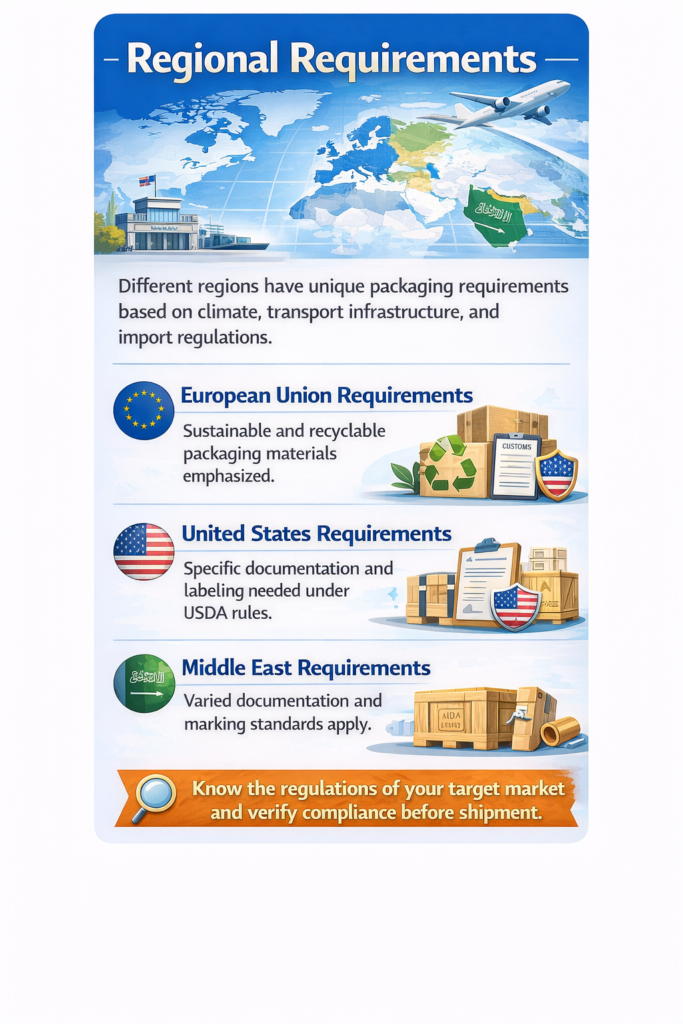
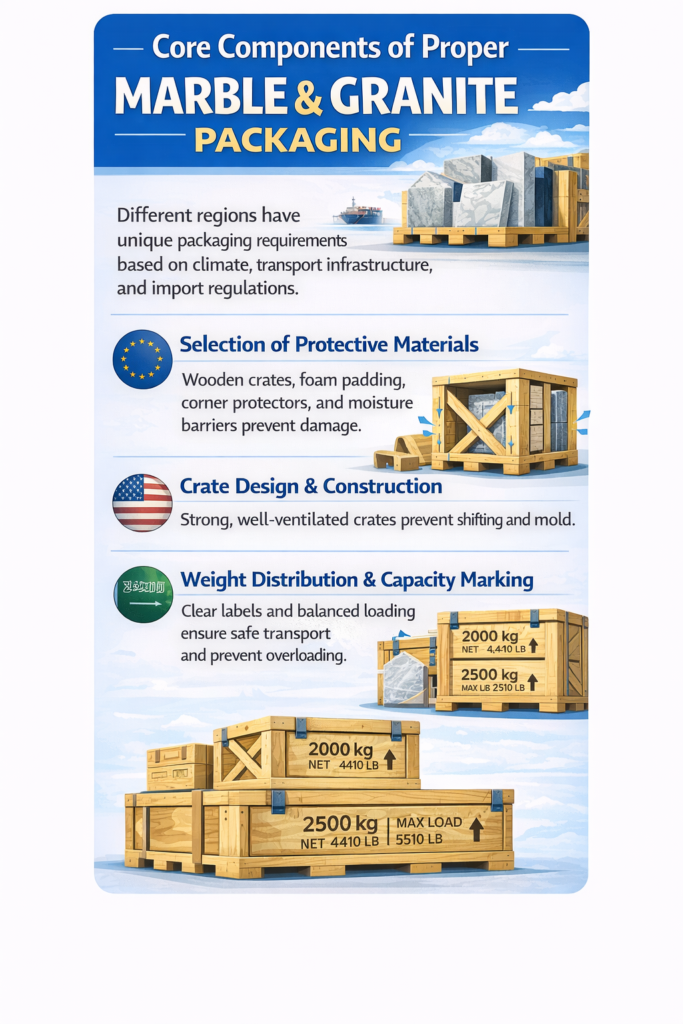
Different regions have unique packaging requirements based on climate, transport infrastructure, and import regulations. European Union regulations, for instance, emphasize sustainability and recyclability of packaging materials. The United States requires specific documentation and labeling standards for natural stone imports under USDA regulations, while Middle Eastern markets may have different requirements for documentation and marking.
Understanding your target market’s specific regulations is crucial. Many importers will request compliance with their regional standards in contracts, making pre-shipment verification essential.
Core Components of Proper Marble and Granite Packaging
Selection of Protective Materials
The foundation of effective packaging begins with material selection. Wooden crates remain the industry standard for marble and granite due to their strength, durability, and cost-effectiveness. Hardwoods like oak or poplar are preferred as they provide superior structural integrity during long ocean voyages.
Foam padding, bubble wrap, and specialized foam sheets protect individual pieces from scratching and impact damage. The density and thickness of protective materials should correspond to the fragility of the product and the length of the shipping journey. Corner protectors made from foam or cardboard prevent edge damage, which is particularly important for polished or honed surfaces where even minor damage becomes visible.
Kraft paper and plastic wrapping create a moisture barrier, protecting polished surfaces from humidity and salt spray exposure during maritime transport. Many exporters use layered protection systems combining multiple materials to ensure maximum protection.
Crate Design and Construction
Crate design directly impacts product safety and shipping costs. Proper crating should distribute weight evenly across the structure, preventing warping or collapse. Internal bracing and diagonal supports are essential, especially for larger slabs that can weigh over 500 pounds.
Ventilation holes prevent moisture accumulation inside crates, reducing the risk of mold and discoloration. However, these holes must be strategically placed to avoid water ingress during maritime transport. Many professional exporters use slatted designs that allow air circulation while maintaining structural integrity.
The interior dimensions should allow approximately two inches of cushioning material on all sides of products. This spacing prevents items from shifting during transport while ensuring proper air circulation.
Weight Distribution and Capacity Marking
Clear labeling of maximum safe weight capacity prevents overloading of crates during handling and stacking. Industry standards recommend marking the crate weight, contents weight, and recommended stacking limitations on at least two sides of the crate.
Proper weight distribution inside crates prevents shifting during transport. Heavier pieces should be positioned lower, and items should be arranged to maintain center-of-gravity balance. This is particularly important when crates are stacked during ocean freight. more info
Labeling and Documentation Requirements
Mandatory Markings
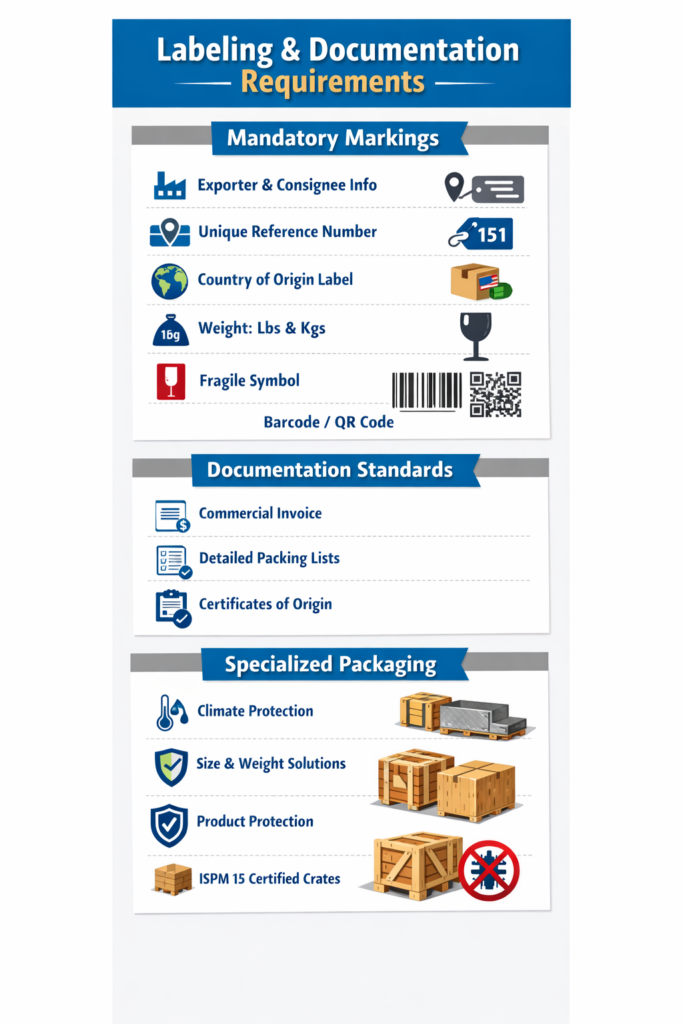
International shipping requires specific markings on all exported marble and granite shipments. These include the exporter’s name and address, consignee information, and a unique reference number corresponding to shipping documents. Fragile goods must be clearly marked with the international fragile symbol (wine glass icon), which alerts handlers to exercise caution.
Country of origin marking is mandatory in most markets and must be permanent and clearly visible. Weight information in both pounds and kilograms ensures clarity for international recipients. Many importers require barcodes or QR codes for inventory tracking, improving logistics efficiency.
Documentation Standards
Commercial invoices, packing lists, and certificates of origin form the foundation of required documentation. Detailed packing lists should specify item descriptions, dimensions, grades, finishes, and individual piece weights. This information expedites customs clearance and helps importers verify shipment accuracy.
Phytosanitary certificates may be required depending on your destination country and the materials used in crating. If you’re using wood crates, ISPM 15 (International Standards for Phytosanitary Measures) compliance certification is often mandatory to prevent the spread of pests and diseases.
Specialized Packaging Considerations
Climate and Environmental Protection
Marble and granite are susceptible to damage from humidity, temperature extremes, and salt air. In humid tropical climates, moisture barriers become even more critical. Silica gel packets placed inside packaging absorb excess moisture, protecting polished surfaces from water damage and discoloration.
For shipments traveling through salt-air maritime routes, additional protective coatings on wood crates prevent corrosion of metal fasteners and deterioration of the crate structure itself. Vacuum-sealed packaging provides the highest level of protection for premium products but comes at increased cost.
Size and Weight Specifications
Different types of products require tailored packaging solutions. Small decorative items can be grouped together in consolidated packaging, reducing costs. Large architectural slabs require individual crating with reinforced support structures. Irregular shapes like moldings or columns demand custom crate designs with precise internal bracing.
Product-Specific Protection
Polished surfaces require extra protection during transit. Soft padding materials prevent scratching, while anti-slip surfaces within crates prevent movement. Honed and bush-hammered finishes are less sensitive to scratches but still require dust protection.
Thinner products like tiles require horizontal stacking with separators to prevent chipping and breaking. Edges are particularly vulnerable and benefit from corner guards and edge protection materials.
Cost Benefit Analysis of Quality Packaging
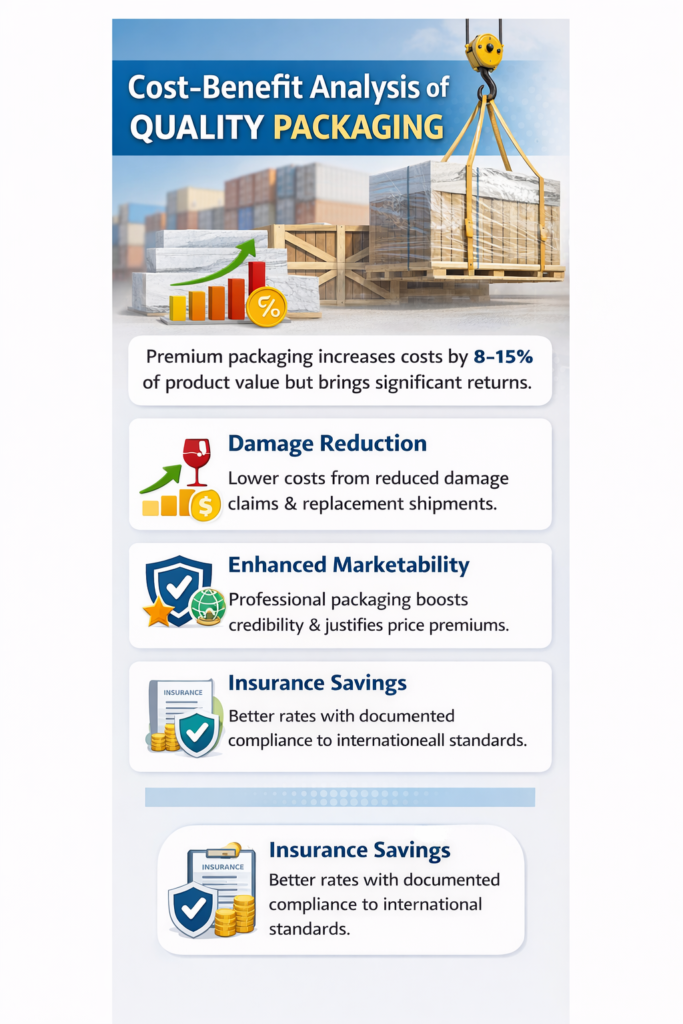
While premium packaging increases upfront costs by 8-15 percent of product value, it delivers significant returns. Damage-related claims, replacement shipments, and loss of customer relationships far exceed packaging investment.
Quality packaging also improves marketability. International buyers understand that proper packaging indicates a serious, professional supplier. This perception often justifies price premiums and builds long-term business relationships.
Insurance costs may be lower with documented compliance to international standards. Many marine insurance providers offer better rates to exporters demonstrating commitment to quality packaging and standard compliance.
Best Practices for Marble and Granite Exporters
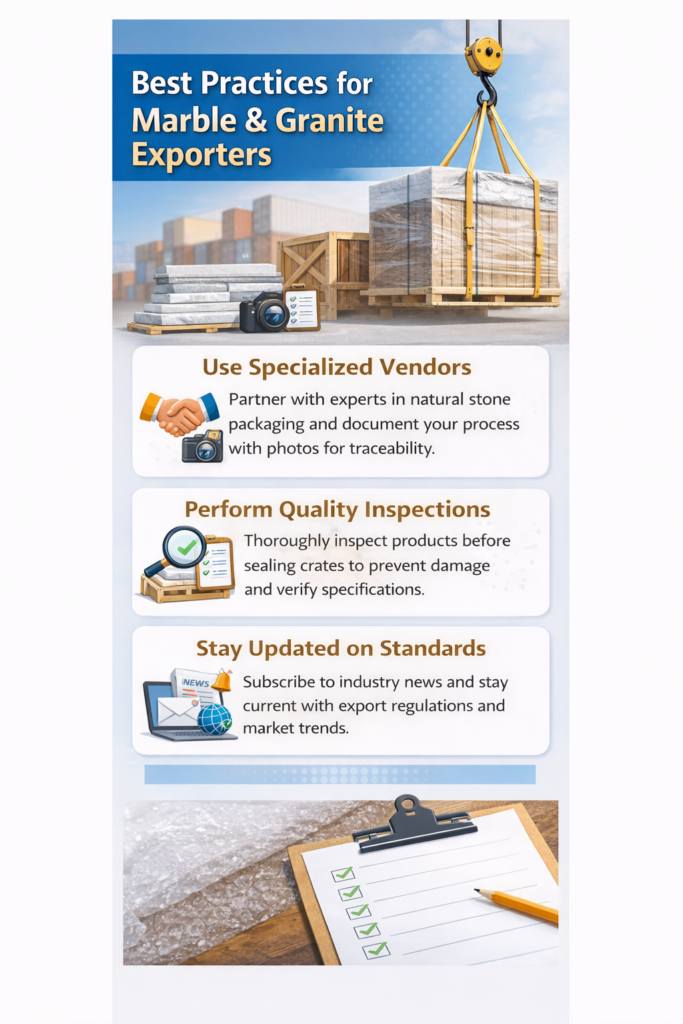
Develop relationships with specialized natural stone packaging vendors who understand product fragility and transport requirements. Document your packaging process with photographs, ensuring traceability and helping resolve disputes.
Implement quality control inspections before sealing crates. Products should be inspected for existing damage, properly padded, and verified as matching documentation. This simple step prevents costly mistakes.
Stay informed about evolving standards and market requirements. Subscribe to industry publications and maintain communication with your primary export markets to understand changing regulations and expectations.
Common Packaging Mistakes to Avoid
Many marble and granite exporters unknowingly compromise product quality through preventable packaging errors. Using inadequate cushioning material to reduce costs inevitably leads to damage claims that cost far more than the savings. Ignoring moisture protection allows polished surfaces to develop water spots and discoloration during transit.
Improper documentation creates customs delays, holding shipments in ports for weeks while paperwork is corrected. Undersizing crates or exceeding recommended weight capacities results in structural failure during stacking and handling. Neglecting to mark fragile goods appropriately signals to handlers that products are less valuable than they actually are.
The most successful exporters view these mistakes as learning opportunities and implement systems preventing their recurrence. Standard operating procedures for packaging ensure consistency across all shipments, reducing errors and improving customer satisfaction.
Implementing Packaging Standards in Your Operation
Transitioning to international packaging standards requires planning and investment but delivers long-term benefits. Begin by conducting a comprehensive audit of your current practices. Compare your procedures against ISO 13364 and regional requirements for your primary markets.
Invest in staff training to ensure everyone understands packaging standards and the reasoning behind them. Workers who understand why certain procedures matter are more likely to execute them consistently and carefully.
Establish relationships with reliable suppliers of packaging materials. Bulk purchasing agreements can reduce costs while ensuring you have consistent access to high-quality materials. Many suppliers offer guidance on proper packaging techniques for different product types.
Maintain detailed records of all shipments, including photographs of products before and after packaging. This documentation proves compliance if disputes arise and provides valuable data for continuous improvement.
Conclusion
Packaging standards for international marble and granite export represent far more than bureaucratic requirements they are the foundation of successful international business. Proper packaging protects your valuable products, ensures compliance with international regulations, and communicates professionalism to your customers.
Whether you’re exporting decorative tiles to Europe or architectural slabs to Asia, investing in packaging that meets or exceeds international standards is an investment in your business’s reputation and profitability. By understanding and implementing these standards, you position your company as a reliable, professional supplier capable of consistently delivering products in perfect condition.
The natural stone export industry is competitive, but those who prioritize packaging excellence gain a distinct advantage. Start by auditing your current packaging practices against the standards outlined in this guide. Identify areas for improvement, consult with packaging specialists, and implement systems that ensure every shipment represents your commitment to quality.
Your international customers deserve products that arrive in pristine condition, and your business deserves the reputation that comes from never compromising on packaging standards. Make it your competitive advantage.