

Two importers order marble from Egypt at the same price.
One builds strong margins and scales his business. The other struggles with losses despite thinking he made a smart deal.
What went wrong?
The answer is simple: hidden costs.
Most buyers focus only on the FOB or CIF price, assuming that’s the real cost of shipping marble from Egypt. But in reality, that number is just the starting point. Beneath it lies a chain of overlooked expenses that quietly erode profit margins.
In this guide, you’ll uncover the real costs behind shipping marble from Egypt, and more importantly, how to control them before they impact your bottom line.
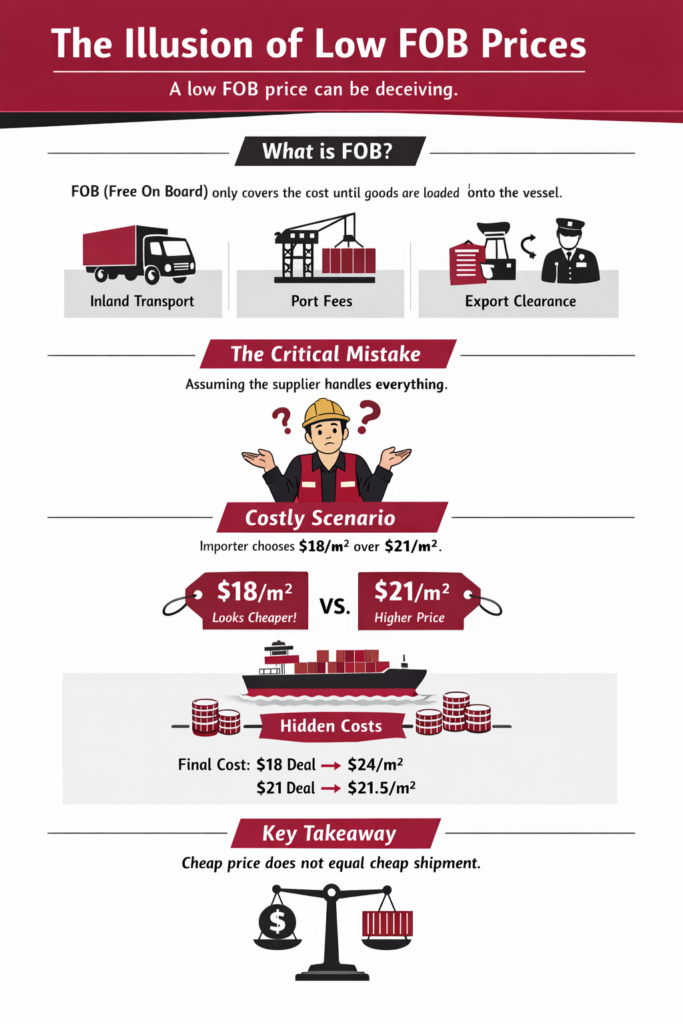
The Illusion of Low FOB Prices
A low FOB price can be extremely attractive but it’s often misleading.
FOB (Free On Board) only covers the cost of the marble until it is loaded onto the vessel. It does not include:
- Inland transportation to the port
- Port handling charges
- Export clearance fees
Here’s where many importers make a critical mistake: they assume the supplier is handling everything.
Scenario:
An importer chooses a supplier offering $18/m² instead of another at $21/m². On paper, it looks like a clear win. But once inland logistics and port fees are added, the “cheaper” option ends up costing more.
Key takeaway:
Cheap price does not equal cheap shipment.
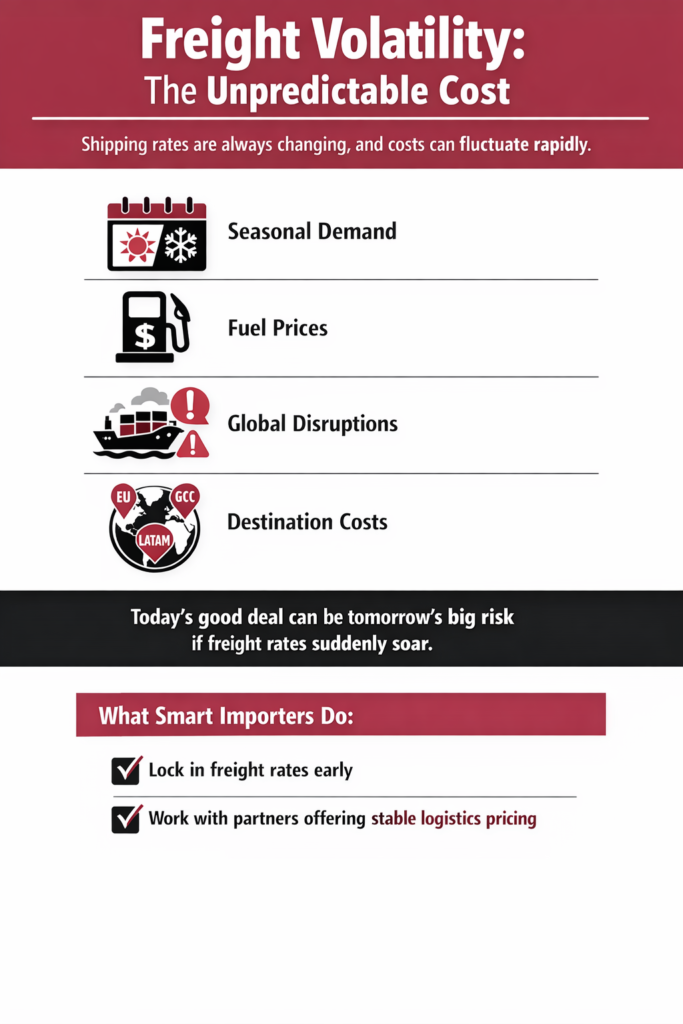
Freight Volatility: The Unpredictable Cost
Shipping rates are not fixed. They fluctuate constantly based on:
- Seasonal demand
- Fuel prices
- Global shipping disruptions
- Destination (Europe, GCC, Latin America all differ significantly)
A deal that looks profitable today can become risky tomorrow if freight costs spike unexpectedly.
Many importers finalize supplier agreements without securing freight rates only to face sudden increases later.
What smart importers do differently:
They lock freight rates early or work with partners who provide stable logistics pricing.
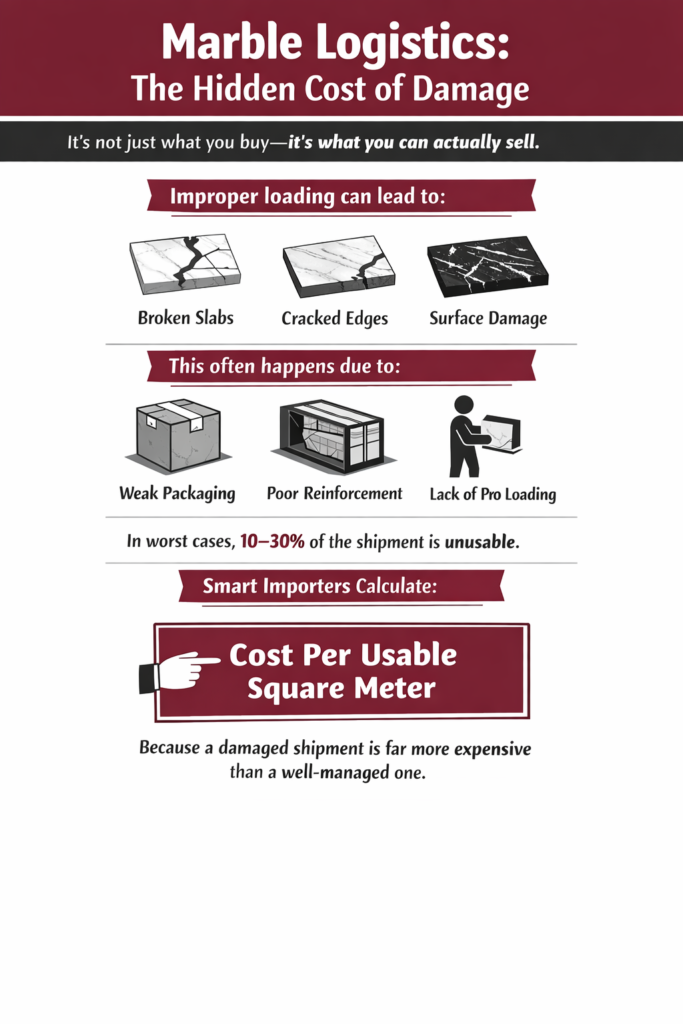
Damage & Breakage: The Silent Profit Killer
When it comes to marble logistics, the biggest cost is not what you buy
it’s what you can actually sell.
Improper loading practices can lead to:
- Broken slabs
- Cracked edges
- Surface damage
This often happens due to:
- Weak packaging
- Poor container reinforcement
- Lack of professional loading techniques
In worst-case scenarios, 10–30% of the shipment becomes unusable.
That’s why experienced importers don’t calculate cost per square meter they calculate:
👉 Cost per usable square meter
Because a cheap shipment with high damage is far more expensive than a well-managed one.
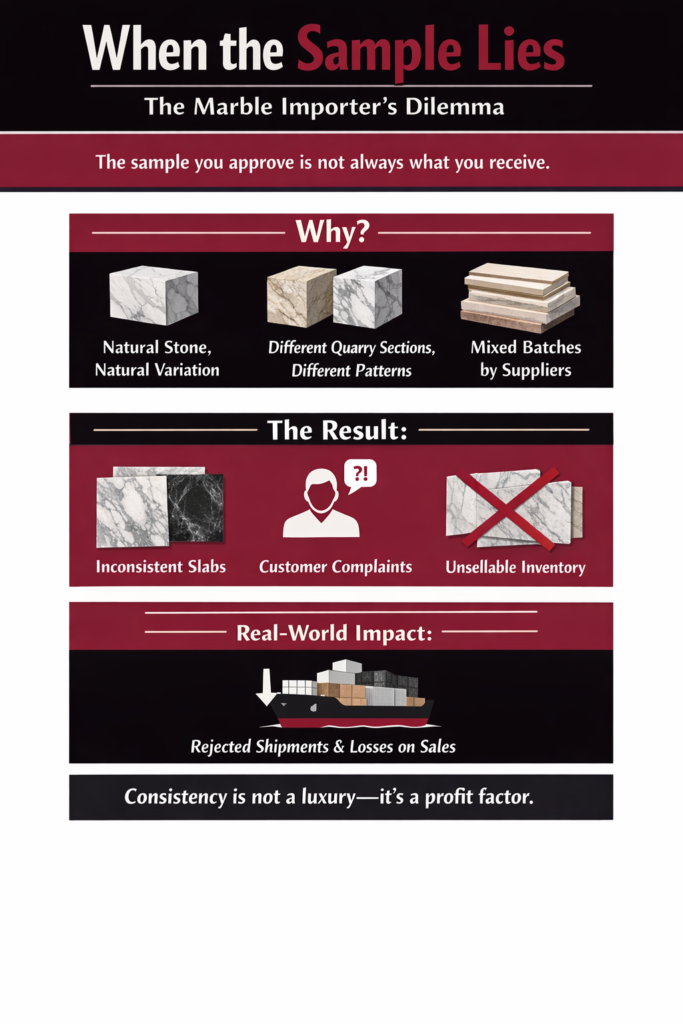
Quality Variations: When the Sample Lies
One of the most frustrating realities in importing marble is this:
The sample you approve is not always what you receive.
Why?
- Marble is a natural stone with inherent variation
- Blocks from different quarry sections may differ in color and pattern
- Some suppliers mix batches to fulfill orders quickly
The result:
- Inconsistent slabs
- Customer complaints
- Unsellable inventory
Real-world impact:
Importers often reject entire shipments or sell them at a loss because they don’t match the sample.
Consistency is not a luxury it’s a profit factor.
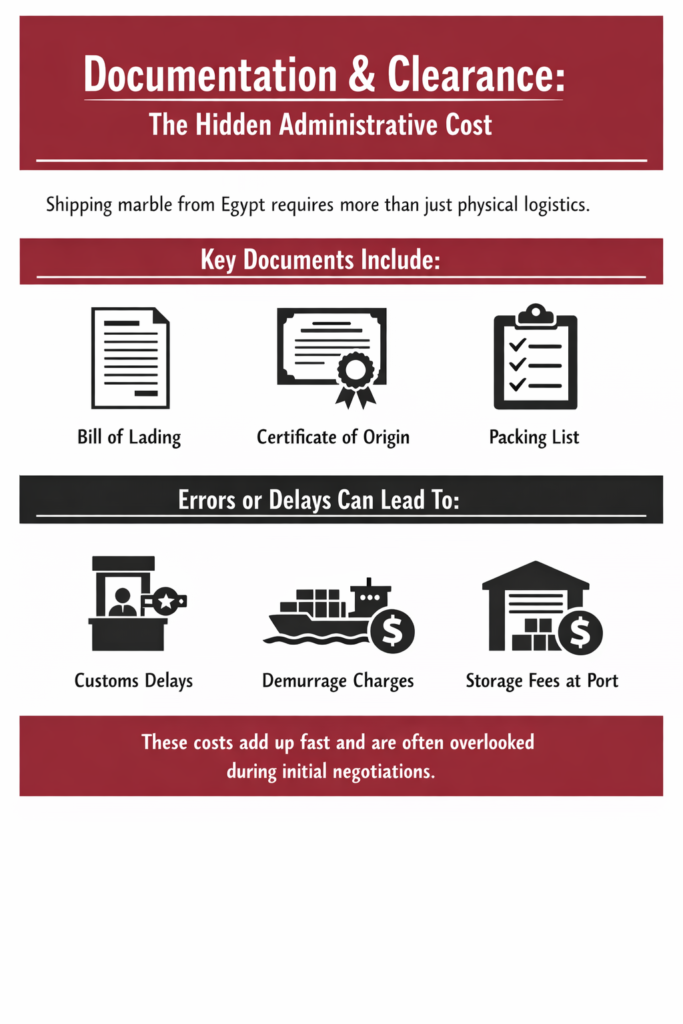
Documentation & Clearance: The Hidden Administrative Cost
Shipping marble from Egypt involves more than physical logistics it also requires accurate documentation.
Key documents include:
- Bill of Lading
- Certificate of Origin
- Packing List
Any mistake or delay in these documents can lead to:
- Customs delays
- Demurrage charges
- Storage fees at the port
These costs accumulate quickly and are often completely overlooked during initial negotiations.
Proper documentation is critical. You can review standard export requirements through International Chamber of Commerce guidelines for international trade documentation.
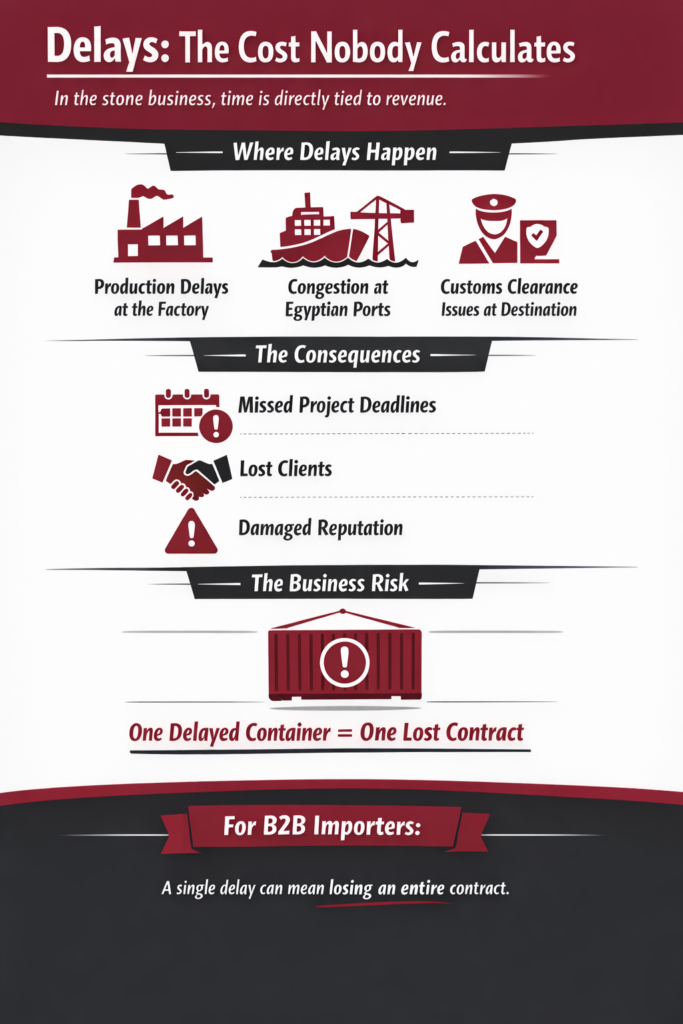
Delays: The Cost Nobody Calculates
In the stone business, time is directly tied to revenue.
Delays can happen at multiple stages:
- Production delays at the factory
- Congestion at Egyptian ports
- Customs clearance issues at destination
The consequences go beyond shipping costs:
- Missed project deadlines
- Lost clients
- Damaged reputation
For B2B importers, one delayed container can mean losing an entire contract.
Container Optimization: Paying for Air Instead of Stone
Another hidden inefficiency lies in how containers are loaded.
Poor planning leads to:
- Underutilized space
- Incorrect weight distribution
- Inefficient palletizing
This means you are effectively paying shipping costs for empty space instead of product.
The result:
- Higher cost per ton
- Lower return on investment per shipment
Optimized loading is not a technical detail it’s a competitive advantage.
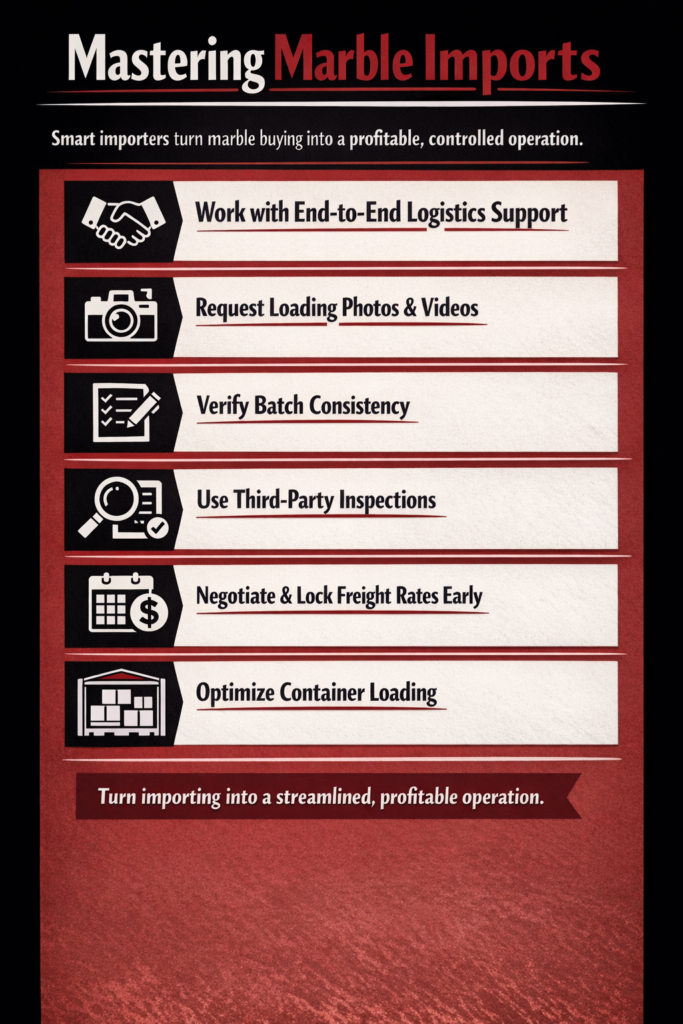
How Smart Importers Eliminate These Hidden Costs
Successful importers don’t just buy marble they manage the entire process strategically.
Here’s how they protect their margins:
- Work with suppliers offering end-to-end logistics support
- Request loading photos and videos before shipment
- Ensure batch consistency verification
- Use third-party inspection services
- Negotiate and lock freight rates early
- Optimize container loading for maximum efficiency
These steps transform importing from a risky transaction into a controlled, profitable operation.
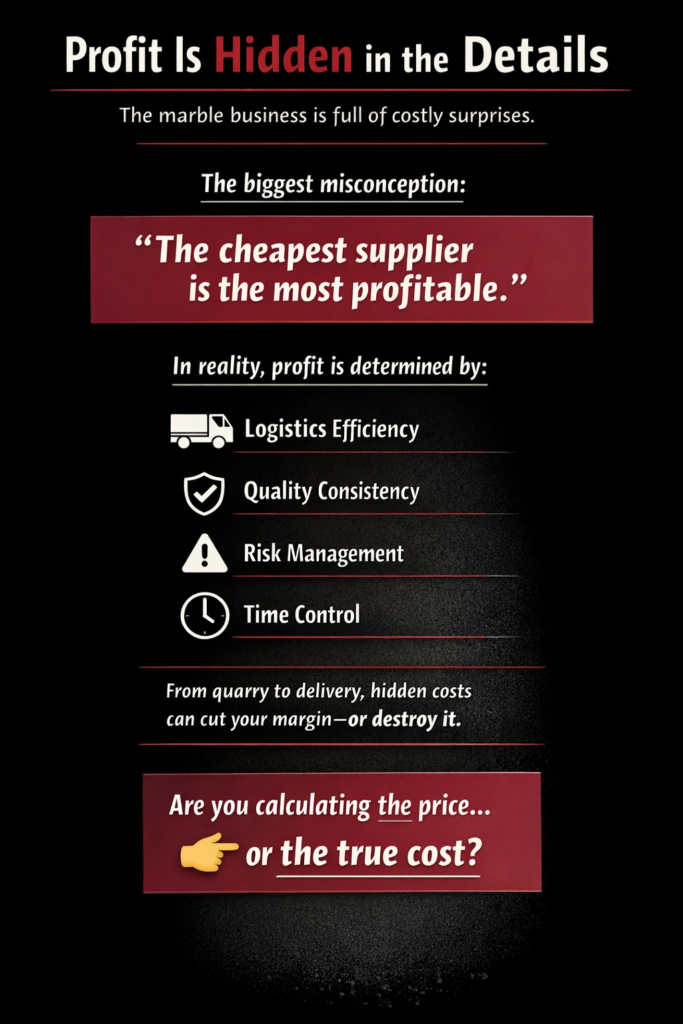
Conclusion: Profit Is Hidden in the Details
The biggest misconception in the marble industry is this:
The cheapest supplier is the most profitable.
In reality, profit is determined by:
- Logistics efficiency
- Quality consistency
- Risk management
- Time control
Every stage from quarry to delivery contains hidden costs that can either reduce your margin or destroy it entirely.
So before placing your next order, ask yourself:
Are you calculating the price… or the true cost?
If you want to avoid these costly mistakes, start with a simple step:
Request a complete shipment cost breakdown before your next order
or
Create your own checklist to evaluate suppliers beyond price Because in the world of importing marble from Egypt,
what you don’t see is exactly what costs you the most