Egyptian Marble price per sqm? is one of the first questions buyers ask when sourcing natural stone.
But behind that seemingly straightforward number lies a complex structure of variables that directly influence the final cost.
Whether you’re a contractor, architect, importer, or procurement manager, understanding what drives marble pricing especially in a competitive market like Egypt can help you make better purchasing decisions, optimize margins, and avoid costly surprises.
This guide breaks down the real factors affecting marble price per sqm in Egypt, with a transparent look into the export marble cost structure and how to evaluate the right supplier.
Why Egyptian Marble Price Isn’t Fixed.
Unlike standardized materials, marble is a natural product, meaning no two slabs are identical. Pricing varies not only between types but also within the same quarry based on quality, availability, and processing.
This is why you’ll often see a wide range when requesting quotes. The goal isn’t to find the cheapest option it’s to understand what you’re paying for.
1. Marble Type and Origin
The first and most obvious factor is the type of marble.
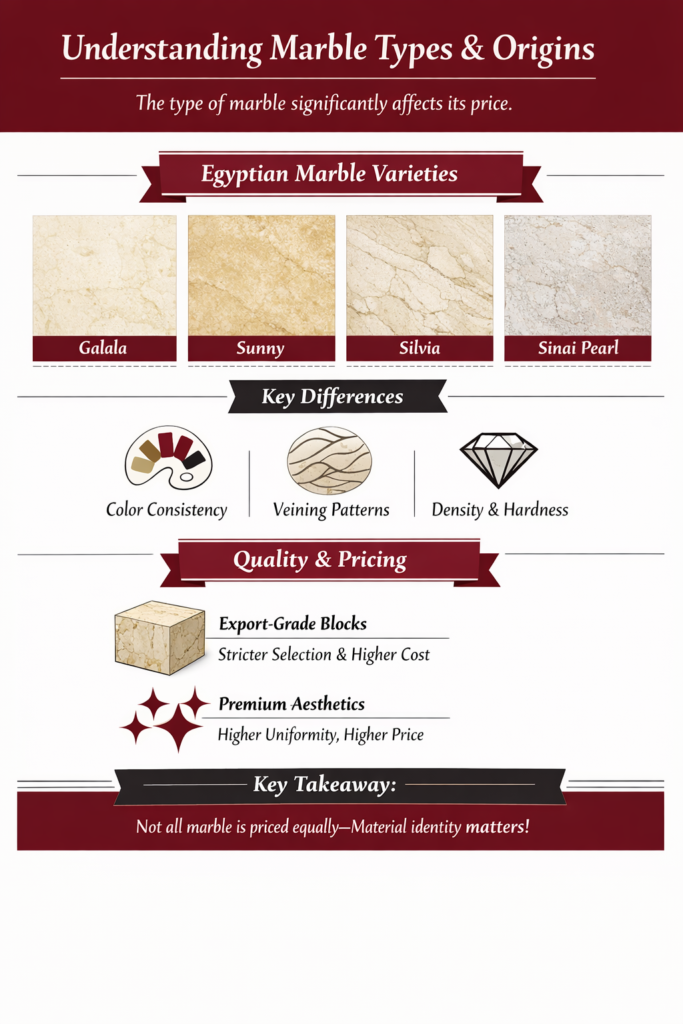
Egypt produces a wide variety of marble such as:
- Galala
- Sunny
- Silvia
- Sinai Pearl
Each type differs in:
- Color consistency
- Veining patterns
- Density and hardness
Higher uniformity and unique aesthetics typically command higher prices. Additionally, export-grade blocks (used for international markets) are more expensive due to stricter quality selection.Key takeaway: Not all marble is priced equally material identity alone can shift cost per sqm significantly.
2. Block Quality and Selection
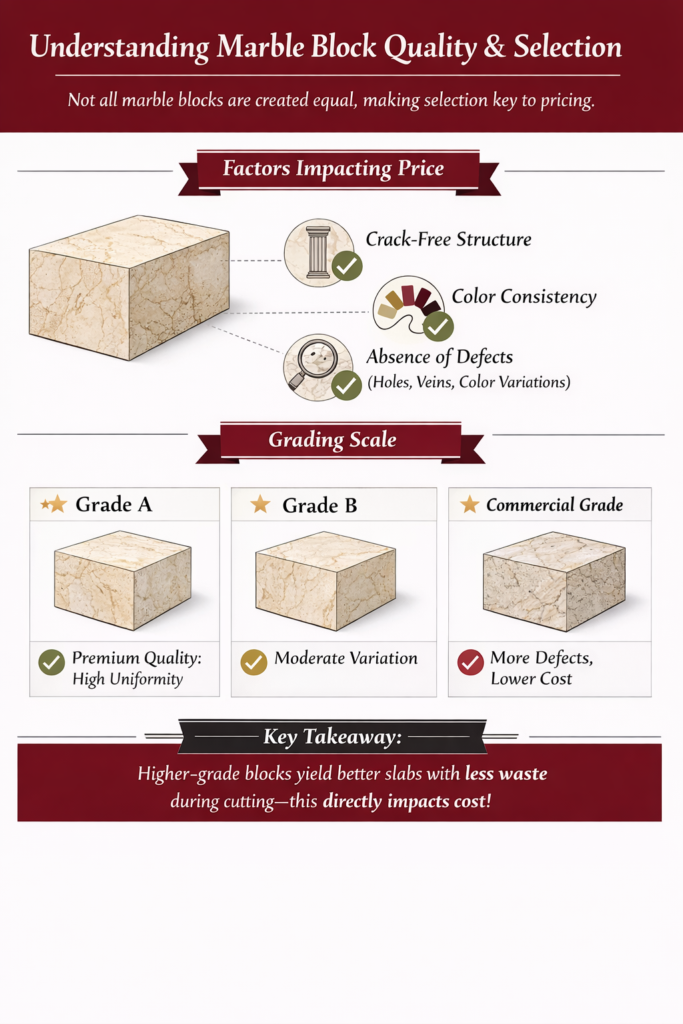
Marble is extracted in large blocks, and not all blocks are equal. Pricing depends heavily on:
- Crack-free structure
- Color consistency
- Absence of defects (holes, veins, shading variations)
Blocks are usually graded:
- Grade A: Premium quality, high uniformity
- Grade B: Moderate variation
- Commercial Grade: More defects, lower cost
Higher-grade blocks yield better slabs with less waste during cutting this directly impacts cost.
Quality grading can vary between suppliers, but international standards such as those defined by ASTM International help ensure consistency in marble specifications and performance.
3. Slab Thickness and Dimensions
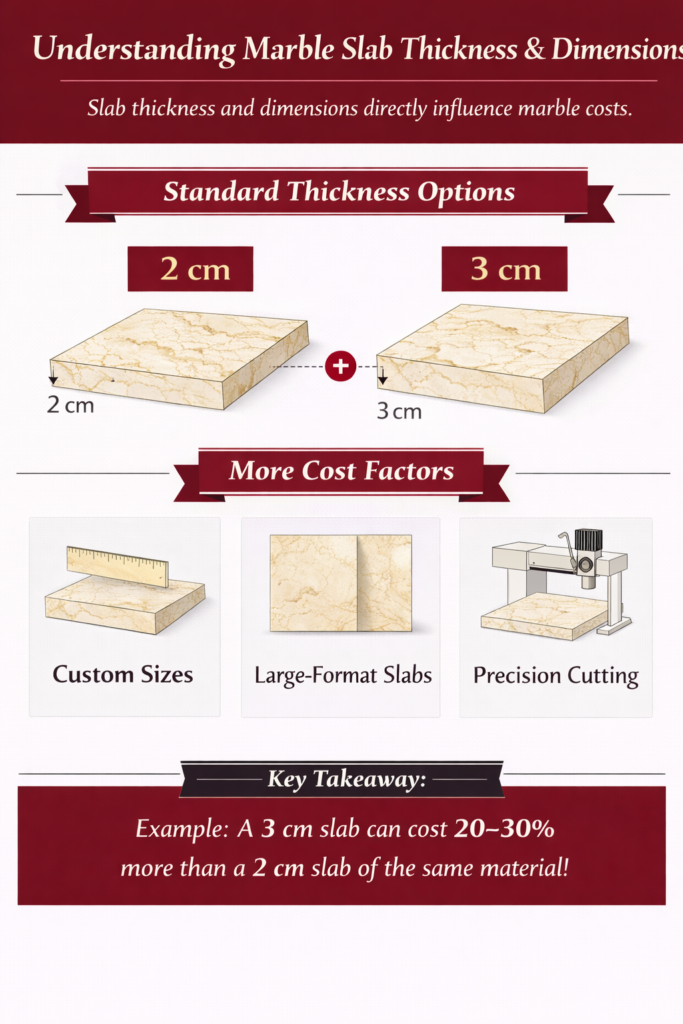
Marble is typically sold in standard thicknesses:
- 2 cm
- 3 cm
Thicker slabs require more raw material and processing, increasing the price per sqm.
Additionally:
- Custom sizes
- Large-format slabs
- Precision cutting
…all add to production costs.
Example: A 3 cm slab can cost 20–30% more than a 2 cm slab of the same material.
4. Finishing Type
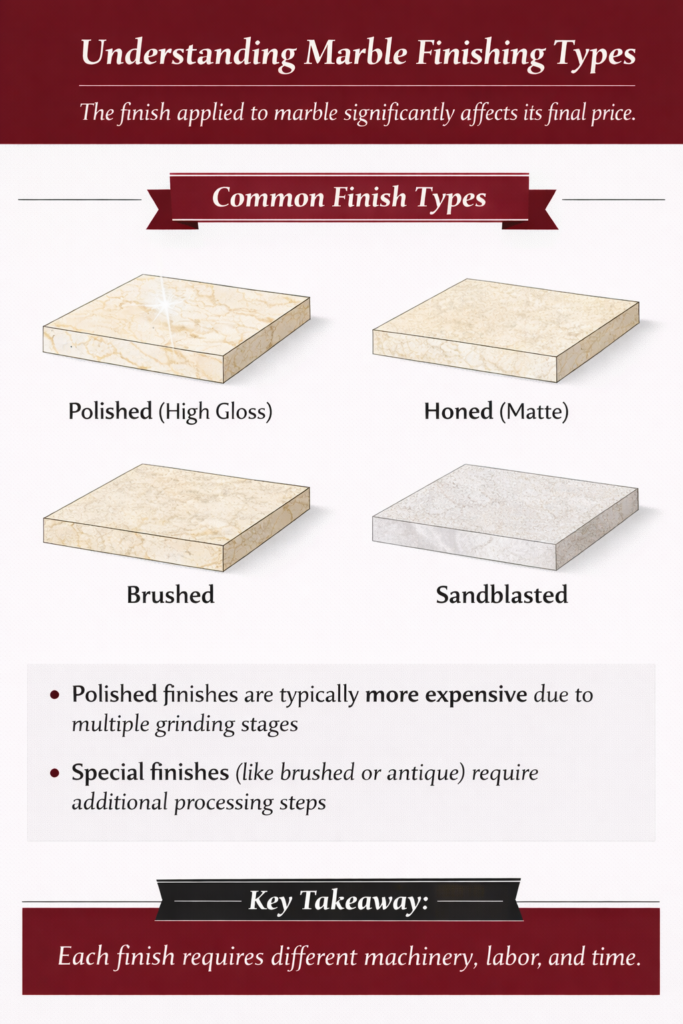
The finish applied to marble significantly affects its final price.
Common finishes include:
- Polished (high gloss)
- Honed (matte)
- Brushed
- Sandblasted
Each finish requires different machinery, labor, and time.
- Polished finishes are typically more expensive due to multiple grinding stages
- Special finishes (like brushed or antique) require additional processing steps
5. Cutting and Processing Costs
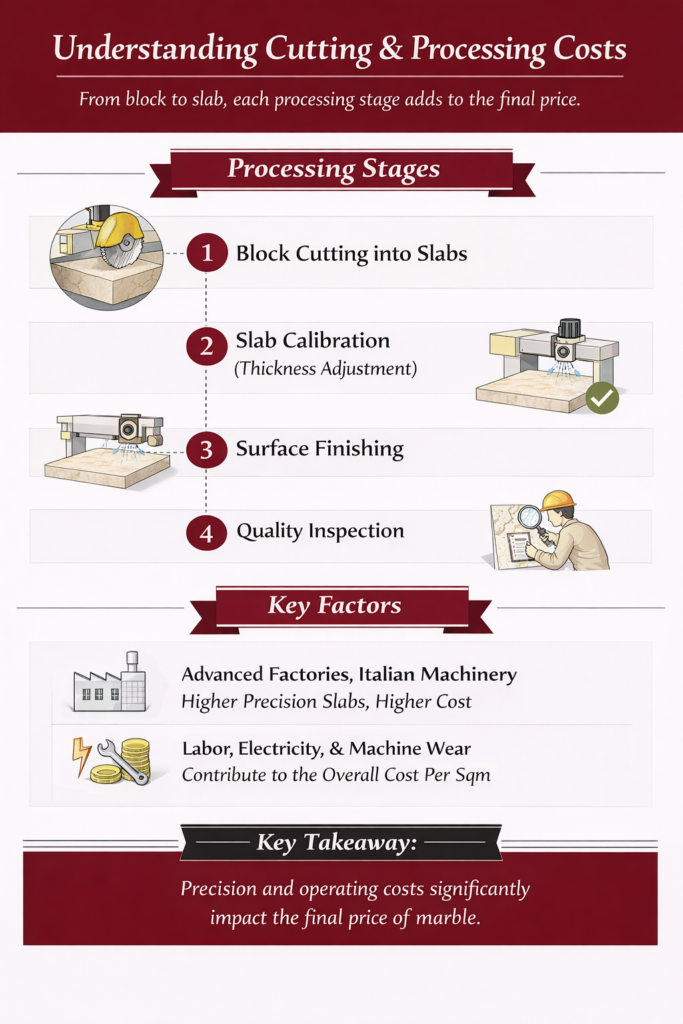
Once the block is extracted, it undergoes several stages:
- Block cutting into slabs
- Slab calibration (thickness adjustment)
- Surface finishing
- Quality inspection
Advanced factories with Italian machinery produce higher precision slabs—but at a higher cost.
Labor, electricity, and machine wear also contribute to the overall cost per sqm.
6. Waste Factor and Yield
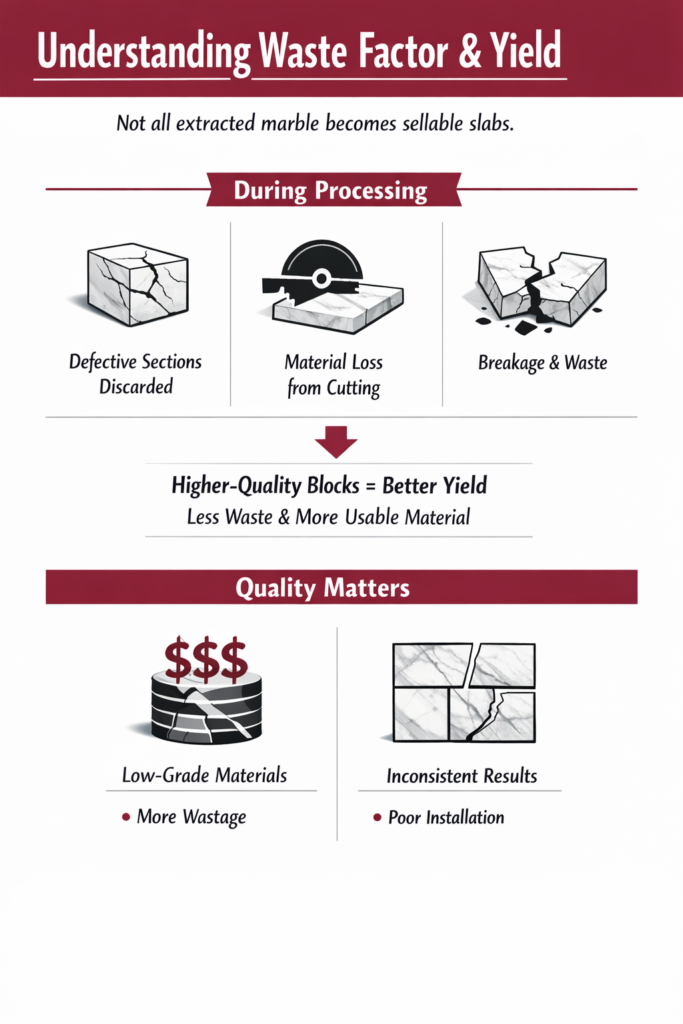
Not all extracted marble becomes sellable slabs.
During processing:
- Some parts are discarded due to defects
- Cutting results in material loss
- Breakage can occur
Higher-quality blocks have better yield, meaning less waste and more usable material this stabilizes pricing.
Lower-grade materials may seem cheaper initially but often result in:
- Higher wastage
- Inconsistent installation results
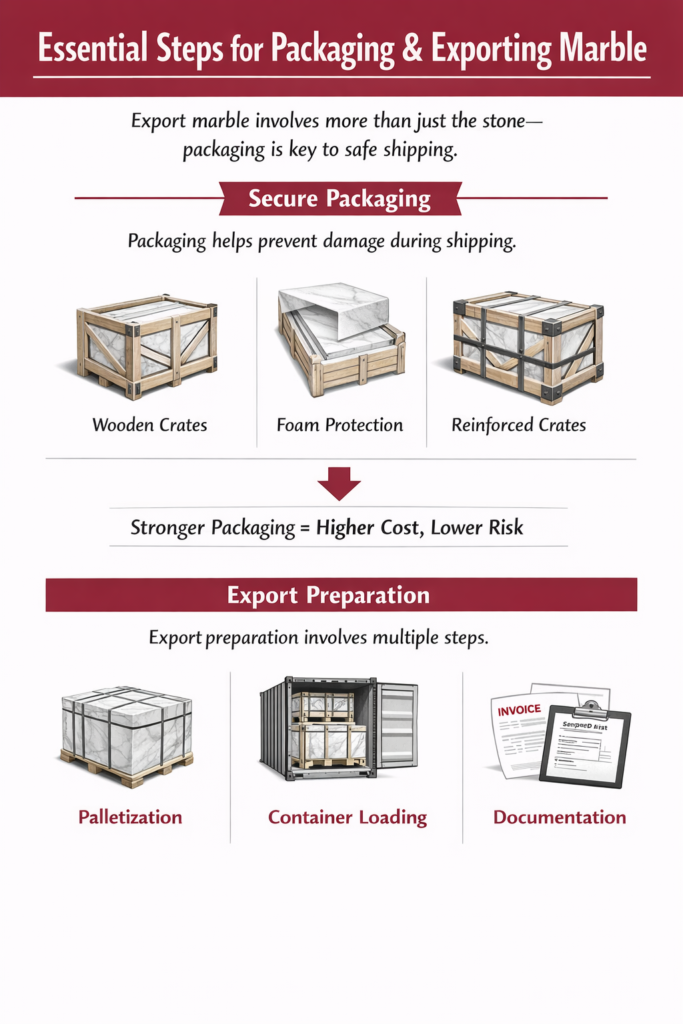
7. Packaging and Export Preparation
For international buyers, export marble cost breakdown includes more than just the stone itself.
Packaging is critical to prevent damage during shipping:
- Wooden crates
- Foam protection
- Reinforcement for slabs
Stronger packaging increases cost but reduces risk.
Export preparation also includes:
- Palletization
- Container loading
Documentation
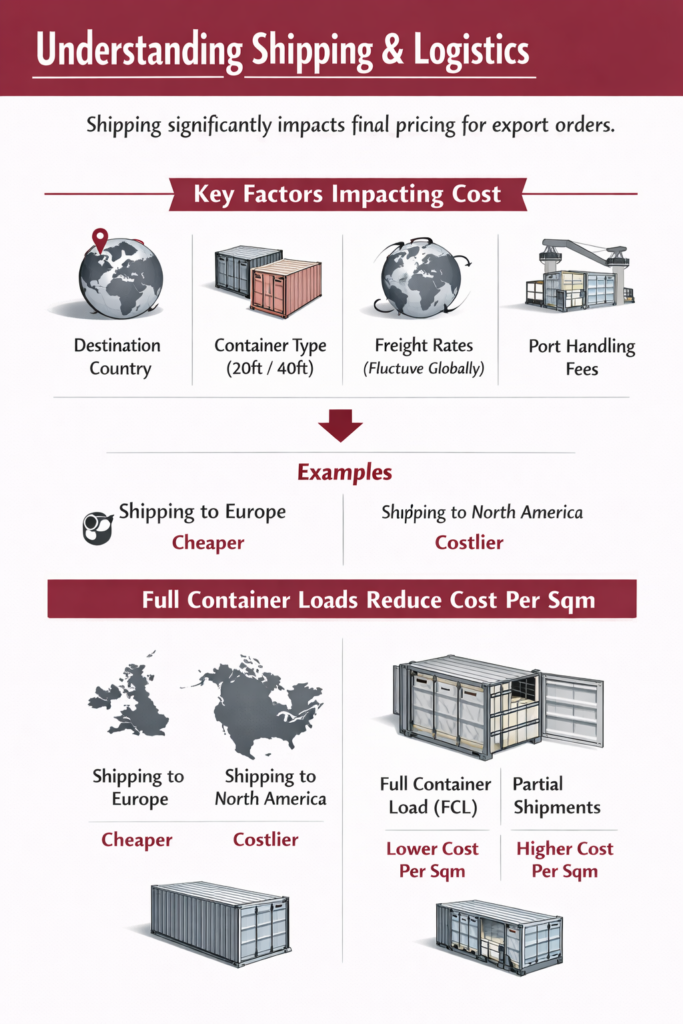
8. Shipping and Logistics
Shipping plays a major role in final pricing, especially for export orders.
Factors include:
- Destination country
- Container type (20ft / 40ft)
- Freight rates (which fluctuate globally)
- Port handling fees
For example:
- Shipping to Europe is typically cheaper than to North America
- Full container loads reduce cost per sqm compared to partial shipments
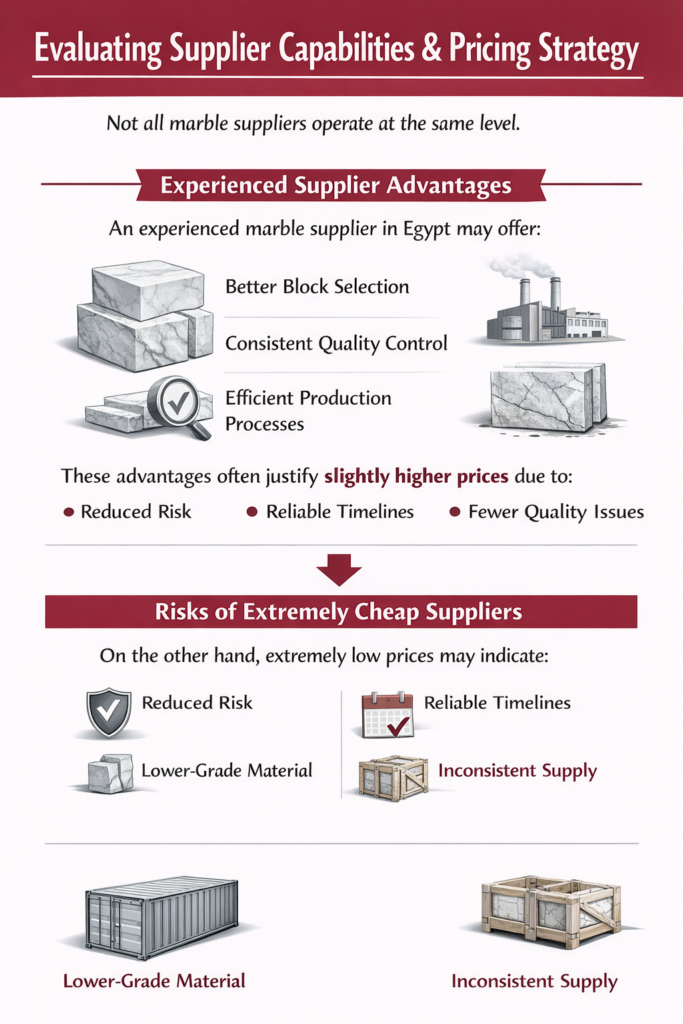
9. Supplier Capabilities and Pricing Strategy
Not all suppliers operate at the same level.
An experienced marble supplier in Egypt may offer:
- Better block selection
- More consistent quality control
- Efficient production processes
These advantages often justify slightly higher prices due to:
- Reduced risk
- Reliable timelines
- Fewer quality issues
On the other hand, extremely low prices may indicate:
- Lower-grade material
- Inconsistent supply
Hidden costs later
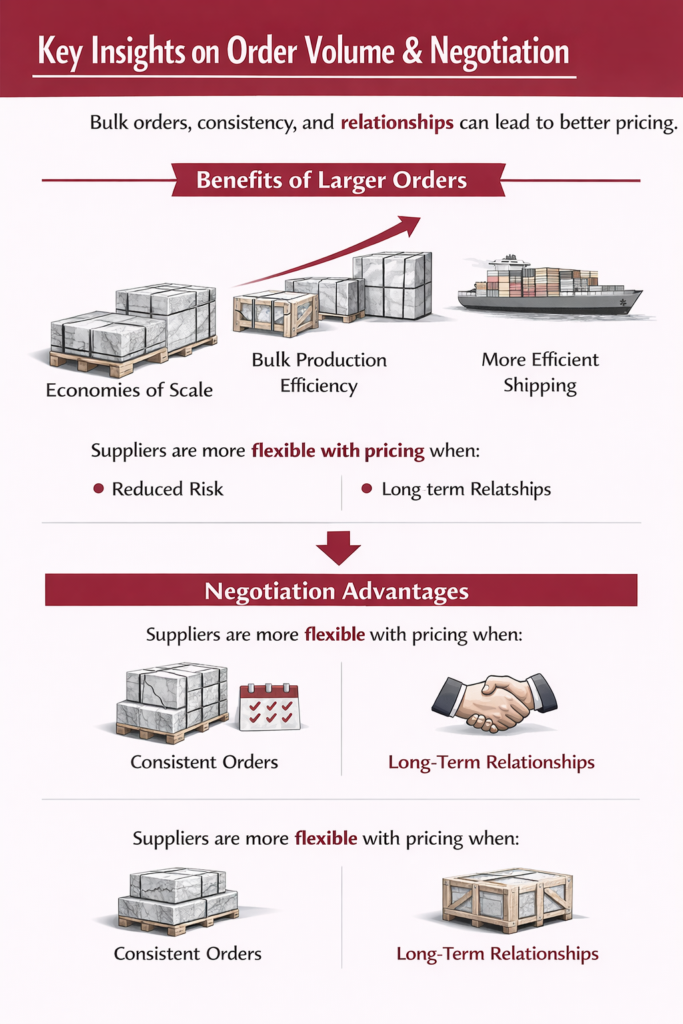
10. Order Volume and Negotiation
Volume directly impacts price per sqm.
- Large orders benefit from economies of scale
- Bulk production reduces per-unit processing cost
- Shipping becomes more efficient
Suppliers are more flexible with pricing when:
- Orders are consistent
- Long-term relationships are established
Why Transparency in Pricing Matters
Many buyers focus only on the initial quote, but experienced importers look deeper.
Transparent pricing helps you:
- Compare suppliers accurately
- Understand trade-offs between quality and cost
- Avoid hidden expenses
A trustworthy supplier should be able to clearly explain:
- What grade you’re getting
- What’s included in the price
- What could increase costs later
How to Evaluate the Right Marble Supplier
When choosing a supplier, don’t base your decision on price alone. Evaluate:
- Product consistency
- Factory capabilities
- Export experience
- Communication clarity
Ask for:
- Slab photos/videos
- Previous export references
- Detailed quotations
The goal is to minimize risk not just cost.
Conclusion
Marble pricing is not arbitrary it’s a reflection of material quality, processing complexity, and logistical factors.
Understanding what determines the marble price per sqm in Egypt gives you a strategic advantage. Instead of chasing the lowest quote, you can make informed decisions that balance cost, quality, and long-term value.
In international trade, especially with natural stone, transparency builds trust—and trust leads to better business outcomes.
If you’re sourcing marble for your next project, focus on clarity, consistency, and supplier reliability. That’s where real cost efficiency begins.