
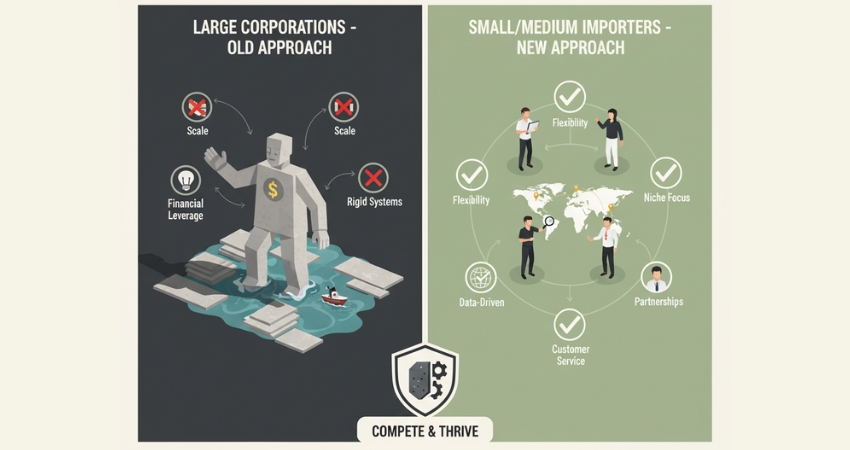
Marble and Granite Import Strategy In the natural stone trade, large corporations often dominate with scale, financial leverage, and brand presence. Yet across markets from the U.S. to Europe and the Middle East small and medium importers continue to thrive by being more adaptive, strategic, and relationship-driven. Competing with the giants isn’t about matching their volume; it’s about leveraging flexibility, precision, and insight where size becomes a disadvantage.
This article explores eight core areas where smaller importers can compete effectively and even outperform larger players when sourcing and distributing marble and granite internationally.
Strategic Positioning and Niche Focus
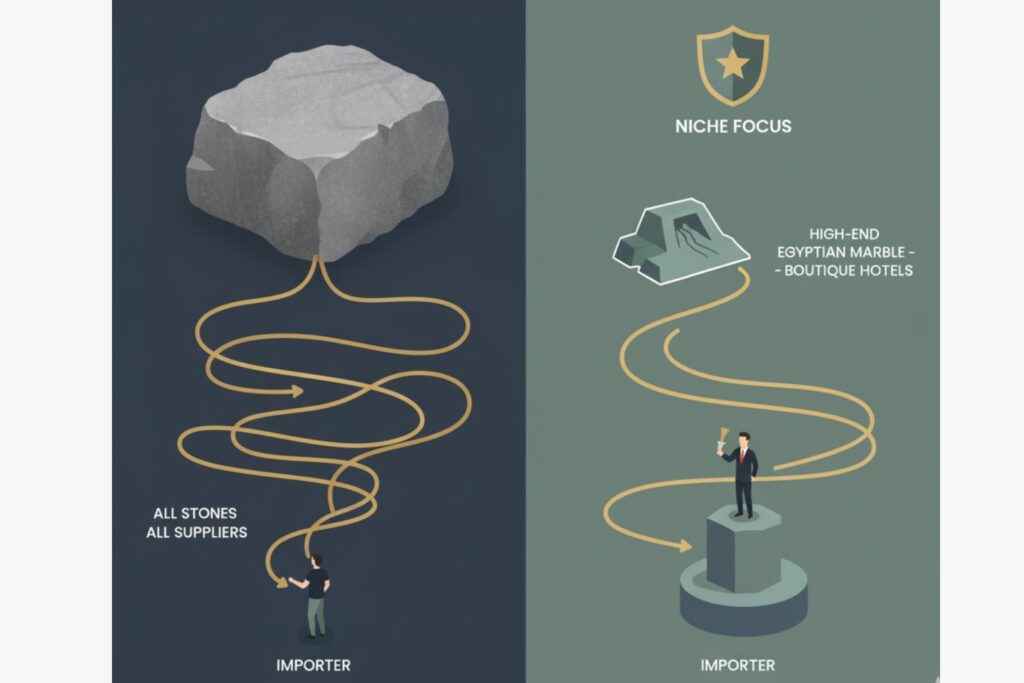
The first step for any smaller importer is defining a focused nicheis the foundation of any successful Marble and Granite Import Strategy . Giants win on volume, but small players win on specialization. Instead of trying to supply every stone from every quarry, smart importers focus on a specific strength such as high-end Egyptian marble for luxury projects, or pre-cut granite slabs for fabricators.
A clear niche builds authority and brand equity. It also makes your logistics, pricing, and client targeting far more efficient. For example, a company specializing in “cut-to-size marble for boutique hotels” can tailor its packaging, quality control, and even marketing to that audience, reducing waste and increasing margins.
Agile Supply Chain
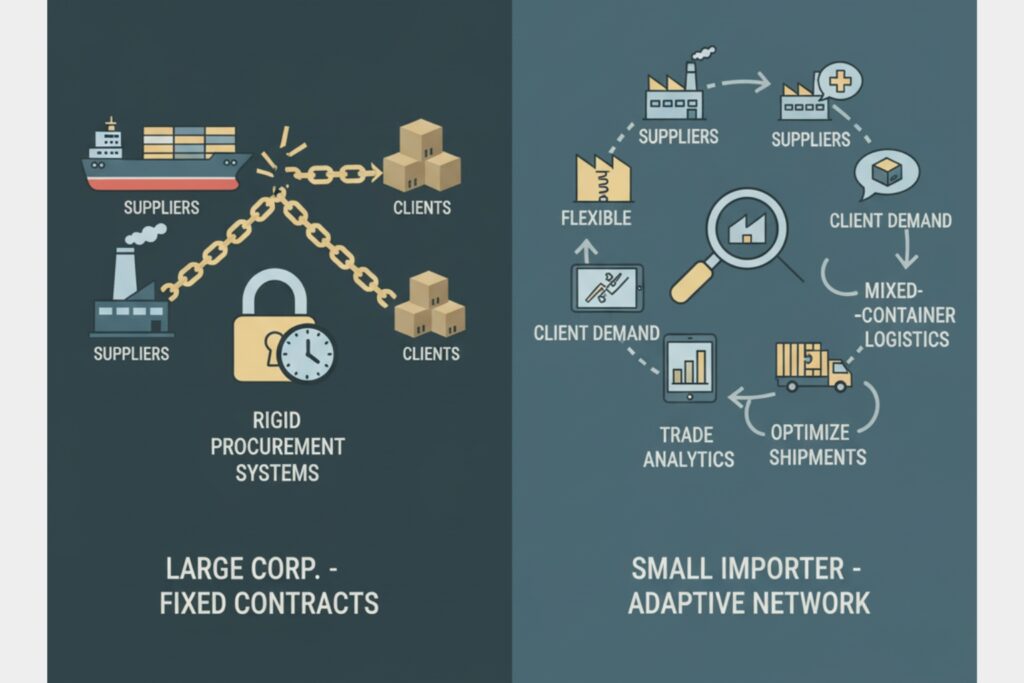
Large corporations often operate with rigid procurement systems and fixed vendor contracts. Small importers, however, can pivot faster switching suppliers, adjusting order quantities, or experimenting with new stone finishes based on client demand.
By working closely with flexible and transparent exporters, smaller companies can create responsive supply chains. Instead of waiting for market shifts, they can move with them.
Agility also extends to logistics. A small importer that optimizes mixed container loads or consolidates shipments with a trusted exporter can cut shipping costs significantly. That adaptability is a competitive edge that big companies often can’t replicate due to their scale and bureaucracy.
Data Driven Decisions For An Effective Marble and Granite Import Strategy
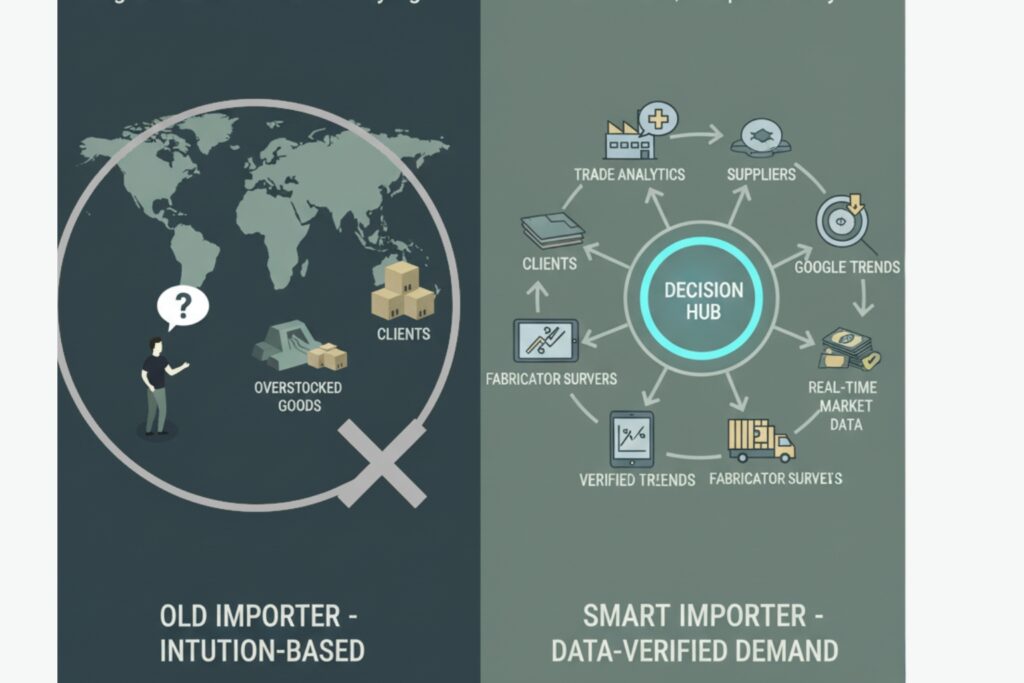
In today’s market, intuition is valuable but data wins deals. Small importers can use market insights, import data, and local trend monitoring to identify which materials are gaining traction (for example, beige tones in Europe or leather-finished granites in the U.S.).
Tools like trade analytics, Google Trends, or even simple surveys from fabricators can inform smarter purchasing decisions. This reduces overstocking, limits capital lock-up, and allows for more precise marketing.
A data driven importer doesn’t just buy stone; they buy based on verified demand.
Customer Centric Service
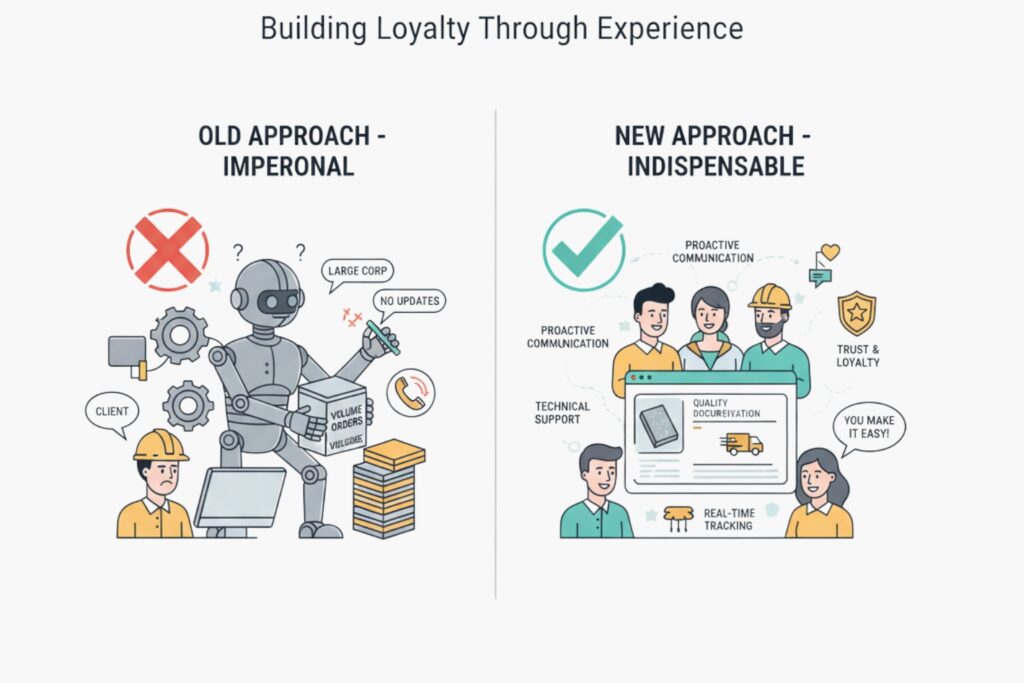
Giants struggle with personalization. Their systems are optimized for volume, not for care. Smaller importers can win by focusing on the experience of their B2B clients—builders, retailers, or fabricators.
That means proactive communication, clear documentation, real time shipment updates, and technical support about stone performance and installation.
In a market where delays and miscommunication can cost thousands, reliability and transparency often matter more than price. When you make your client’s life easier, you become indispensable.
Collaboration Instead of Competition
Many small importers try to compete head on with large corporations but collaboration can be more profitable. By forming strategic partnerships with trusted exporters, distributors, or even local installers, they can share risk and scale more sustainably.
For example, two importers from different regions could pool shipments from the same supplier, lowering container costs. Or an importer could partner with a quarry to gain exclusive access to a specific material.
Partnerships create leverage without massive investment. In a fragmented industry like stone, alliances often outperform solo efforts.
Risk Management and Cash Flow Flexibility
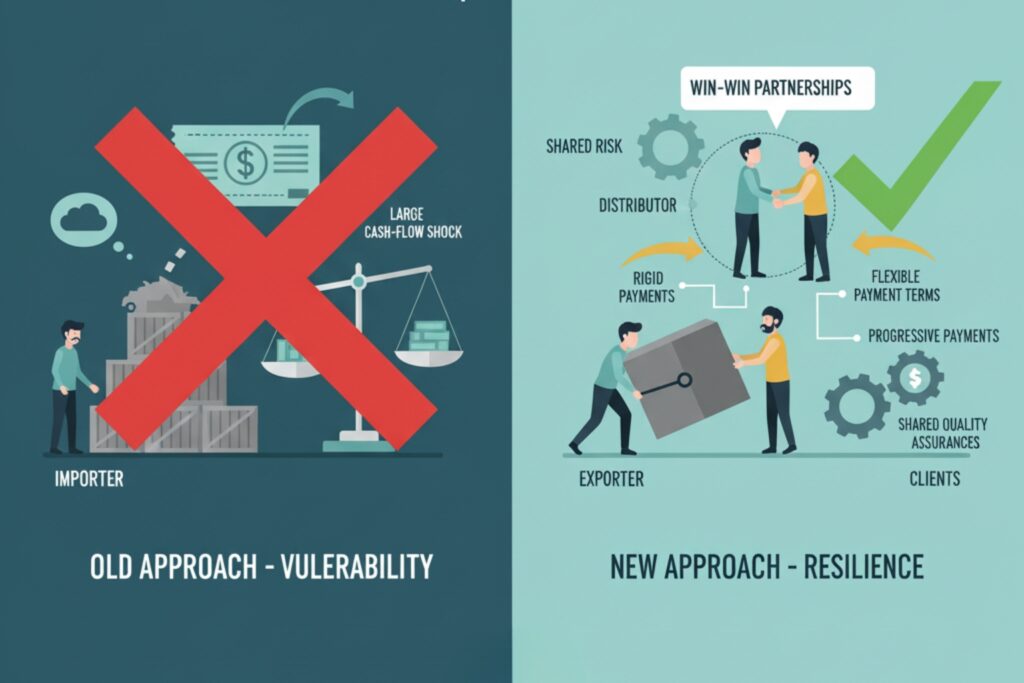
Effective Marble and Granite Import Strategy requires strong financial planning. Unlike big corporations, smaller importers can’t afford large cash flow shocks. Managing financial risk starts with smarter supplier relationships and payment terms.
Working with exporters who offer flexible order sizes, progressive payment structures, or shared quality assurance systems can prevent liquidity stress.
Additionally, diversifying client types mixing small fabricators with project-based buyers helps stabilize revenue streams. One delayed project won’t disrupt your entire operation.
Cash flow flexibility is what keeps a small importer alive during market turbulence and it starts with choosing partners who understand the realities of your scale.

Brand Trust and Market Storytelling
In an industry built on materials, trust is the ultimate currency. Small and medium importers can differentiate themselves by telling their story authentically why they source from certain quarries, how they inspect quality, or how their process ensures consistent color and finish.
Buyers remember brands that communicate purpose and reliability. A strong brand story can close deals faster than a price list can.
Over time, consistent storytelling positions a small importer as a specialist, not just a supplier.
Technology and Process Scalability In Marble and Granite Import Strategy
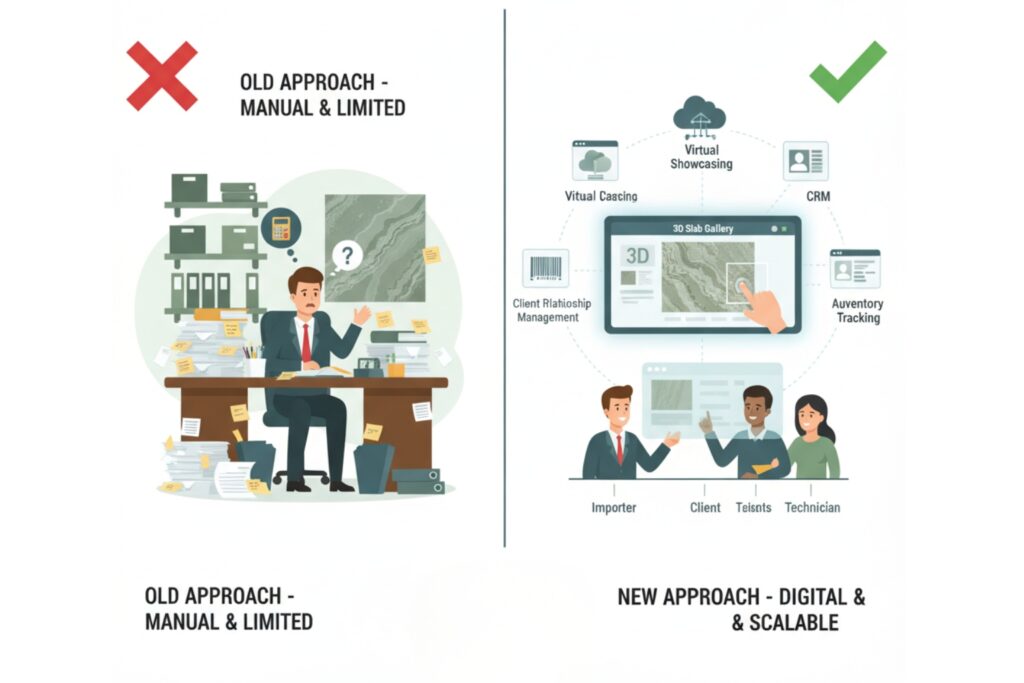
Scalability isn’t about buying more containers it’s about replicating success efficiently. Small importers can leverage digital tools for inventory tracking, client relationship management, and virtual slab showcasing.
Imagine being able to offer a 3D gallery of your slabs online, where clients can zoom into textures before ordering. Or using CRM software to follow up with every lead systematically.
When systems scale, your team doesn’t have to. That’s how small companies compete sustainably with the giants.
conclusion
Competing with major importers doesn’t mean becoming one. It means thinking differently, acting faster, and building smarter networks.
Small and medium importers who position themselves as specialized, data-informed, customer-obsessed, and financially agile can outperform industry giants not in size, but in strength of execution.
But success in this strategy depends on collaboration. To implement these principles, importers need suppliers who don’t just ship stone but share their business vision.
Partnering with a reliable, flexible exporter who understands your market challenges can unlock the scalability, cash flow stability, and product consistency you need to grow.
When your supply chain is built on trust and shared goals, every container becomes more than a shipment it it becomes a Marble and Granite Import Strategy for growth.