

Marble and granite shipments are critical to exporters. Every day, marble and granite exporters lose time and money due to preventable shipment delays. Whether it’s a busy quarry, slow logistics, or last-minute quality issues, these bottlenecks can disrupt cashflow, frustrate clients, and damage reputations. If you’ve ever faced delayed deliveries, you know the domino effect it can createlate projects, dissatisfied customers, and lost revenue.
The good news is that most of these delays are avoidable. By understanding the operational hurdles that slow down shipments and implementing practical solutions, you can streamline your workflow, improve efficiency, and deliver your products on time every time.
In this post, we’ll explore the seven most common bottlenecks in marble and granite shipments, explain why they occur, and provide actionable strategies to eliminate them. By the end, you’ll have a clear roadmap to optimize your operations, reduce delays, and increase both customer satisfaction and profitability.
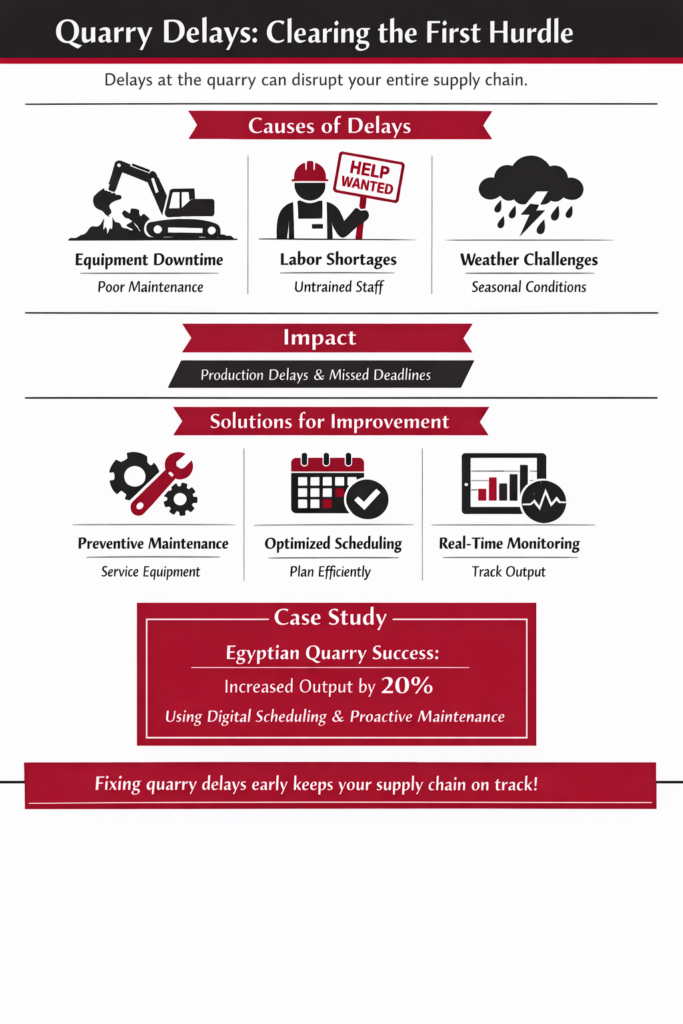
1. Marble and Granite Shipments Delayed by Quarry Extraction
The journey of marble and granite begins at the quarry, and delays here can ripple throughout your entire supply chain.
Causes:
- Equipment downtime due to poor maintenance
- Labor shortages or untrained staff
- Seasonal weather challenges that make extraction difficult
Impact: Even minor delays in quarry extraction can push back the entire production schedule, causing late deliveries and missed contracts.
Solutions:
- Preventive Maintenance: Regularly service machinery to prevent breakdowns.
- Optimized Scheduling: Plan extraction schedules around seasonal and labor constraints.
- Real-Time Monitoring: Use digital tools to track quarry output and identify potential delays early.
Mini-case study: One quarry in Egypt improved output by 20% by implementing a digital scheduling system and proactive equipment maintenance, drastically reducing delivery delays to clients.
By addressing these issues at the source, exporters can prevent delays before they reach the production floor.
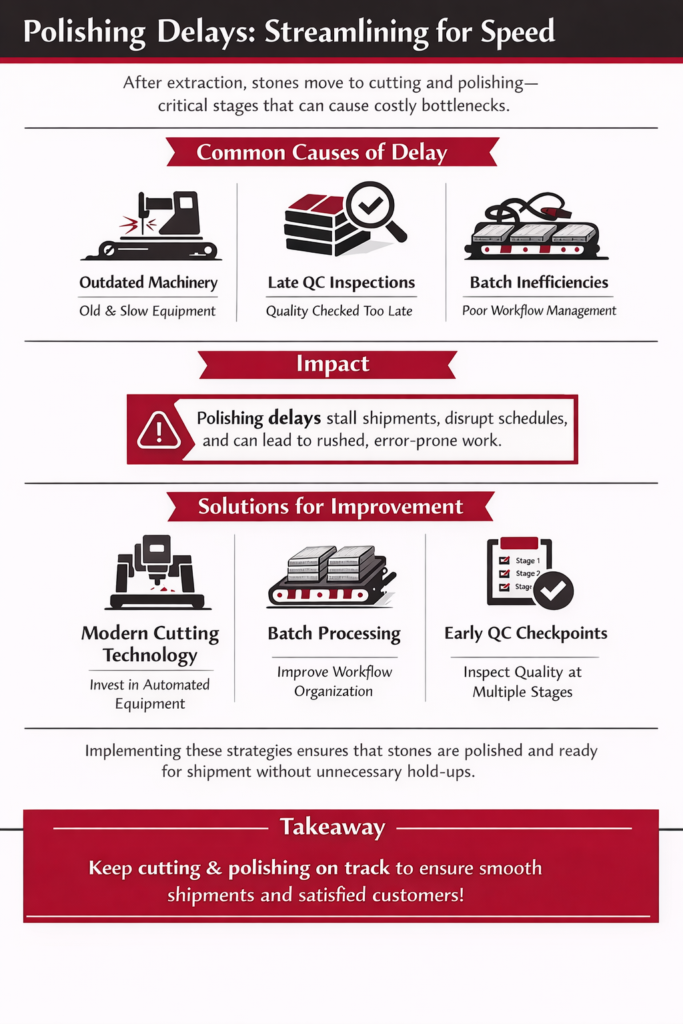
2. Cutting and Polishing Inefficiencies: Polishing Problems That Stall Shipments
After extraction, stones move to cutting and polishing another critical stage prone to delays.
Common Causes of Delay:
- Bottlenecks in cutting or finishing due to outdated machinery
- QC inspections occurring too late in the process
- Inefficient batch processing
Impact: Late polishing delays shipments, disrupts production schedules, and can lead to rushed work, increasing the risk of errors.
Solutions:
- Modern Cutting Technology: Invest in automated cutting machines to speed up processing.
- Batch Processing: Organize stones into manageable batches to prevent workflow pileups.
- Early QC Checkpoints: Conduct quality inspections at multiple stages instead of waiting until the end.
Implementing these strategies ensures that stones are polished and ready for shipment without unnecessary hold-ups.
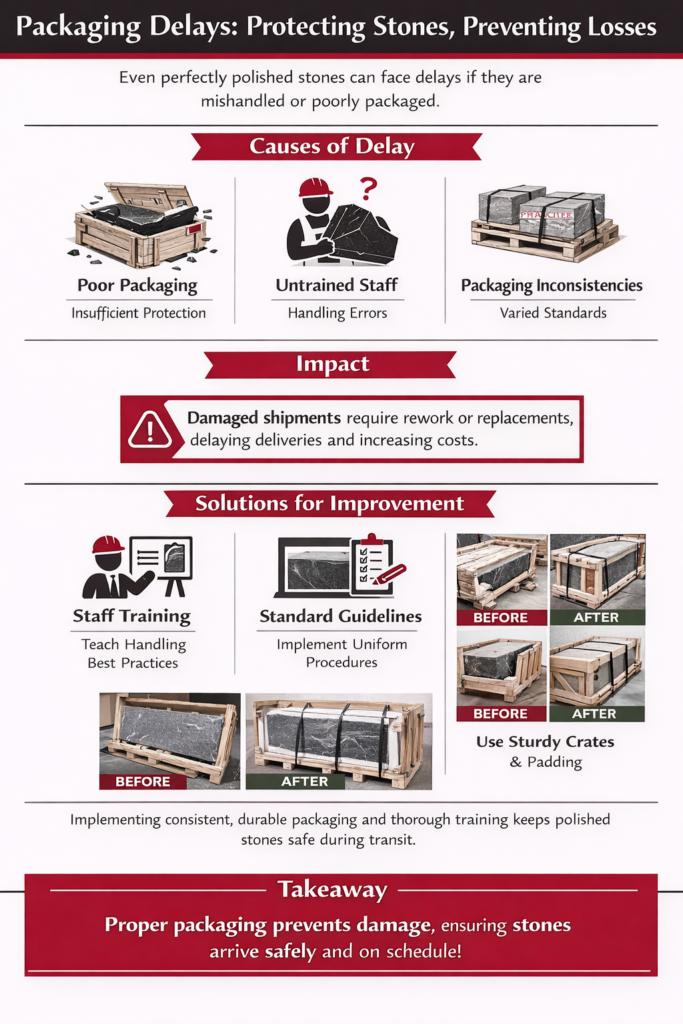
3. Packaging & Handling Mistakes: Packaging Errors That Cost Time and Money
Even perfectly polished stones can face delays if they are mishandled or poorly packaged.
Causes of Delay:
- Incorrect or inadequate packaging causing damage
- Staff not trained in handling fragile stone slabs
- Inconsistent packaging standards across shipments
Impact: Damaged shipments require rework or replacements, delaying deliveries and increasing costs.
Solutions:
- Staff Training: Ensure all personnel know best practices for handling and packing stone.
- Standard Guidelines: Implement uniform packaging procedures across the organization.
- Durable Materials: Use crates, foam padding, and strapping appropriate for heavy stone slabs.
Visual suggestion: Before-and-after photos showing improved packaging methods can make this section more engaging.
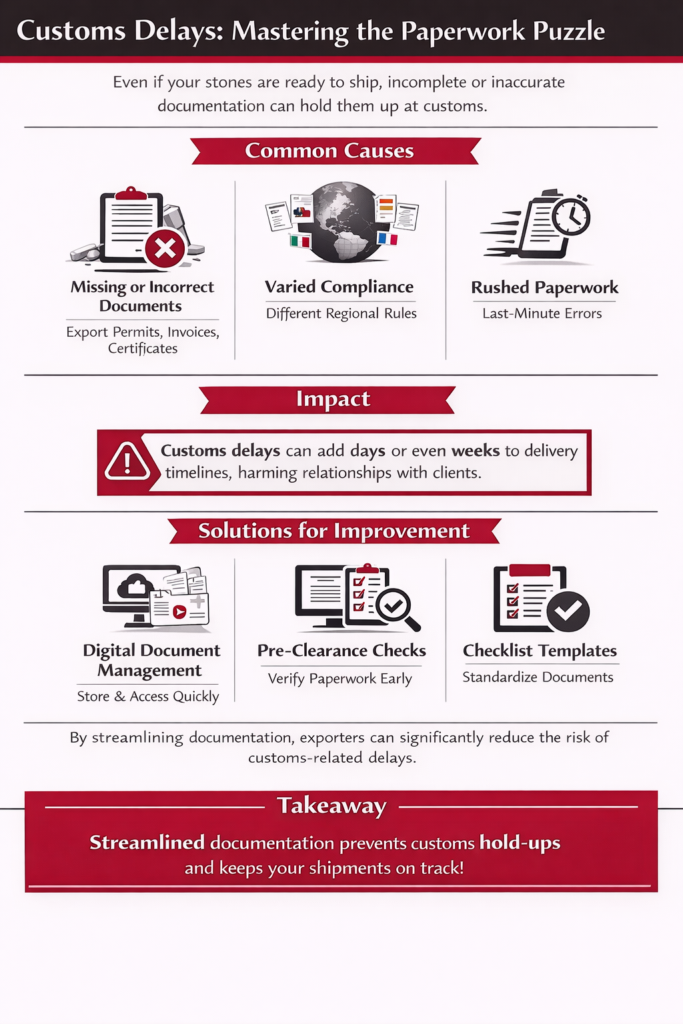
4. Documentation and Compliance Delays: Customs Paperwork The Silent Time Thief
Even if your stones are ready to ship, incomplete or inaccurate documentation can hold them up at customs.
Common Causes:
- Missing or incorrect export permits, invoices, or certificates of origin
- Differences in compliance requirements across regions
- Last-minute paperwork errors
Impact: Delays at customs can add days or even weeks to delivery timelines, harming relationships with clients.
Solutions:
- Digital Document Management: Store all documents in a secure, cloud-based system for quick access.
- Pre-Clearance Checks: Verify paperwork before the shipment leaves the warehouse.
- Checklist Templates: Use standardized templates for invoices, packing lists, and certificates to prevent mistakes.
By streamlining documentation, exporters can significantly reduce the risk of customs-related delays.
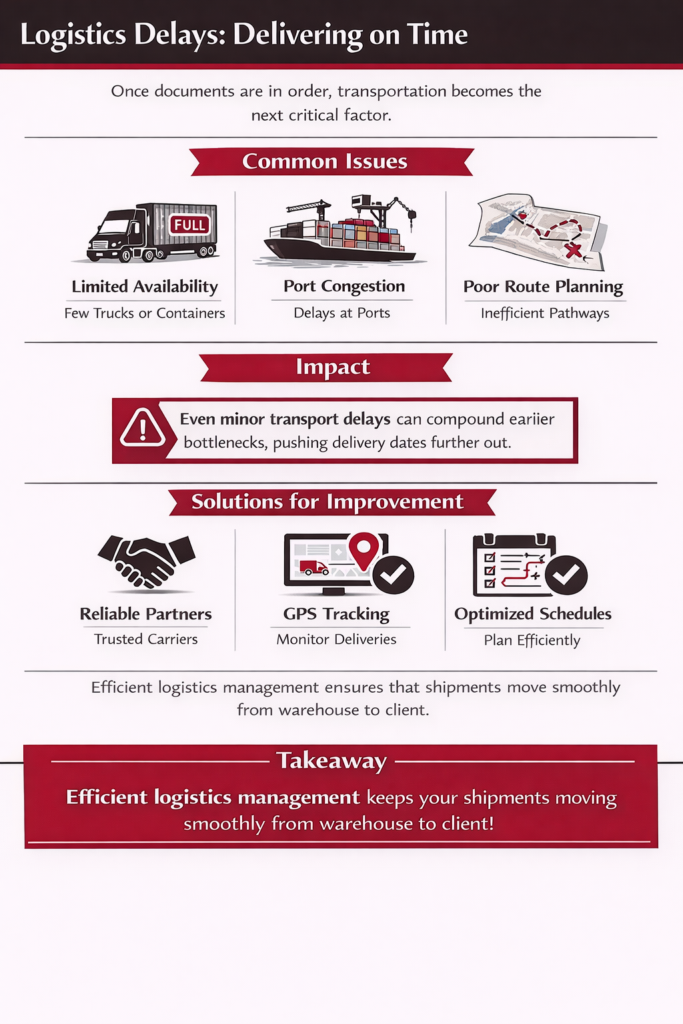
5. Transportation and Logistics Challenges: Logistics Bottlenecks That Stall Delivery
Once documents are in order, transportation becomes the next critical factor.
Common Issues:
- Limited truck or shipping container availability
- Port congestion or delays in loading/unloading
- Poorly planned shipping routes
Impact: Even minor transport delays can compound earlier bottlenecks, pushing delivery dates further out.
Solutions:
- Reliable Partners: Work with trusted carriers and shipping companies.
- GPS Tracking: Monitor shipments in real-time to anticipate delays.
- Optimized Schedules: Plan routes to avoid peak traffic or congestion at ports.
Efficient logistics management ensures that shipments move smoothly from warehouse to client.
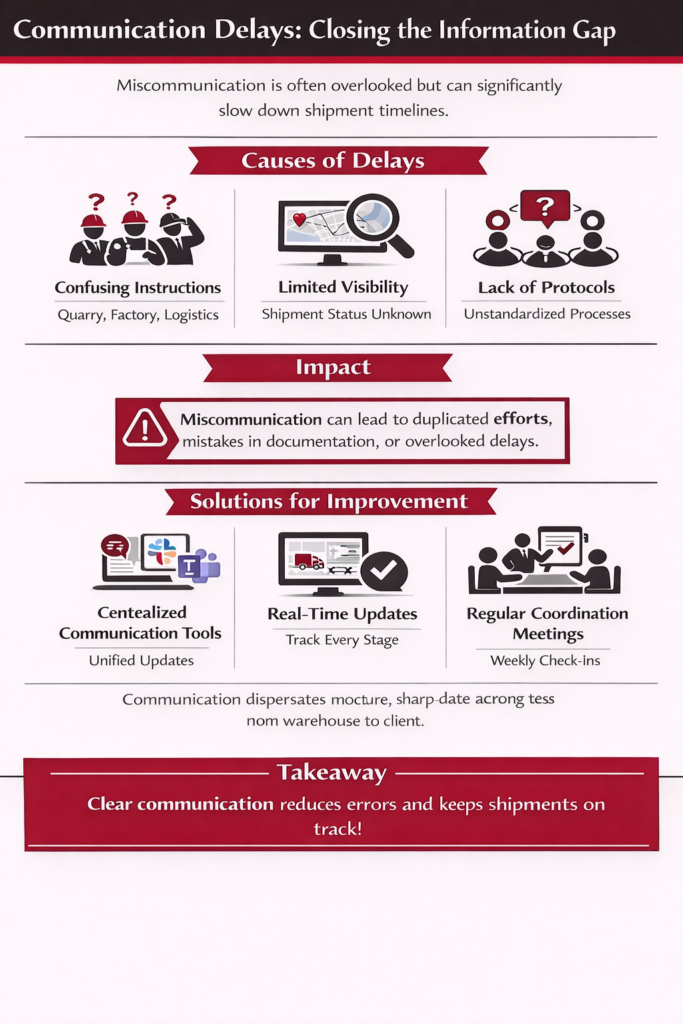
6. Communication Gaps: Miscommunication Across Teams and Partners
Miscommunication is often overlooked but can significantly slow down shipment timelines.
Causes:
- Confusing or delayed instructions between quarry, factory, and logistics teams
- Lack of visibility into shipment status for all stakeholders
- No standardized communication protocols
Impact: Miscommunication can lead to duplicated efforts, mistakes in documentation, or overlooked delays.
Solutions:
- Centralized Communication Tools: Use platforms like Slack or Microsoft Teams for all shipment-related updates.
- Real-Time Updates: Ensure stakeholders have visibility into every stage of the process.
- Regular Coordination Meetings: Weekly check-ins can prevent misalignment across teams.
Clear communication reduces errors and keeps shipments on track.
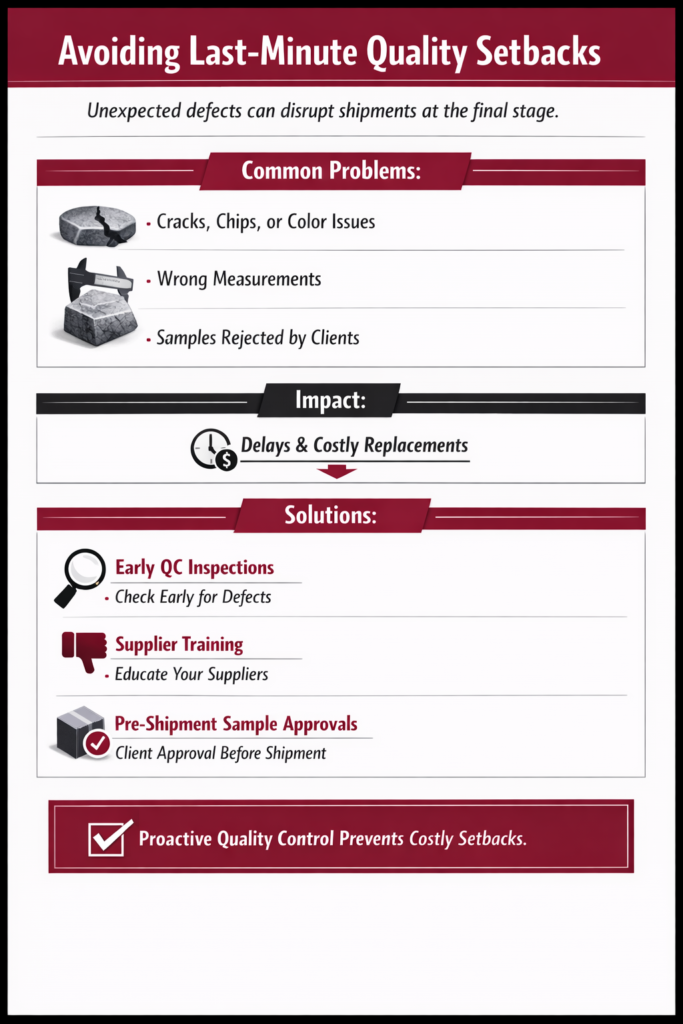
7. Unexpected Quality Issues: Defects and Rejections Last Minute Setbacks
Even with proper extraction, polishing, packaging, and documentation, quality issues can arise unexpectedly.
Common Problems:
- Cracks, chips, or color inconsistencies discovered just before shipment
- Stone measurements not matching client specifications
- Samples rejected by clients
Impact: Last-minute QC issues can delay shipments and result in costly replacements.
Solutions:
- Early QC Inspections: Identify defects as soon as possible in the production process.
- Supplier Training: Ensure quarries and suppliers understand your quality standards.
- Pre-Shipment Sample Approvals: Send sample stones to clients for confirmation before full shipment.
Proactive quality control prevents costly setbacks and preserves client trust.
Conclusion
Delays in marble and granite shipments don’t have to be inevitable. By addressing quarry extraction, polishing inefficiencies, packaging mistakes, documentation errors, transportation challenges, communication gaps, and unexpected quality issues, exporters can dramatically improve operational efficiency.
Actionable Takeaways:
- Implement preventive maintenance and scheduling at quarries
- Adopt modern cutting and polishing technology
- Standardize packaging and handling practices
- Digitize documentation for faster customs clearance
- Partner with reliable logistics providers
- Ensure clear, centralized communication
- Conduct early quality inspections
Call-to-Action: Which bottleneck is slowing your shipments the most? Share your experiences in the comments below. For a complete guide, download our free flowchart and checklist summarizing the 7 bottlenecks and practical solutions.
Optimizing these operational areas not only reduces delays but also increases client satisfaction, strengthens your reputation, and ultimately boosts revenue.
Recomended : Steps To Develop Your Export Plan