Risk Management for Stone Importers has become a strategic necessity in today’s volatile geopolitical environment. The ongoing escalation involving Iran, Israel, and the United States has introduced renewed instability across global trade networks. While ports remain operational and commerce continues, indirect consequences are already affecting freight pricing, marine insurance structures, energy markets, and delivery predictability.
For marble and granite importers, these developments directly influence landed costs, supply continuity, and project profitability. Stone is a freight-sensitive commodity, and even moderate logistics disruption can compress margins rapidly..
Geopolitical Escalation and Strategic Maritime Routes
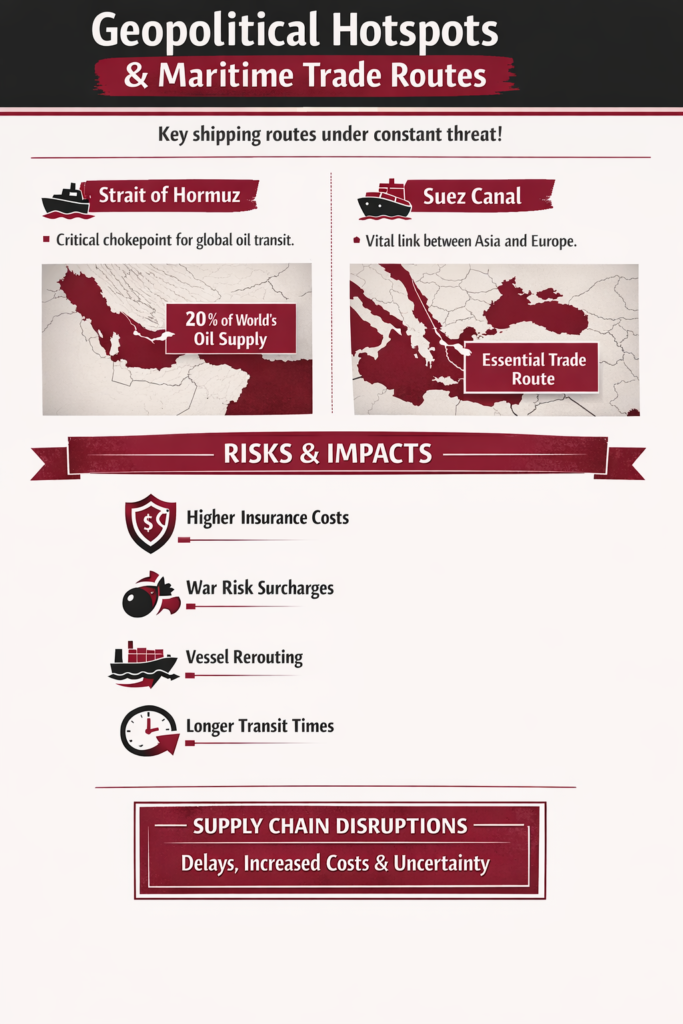
Global trade is highly dependent on maritime corridors located in politically sensitive regions. Two routes are particularly critical:
- Strait of Hormuz
- Suez Canal
The Strait of Hormuz facilitates a significant share of global oil transit. Any perceived threat to this corridor immediately affects oil prices, bunker fuel costs, and freight pricing models.
The Suez Canal connects Asia and the Middle East to Europe. For European stone importers sourcing from Egypt, Turkey, India, or Gulf countries, this corridor is essential. Even without closure, elevated security risk can lead to:
- Increased marine insurance premiums
- War risk surcharges
- Vessel rerouting
- Extended transit times
These operational adjustments create friction across the supply chain.
How the Conflict Impacts Global Shipping
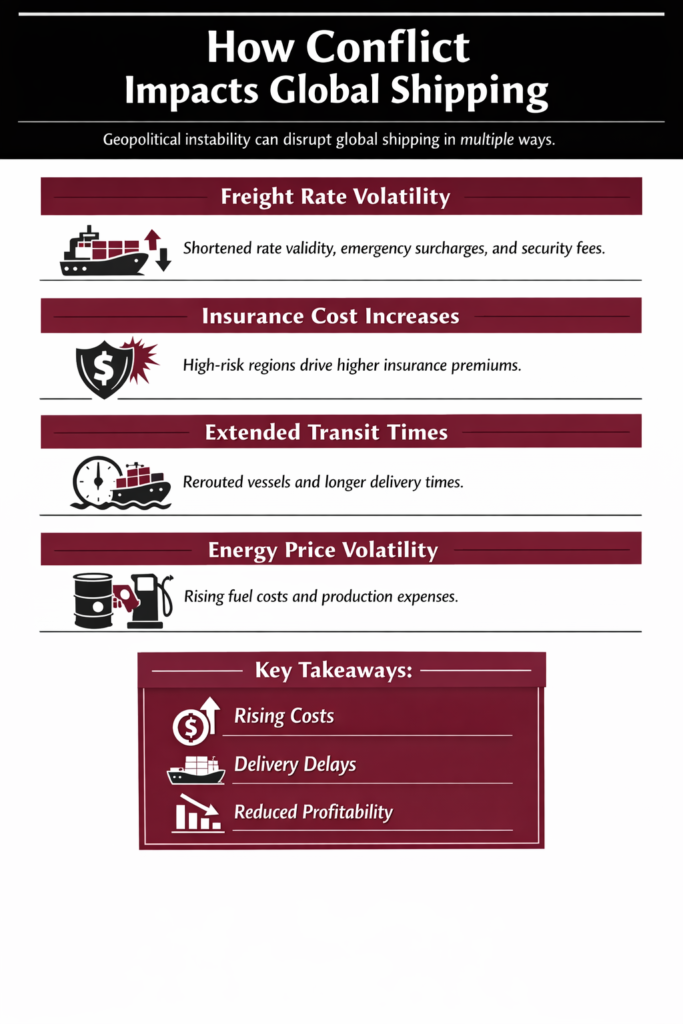
Freight Rate Volatility
Shipping lines respond rapidly to geopolitical risk. Even temporary instability can result in:
- Shortened freight rate validity
- Emergency fuel surcharges
- Additional security-related fees
For importers operating under CIF terms, freight fluctuations are embedded in supplier quotations, reducing transparency and increasing exposure.
Insurance Cost Increases
During military escalation, insurers reassess route risk classifications. When a region is labeled high-risk, premiums increase accordingly.
For stone importers, higher marine insurance directly increases landed cost per container, affecting overall profitability.
Extended Transit Times
To minimize exposure, carriers may adjust sailing schedules or reroute vessels. In extreme cases, ships avoid high-risk corridors entirely.
Longer transit times affect:
- Inventory turnover
- Project scheduling
- Cash flow cycles
In construction-driven industries, delayed material arrival can disrupt installation phases and create financial penalties.
Energy Price Volatility
Geopolitical tension in energy-producing regions often causes oil and gas price fluctuations. These changes influence:
- Bunker fuel prices
- Inland trucking costs
- Factory production expenses at origin
Because marble and granite production involves energy-intensive quarrying, cutting, and polishing, cost increases at origin eventually affect export pricing.
Direct Implications for Marble and Granite Importers
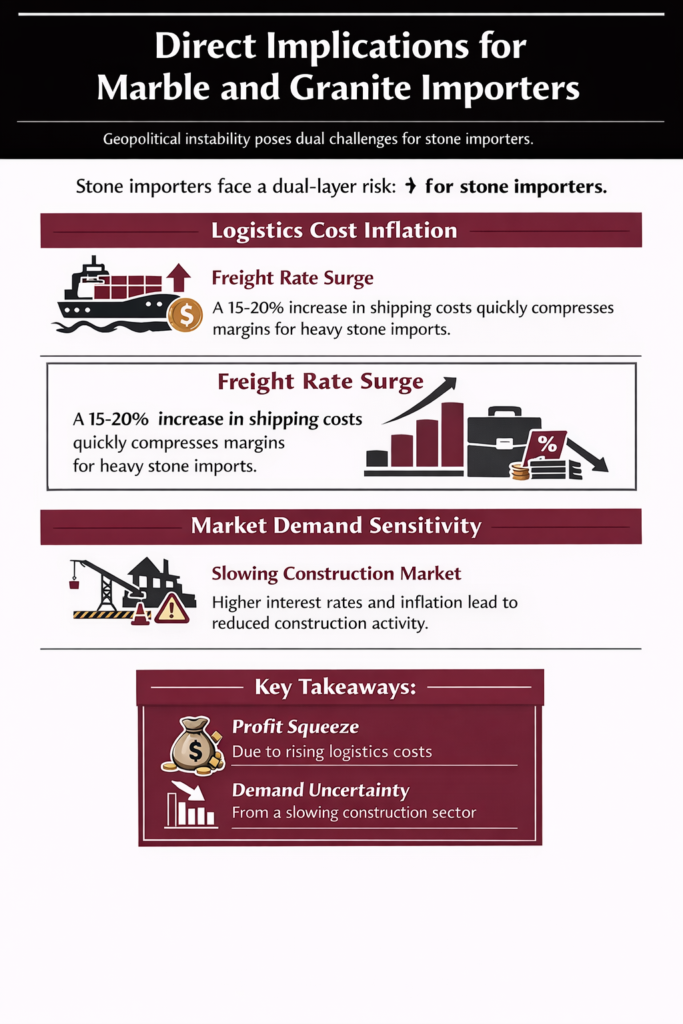
Stone importers face a dual-layer risk:
- Logistics cost inflation
- Market demand sensitivity
Freight represents a significant share of total landed cost for heavy materials. When freight rates increase by even 15 to 20 percent, margin compression becomes immediate unless pricing adjustments are implemented.
At the same time, geopolitical instability can slow construction markets due to higher financing costs and inflationary pressure. This combination creates both cost-side and demand-side challenges.
Risk Management for Stone Importers in Times of Geopolitical Instability
In a volatile geopolitical environment, structured risk mitigation is essential. The following strategies provide a practical framework for protecting margins and maintaining supply continuity.
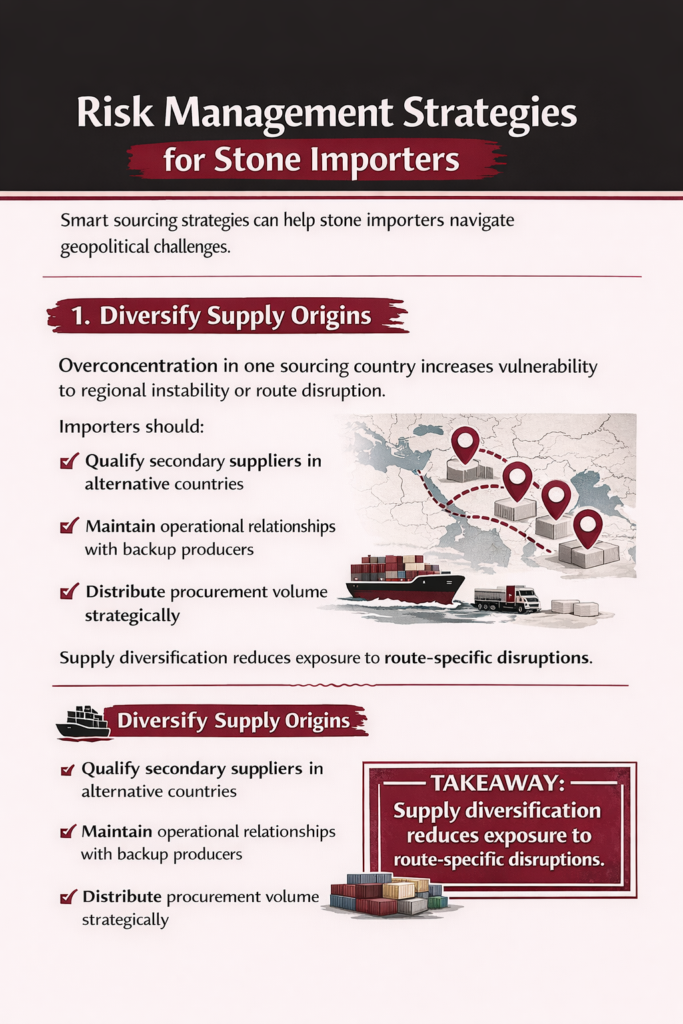
1. Diversify Supply Origins
Overconcentration in one sourcing country increases vulnerability to regional instability or route disruption.
Importers should:
- Qualify secondary suppliers in alternative countries
- Maintain operational relationships with backup producers
- Distribute procurement volume strategically
Supply diversification reduces exposure to route-specific disruptions.
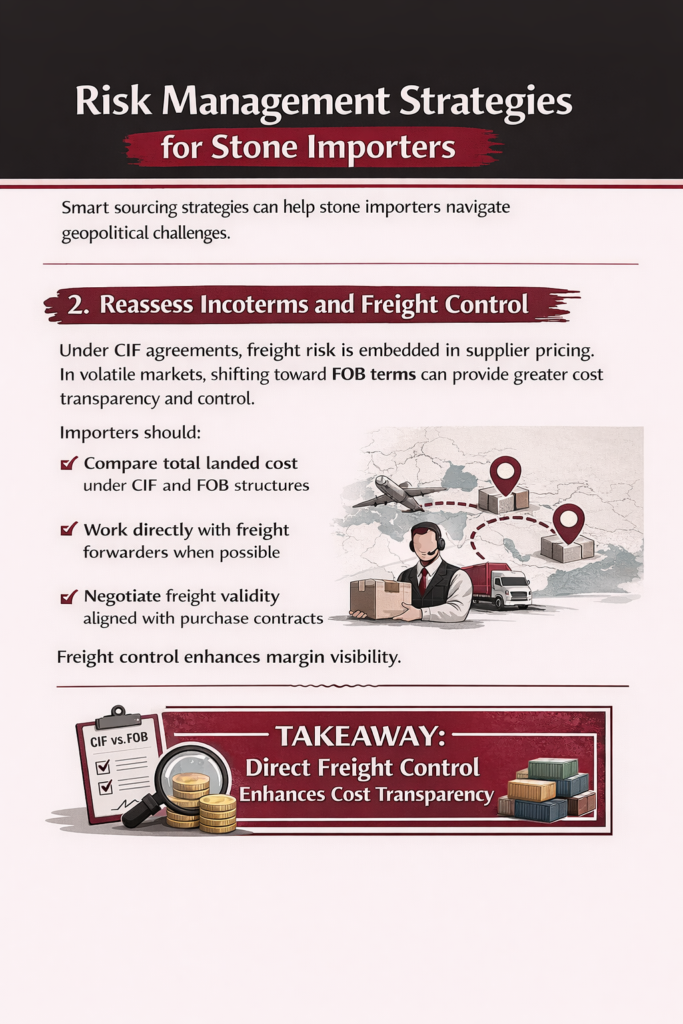
2. Reassess Incoterms and Freight Control
Under CIF agreements, freight risk is embedded in supplier pricing. In volatile markets, shifting toward FOB terms can provide greater cost transparency and control.
Importers should:
- Compare total landed cost under CIF and FOB structures
- Work directly with freight forwarders when possible
- Negotiate freight validity aligned with purchase contracts
Freight control enhances margin visibility.
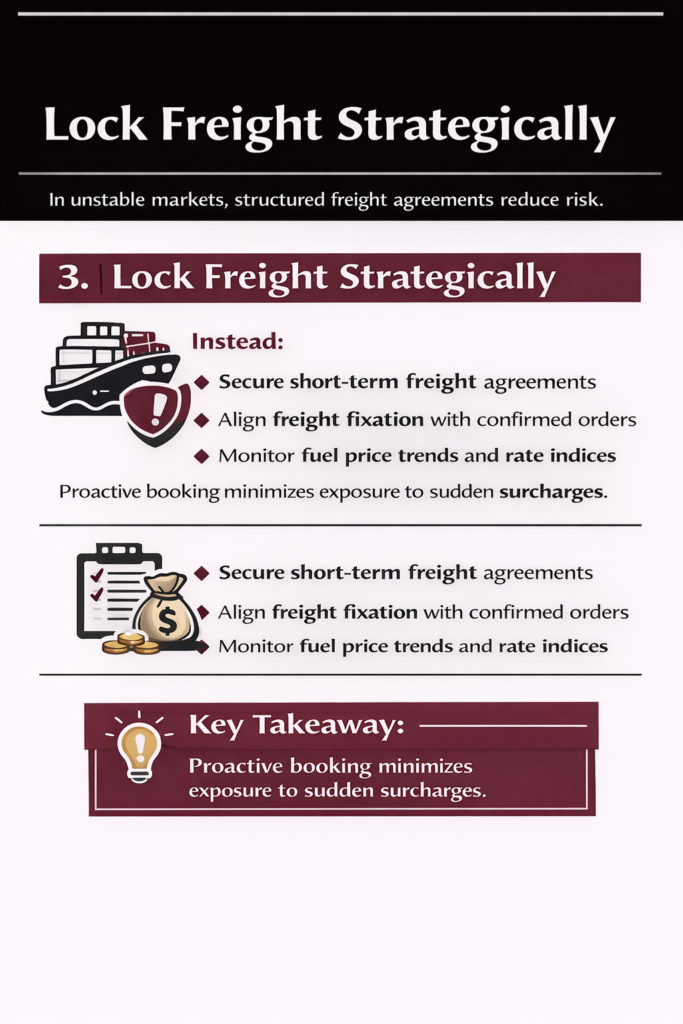
3. Lock Freight Strategically
In unstable markets, relying solely on spot freight rates increases risk.
Instead:
- Secure short-term freight agreements
- Align freight fixation with confirmed orders
- Monitor fuel price trends and rate indices
Proactive booking minimizes exposure to sudden surcharges.
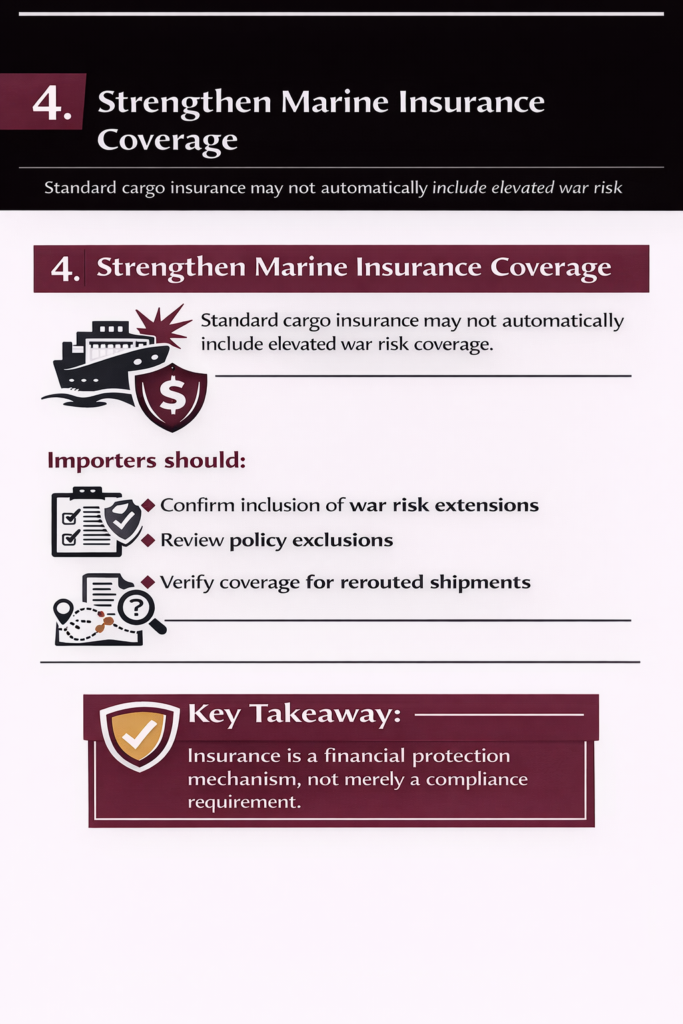
4. Strengthen Marine Insurance Coverage
Standard cargo insurance may not automatically include elevated war risk coverage.
Importers should:
- Confirm inclusion of war risk extensions
- Review policy exclusions
- Verify coverage for rerouted shipments
Insurance is a financial protection mechanism
Strategic Outlook
Geopolitical conflicts rarely halt global trade entirely. Instead, they increase operational friction. Freight becomes more expensive. Insurance becomes more complex. Transit times extend. Pricing predictability declines.
For marble and granite importers, whose cost structures are heavily influenced by shipping and energy variables, the impact is amplified.
The competitive difference lies in preparedness. Importers who proactively diversify sourcing, control freight exposure, model financial sensitivity, and strengthen contractual frameworks will maintain stability even in volatile conditions.
In today’s global trade environment, geopolitical awareness is not a political issue. It is a logistics strategy.