
Importing marble and granite can be one of the most profitable ventures for wholesale traders in the construction and interior design supply chain. Demand for importing marble and granite continues to rise globally, and buyers are always looking for reliable partners who can deliver consistent quality at competitive prices.
However, while the opportunity is huge, the risks are equally high. Many wholesale traders—whether new or experienced—fall into common traps that reduce their profit margins, cause cash flow disruptions, or damage their reputation in the market.
In this article, we’ll break down the five most common mistakes traders make when importing marble and granite—and more importantly, how you can avoid them to maximize your profitability and build long-term success.
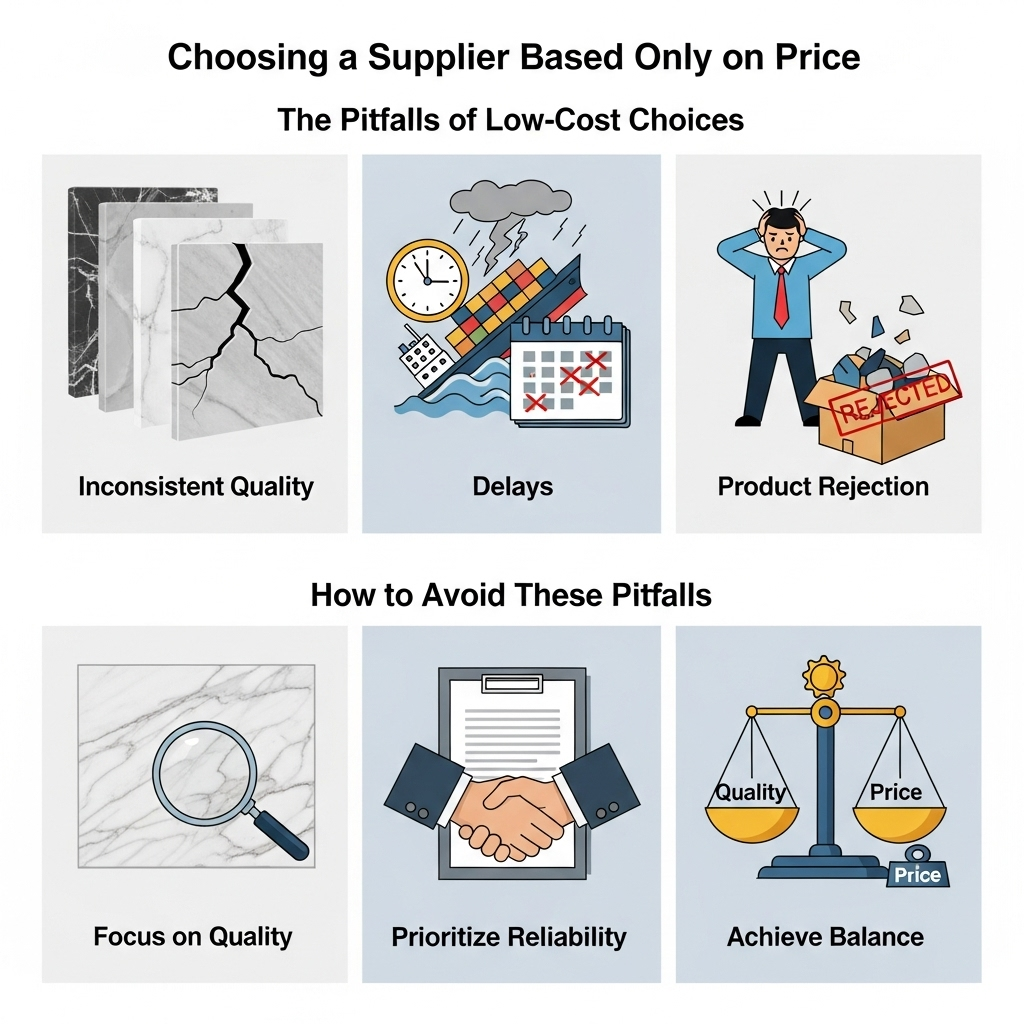
1: Choosing a Supplier Based Only on Price When Importing Marble and Granite
The Problem
It’s tempting to go for the cheapest supplier, especially when you’re trying to maximize your profit margin. But with marble and granite, low upfront costs often mean:
- Inconsistent quality across slabs.
- High variation in color or texture.
- Delays in delivery.
- Increased risk of product rejection by your buyers.
This “cheap-first” mindset can actually cost more in the long run, as dissatisfied customers and rejected shipments eat into your profits.
How to Avoid It
- Evaluate quality first, price second. Ask for samples, technical data sheets, and certifications.
- Check supplier track record. How long have they been exporting? Do they have case studies or references from other traders?
- Balance price with reliability. A slightly higher cost per square meter can mean smoother transactions, fewer disputes, and happier buyers.
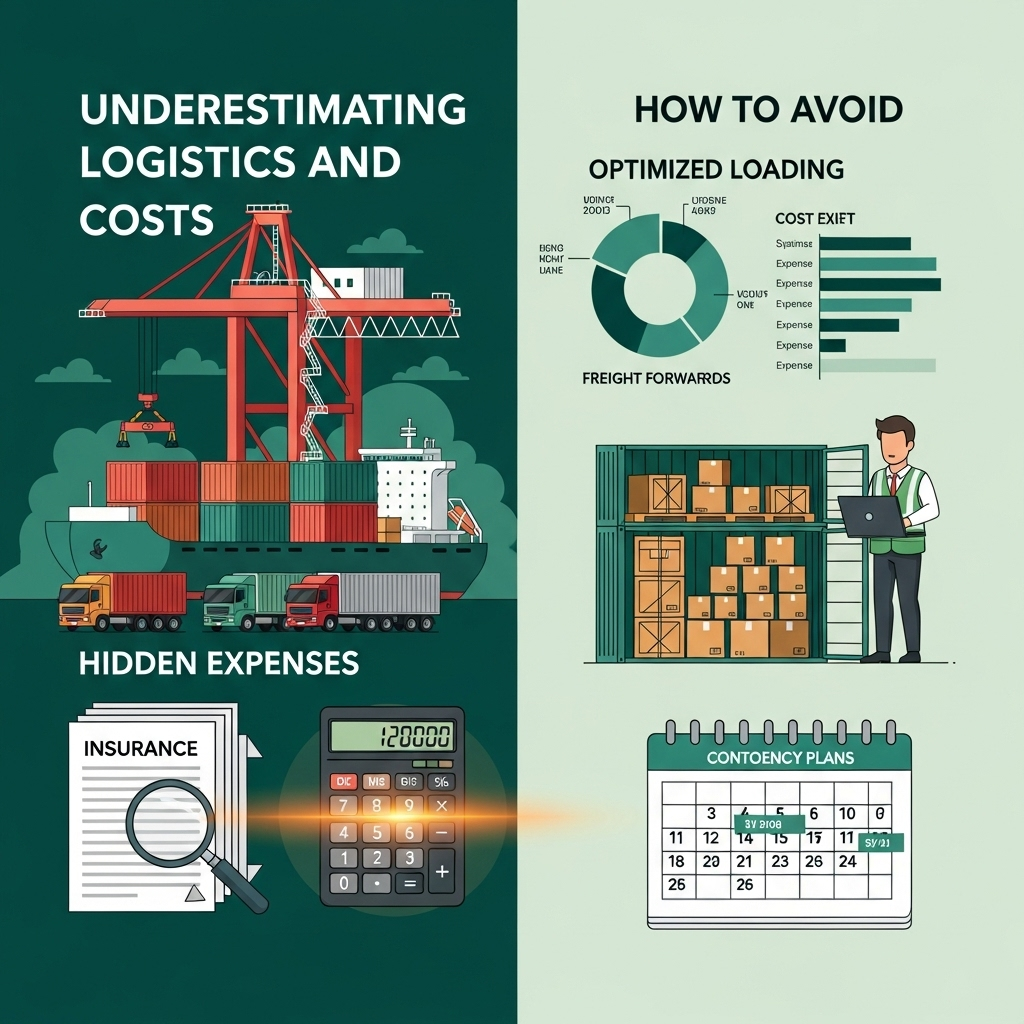
2: Underestimating Logistics and Hidden Costs
The Problem
Many traders calculate only the purchase cost of the stone and forget about the “hidden” expenses:
- Shipping and freight charges.
- Port handling and clearance fees.
- Inland transport.
- Insurance.
- Unexpected demurrage if shipments are delayed.
These overlooked costs can reduce your profit margin significantly.
How to Avoid It
- Work with freight forwarders experienced in natural stone. They know how to optimize container loading and reduce waste.
- Request a full landed cost calculation. Don’t just look at FOB prices—understand what it will cost to deliver to your warehouse.
- Plan for contingencies. Always add a buffer for currency fluctuations, port delays, or rising fuel costs.

3: Ignoring Market Demand and Product Fit
The Problem
Not all stones sell well in every market. Some colors or finishes may be highly popular in one country but nearly impossible to move in another. Traders who import based on personal preference—or on what suppliers want to sell them—risk being stuck with slow-moving stock.
How to Avoid It
- Study local demand trends. Which stones are currently in demand among contractors, retailers, and designers in your market?
- Diversify your product mix. Balance high-demand popular stones with a few unique options to differentiate your offering.
- Stay updated. Market demand changes every 12–18 months—what sold well last year may not move today.
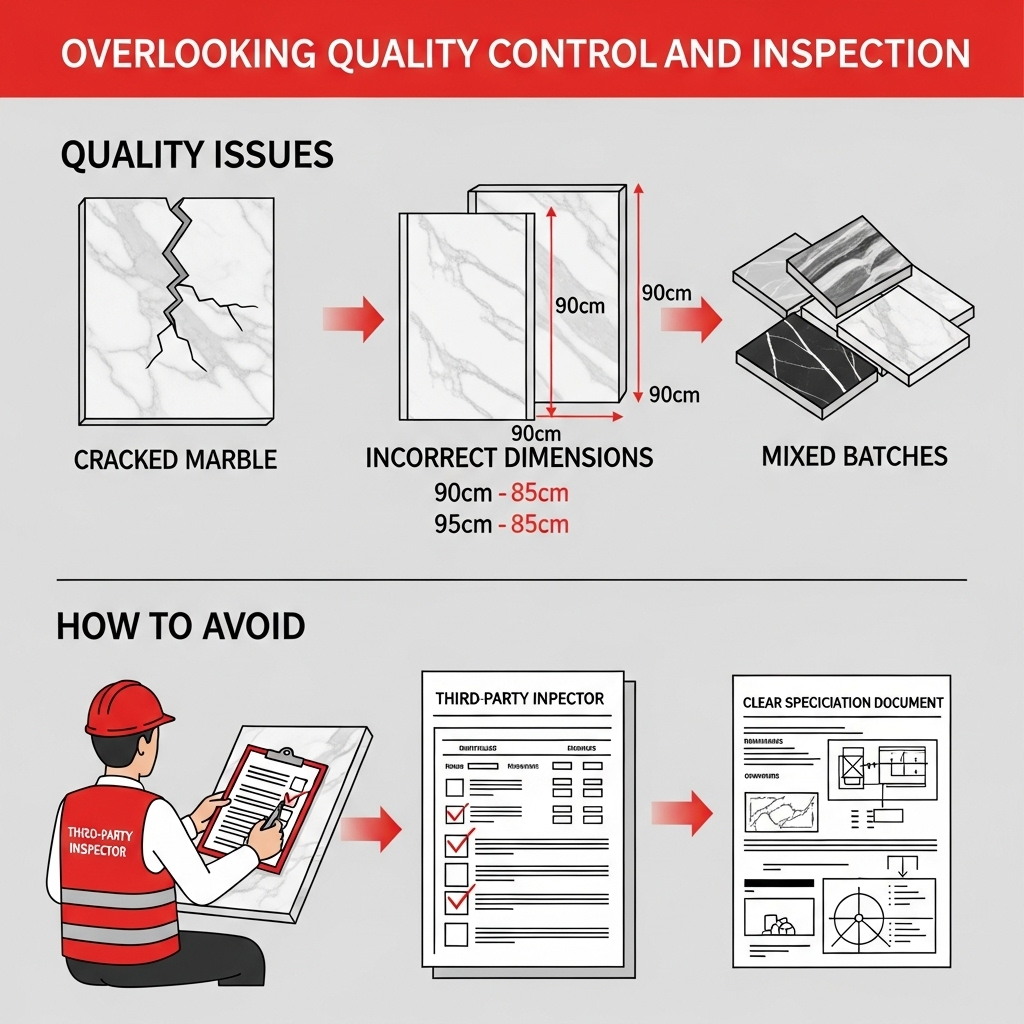
4: Overlooking Quality Control and Inspection
The Problem
Even reliable suppliers can have quality variations due to the nature of natural stone. Without proper inspection, you risk receiving:
- Cracked or chipped slabs.
- Wrong sizes or thickness.
- Different finishes than what was ordered.
- Mixed colors in the same batch.
This can cause disputes, customer dissatisfaction, or even total shipment rejection.
How to Avoid It
- Arrange third-party inspections. Independent agencies can verify slabs before loading.
- Request detailed packing lists and photographs. Cross-check them before shipment.
- Develop clear specifications. Define acceptable tolerance levels for thickness, color variation, and polish quality.
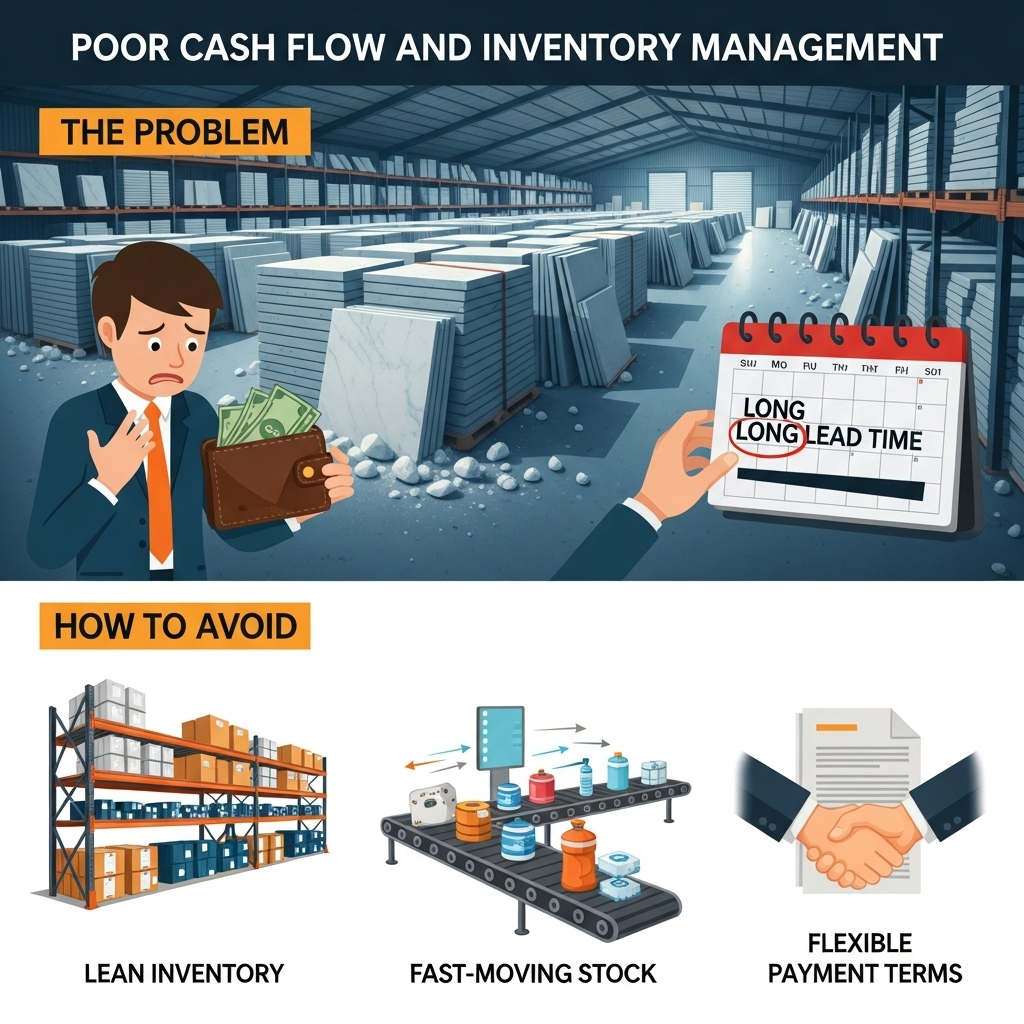
5: Poor Cash Flow and Inventory Management
The Problem
Marble and granite are heavy, high-value products that require significant upfront investment. Many traders overcommit financially by:
- Ordering larger volumes than they can sell quickly.
- Locking too much cash into slow-moving stock.
- Not accounting for long lead times that tie up capital.
This creates cash flow stress and prevents traders from taking on new opportunities.
How to Avoid It
- Start lean. Import manageable quantities that match your current demand.
- Rotate inventory quickly. Focus on fast-selling stones to keep cash flowing.
- Negotiate flexible payment terms. Work with suppliers who offer phased payments, credit terms, or LC (Letter of Credit) options.
Conclusion
Importing marble and granite can either be a high-profit, sustainable business—or a financial nightmare. The difference lies in how well you prepare, evaluate, and manage your supply chain.
By avoiding the five common mistakes—choosing suppliers based only on price, ignoring logistics costs, misreading market demand, skipping quality inspections, and mismanaging cash flow—you’ll set yourself apart from competitors and build a more profitable, reliable trading business.
At the end of the day, successful traders aren’t just those who buy stone they are the ones who manage risk, relationships, and reputation with the same attention as they manage price.
Next Step: If you’re considering importing Egyptian marble and granite and want to avoid these pitfalls, get in touch with our team. We’ll guide you through the process with transparency, reliable supply, and competitive pricing tailored to your market.