Choosing the wrong natural stone can lead to expensive maintenance, inconsistent colors, and costly project delays. That is why smart buyers research their materials before signing a purchase order. If you are considering Sunny Menia Limestone for your next commercial or residential project, this guide will help you decide whether it truly delivers the durability, appearance, and value it is known for.
By the end of this article, you will understand what Sunny Menia Limestone is, where it comes from, its technical specifications, available finishes and sizes, best applications, advantages and limitations, pricing factors, and how to choose a reliable Egyptian supplier.
What Is Sunny Menia Limestone?
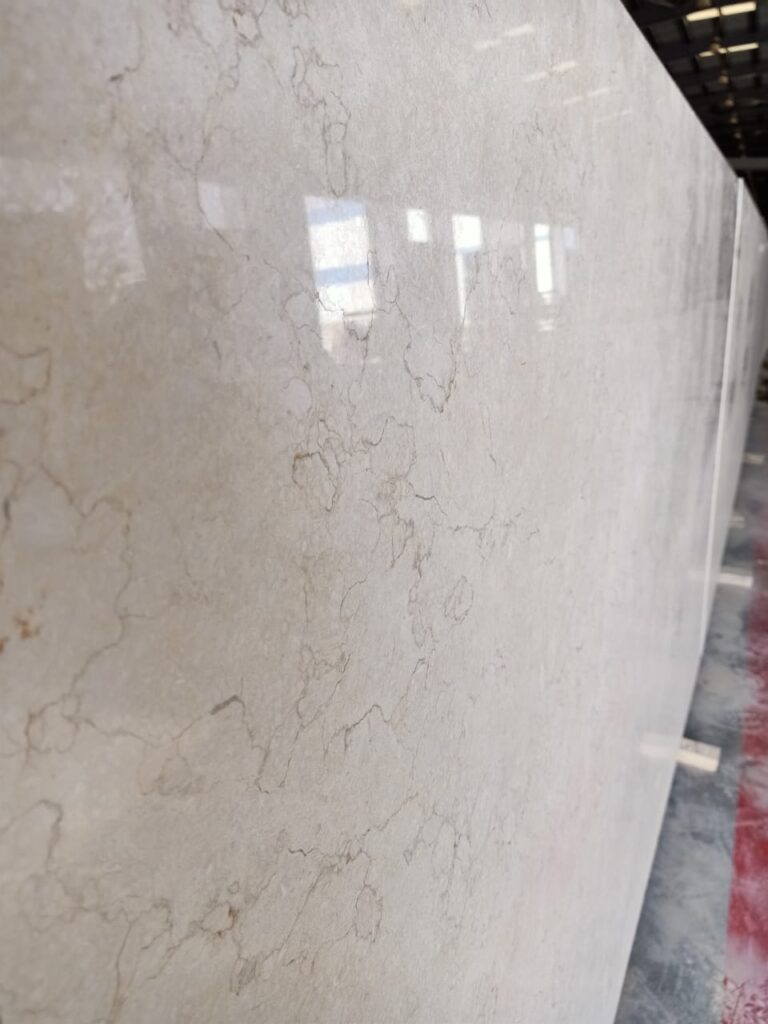
Sunny Menia Limestone is a warm beige limestone quarried in the El Minya region of Upper Egypt, roughly 250 kilometers south of Cairo. The name combines its sunny, golden-beige tone with the location of its quarries. Geologically, it formed millions of years ago from compacted marine sediments, which explains its fine grain and occasional fossil traces.
The stone displays a soft, uniform beige background with subtle natural veining and gentle tonal movement. Unlike louder Egyptian stones, its texture stays calm and consistent, which makes large installations look harmonious. Compared with Galala or Sinai Pearl, Sunny Menia leans warmer and more golden, giving interiors an inviting, sunlit character.
Technical Specifications of Sunny Menia Limestone
| Property | Typical Value | Why It Matters |
|---|---|---|
| Density | 2.55–2.65 g/cm³ | Indicates strength and suitability for flooring |
| Water Absorption | 0.5–1.5% | Lower absorption means better stain and frost performance |
| Compressive Strength | 130–160 MPa | Confirms load-bearing capacity for stairs and facades |
| Flexural Strength | 12–16 MPa | Important for large-format slabs and cladding |
| Surface Hardness (Mohs) | 3–4 | Guides finish choice and maintenance planning |
| Thickness Options | 1.2, 1.5, 2, 3, 5+ cm | Matches different applications and fixing systemsThese numbers translate directly into real-world performance. For example, moderate water absorption means the stone handles humid climates well when sealed, while its compressive strength comfortably supports heavy pedestrian traffic in commercial lobbies. |
These numbers translate directly into real-world performance. For example, moderate water absorption means the stone handles humid climates well when sealed, while its compressive strength comfortably supports heavy pedestrian traffic in commercial lobbies.
Available Finishes
Polished
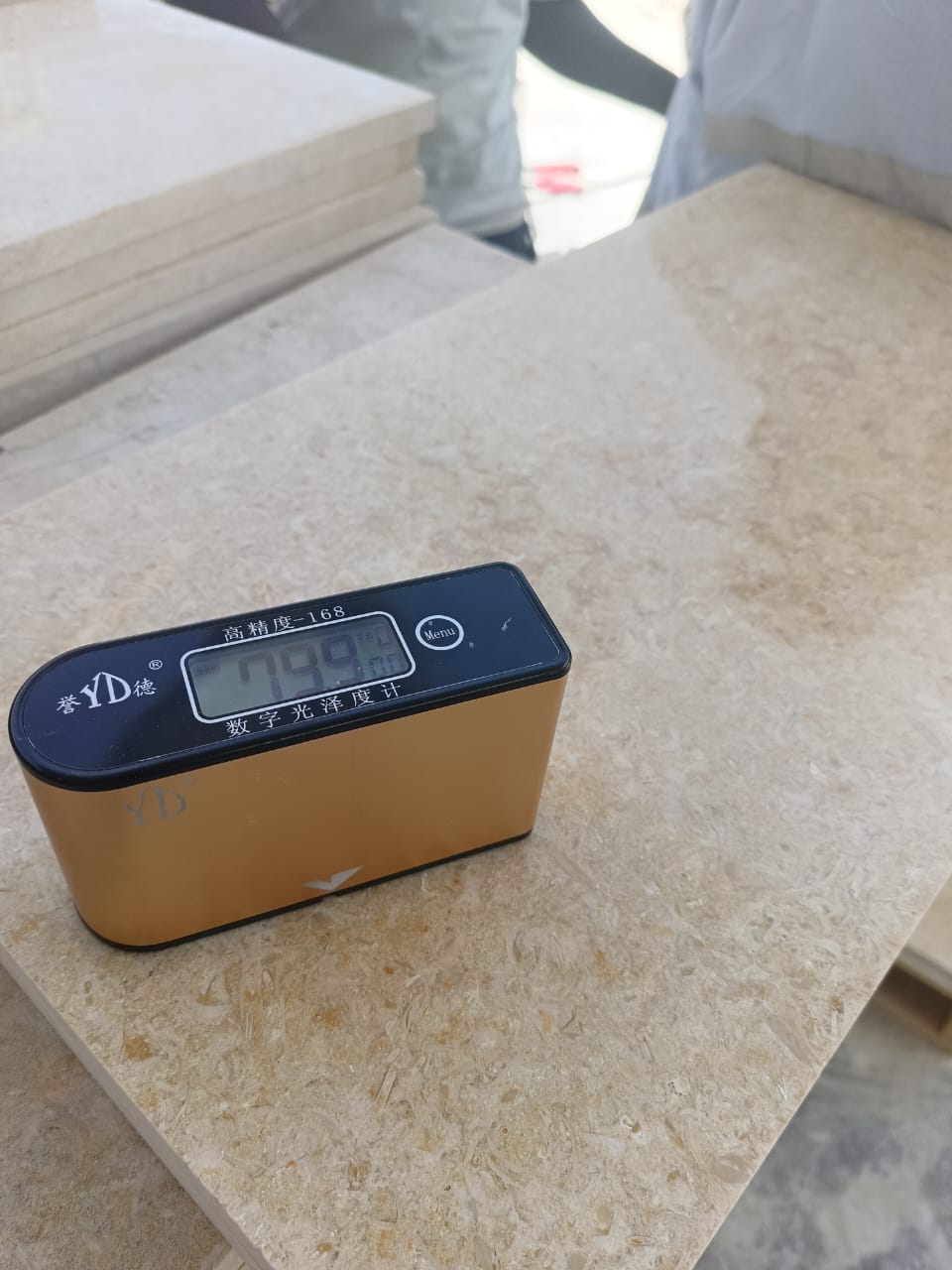
A polished surface brings out the stone’s warm depth and gives a refined, glossy appearance. It is ideal for hotel lobbies, reception walls, and upscale interior flooring.
Tumbled
Honed Sunny Menia offers a smooth matte surface with a soft, contemporary look. Because it hides scratches better than polish, designers often choose it for high-traffic interior floors and bathrooms.
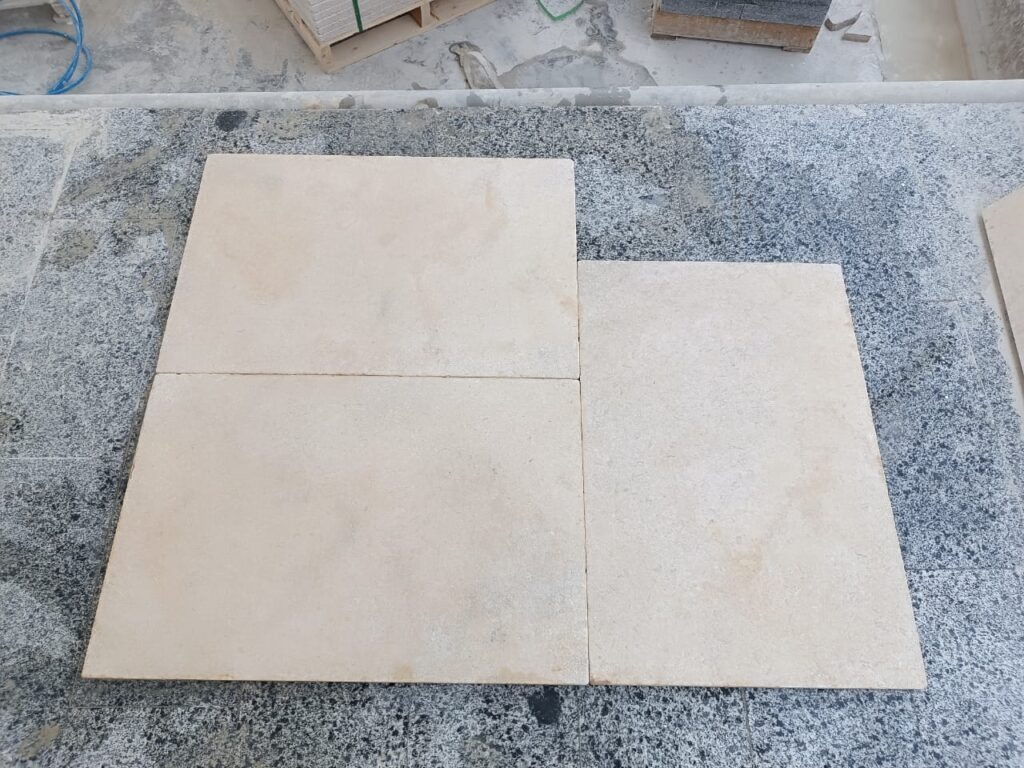
Acid
Brushing creates a gently textured surface with improved slip resistance. Consequently, it performs well outdoors on terraces, walkways, and pool decks.
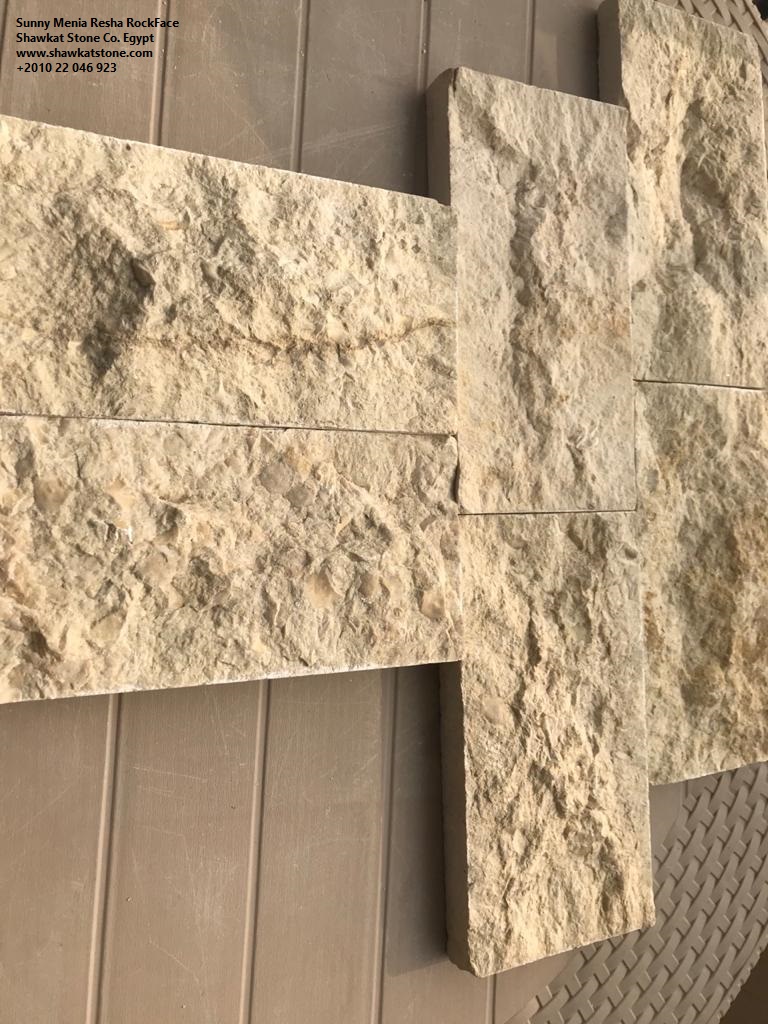
Rockface
Sandblasting produces a uniform rough texture that maximizes grip. It is a common choice for commercial exterior paving, ramps, and public plazas.
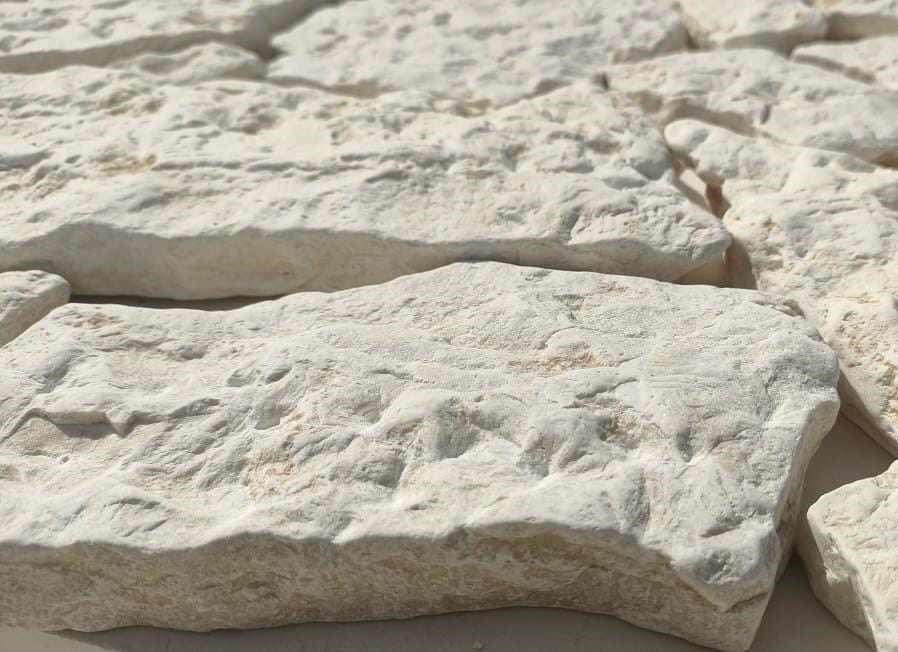
Paving
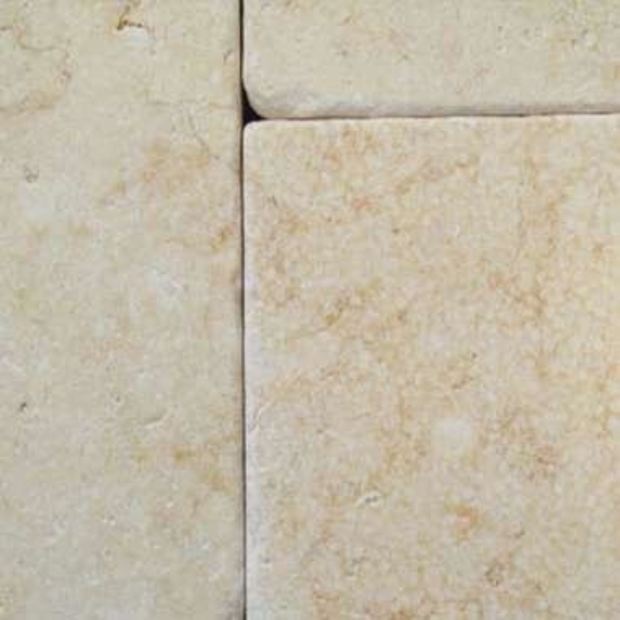
Tumbled edges and a weathered surface give the stone a rustic, aged character. Landscape architects use it for garden paths, courtyards, and Mediterranean-style projects.
Best Applications for Sunny Menia Limestone
Interior Flooring. The stone’s neutral palette brightens interiors and pairs easily with wood, glass, and metal. Its density supports decades of foot traffic.
Exterior Facades. With proper anchoring and sealing, Sunny Menia performs reliably as ventilated or adhered facade cladding, resisting sun exposure without significant fading.
Wall Cladding. Large-format panels create a warm, monolithic visual impact in lobbies, feature walls, and elevator surrounds.
Staircases. Solid treads in 3–5 cm thickness deliver excellent durability where wear is concentrated.
Hotels and Commercial Buildings. Designers choose it because it photographs beautifully, ages gracefully, and stays within budget on large quantities.
Landscaping. From garden paths to pool surrounds and outdoor seating, tumbled and brushed finishes bring natural warmth to exterior spaces.
Potential Limitations to Consider
Honesty matters when specifying natural stone. Like all limestones, Sunny Menia requires periodic sealing to resist staining. It is softer than granite, so sharp impacts can mark the surface. The stone is also acid-sensitive, meaning lemon juice or harsh cleaners can etch polished finishes. Finally, moderate color variation exists between blocks.
Fortunately, proper handling minimizes every one of these issues. Professional installation, a quality penetrating sealer, pH-neutral cleaning, and dry-lay approval of tiles before fixing keep the stone looking excellent for decades.
What Affects the Price of Sunny Menia Limestone?
Sunny Menia Limestone price depends on far more than the material itself. Block quality and color selection come first, followed by thickness, finish type, and tile size, since larger formats increase waste. Quantity ordered, custom fabrication, and packaging standards (wooden crates versus bundles) all shift the final figure. Shipping destination and container loading efficiency then determine the landed cost.
This is why the FOB price alone never tells the full story. A slightly higher FOB offer with professional packaging, accurate calibration, and full containers often costs less per installed square meter than the cheapest quote.
How to Choose a Reliable Sunny Menia Limestone Supplier
Before placing an order with any Sunny Menia Limestone supplier, verify the following:
- Factory ownership, not just trading
- Proven export experience to your region
- Documented quality inspection before loading
- Seaworthy export packaging standards
- Sufficient production capacity for your schedule
- Certifications such as ISO 9001
- Physical samples before mass production
- Clear, realistic lead times
- Responsive customer support throughout the order
Suppliers who meet these criteria protect your budget, your schedule, and your reputation.
Frequently Asked Questions
Is Sunny Menia Limestone suitable for outdoor use? Yes. Brushed, sandblasted, and tumbled finishes perform well on facades, terraces, and landscaping.
Does it require sealing? Yes, a penetrating sealer is recommended, reapplied every few years depending on traffic.
How long does it last? With correct installation and basic care, it lasts for decades—many historic Egyptian buildings prove limestone’s longevity.
Can it be polished? Yes, it accepts a fine polish that highlights its warm tone.
Is it slippery? Polished surfaces can be slippery when wet; brushed or sandblasted finishes solve this outdoors.
How does it compare to marble? It costs less, looks softer and warmer, and is easier to fabricate, though marble is harder.
What countries import it? Major destinations include the USA, Canada, Germany, Greece, the Gulf states, and China.
Can it be customized? Absolutely cut-to-size, special profiles, and mixed containers are standard export options.
Conclusion
Sunny Menia Limestone offers a rare balance of elegance, durability, and affordability. It performs beautifully in flooring, cladding, staircases, landscaping, and large commercial construction. Moreover, understanding its specifications, finishes, and supplier requirements helps you make an informed decision and avoid costly mistakes.
If you are planning a project using Egyptian natural stone, request samples, compare finishes side by side, and partner with an experienced exporter that provides consistent quality, secure export packaging, and dependable delivery timelines. The right supplier turns a good stone into a great project.